 UK
UK
 Hawaii
 USA
USA
The Ultimate Guide to Scattering Ashes: Everything You Need for a Peaceful Goodbye
Deciding how to say a final goodbye is one of the most personal journeys any of us will ever take. When the formal service is over and the flowers have faded, many families find themselves at a crossroads: what comes next? For many, scattering ashes is the most natural, peaceful way to return a loved one to the elements and find a sense of closure.
I’m Matt, and here at Aerial Ashes, I spend a lot of my time talking to families who are in that exact position. You want something beautiful and meaningful, but the logistics can feel overwhelming. Whether you’re dreaming of a quiet release over the hills or a dramatic tribute at sea, there’s no right or wrong way to do this, only what feels right for you and your family.
In this guide, we’re going to walk through everything you need to know about scattering ashes in the UK, from the traditional methods to the unique, modern ways we can help you create a truly timeless farewell.
Understanding the Different Ways to Scatter
When people think about scattering ashes, they often picture the "casting" method, holding a container and letting the wind do the work. While that is a classic choice, there are actually several ways to approach the ceremony, each with its own rhythm and beauty.
1. Casting into the Air
This is the most common approach. It involves casting the ashes into the breeze, usually at waist height. The ashes consist of a mix of fine powder and more dense, sand-like material. While the heavier parts fall quickly, the finer powder creates a graceful, misty cloud that lingers for a moment before disappearing.
2. Trenching and Beach Scattering
If you’ve spent many happy summers by the coast, a trenching ceremony might feel right. You can dig a shallow groove or shape (like a heart or initials) in the sand below the high-tide line. As the tide comes in, the rhythm of the waves gently washes the ashes out to sea. It’s a slow, tranquil process that mirrors the cycles of nature.
3. Water Scattering
Many families choose to scatter directly onto water, be it a river, a lake, or the open ocean. You can use a water-soluble urn that floats for a few minutes before slowly sinking, or you can scatter directly from a boat. Adding petals or flowers to the water as the ashes sink creates a beautiful visual tribute.
4. Aerial Scattering (The Drone Perspective)
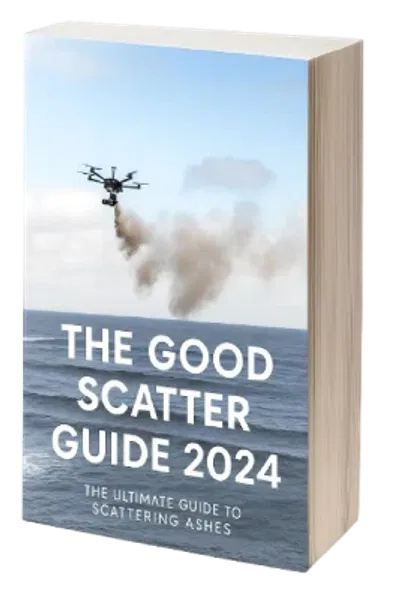
This is where we come in. Traditional scattering can sometimes be tricky, the wind changes direction, or the location you love is hard to reach on foot. By using a drone, we can release the ashes in a perfectly controlled, graceful stream over locations that would otherwise be impossible to access. It’s a "loving act of release" that offers a sense of total freedom and scale.
The Logistics: Staying on the Right Side of the Law
One of the biggest stresses for families is the "can we actually do this here?" question. The UK is generally quite open to scattering ashes, but there are a few rules of the road you need to know to keep things stress-free.
Scattering on Private Land
Technically, you need the landowner’s permission. If it’s your own garden, you’re good to go. If it’s a local farm or a private estate, a quick, polite conversation usually does the trick. Most people are incredibly compassionate when they understand the reason.
Public Parks and National Trust Land
Public spaces like local parks often require a permit, and the National Trust generally discourages scattering on their land to protect the local soil chemistry. However, many "scattering gardens" and memorial woodlands are specifically designed for this purpose.
Waterways and the Sea
In the UK, you don’t usually need a permit to scatter ashes in the sea or on a river, provided you follow the Environment Agency’s guidelines. The main thing is to ensure you aren't dropping anything non-biodegradable into the water. If you’re heading out into the ocean, the general rule of thumb is to stay at least three nautical miles from the shore to ensure a peaceful, undisturbed release.
At Aerial Ashes, we handle the heavy lifting when it comes to permissions. We work closely with local authorities and landowners to ensure everything is above board, so you don't have to worry about the paperwork on a day that should be focused on remembrance.
Planning a Stress-Free Ceremony
The secret to a peaceful goodbye is in the planning. When you’re dealing with the loss of a loved one, even small tasks can feel like a mountain. Here’s how we suggest breaking it down into manageable segments:
- Check the Wind: If you’re scattering by hand, always stand upwind (with the wind at your back). This ensures the ashes move away from the group.
- Think About the Crowd: Is the location accessible for everyone? If you want to scatter at the top of a peak but Grandma can't make the climb, an aerial scattering service can be live-streamed, allowing everyone to participate regardless of their physical location. You can learn more about our live-streamed funeral services here.
- Timing: Sunset and sunrise offer the most "tranquil" atmosphere and often provide the most stunning backdrop for photos or videos of the event.
- Permissions: As mentioned, we take care of this. Whether it’s a football stadium or a specific racecourse, we verify the logistics ahead of time.

Choosing a Location That Tells a Story
The beauty of scattering ashes is that you aren't limited to a cemetery. You can choose a place that truly meant something to your loved one.
Was there a specific stadium where they spent every Saturday? A particular bend in a river where they used to fish? Or maybe a coastal cliff where they felt most at peace? We’ve helped families scatter ashes over lush green valleys, cricket pitches, and even horse racing tracks.
If you're looking for some ideas to spark your imagination, check out our inspiration page. It’s filled with stories of how other families have chosen to celebrate a life in a way that felt authentic to them.

Are You Ready?
There is no rush. Some families feel the need to scatter ashes within weeks, while others wait years until the timing feels "right." Both are perfectly okay.
It is entirely normal to feel a bit of hesitation. To help you explore your own readiness, we’ve put together a gentle guide on knowing when you're ready to scatter. It’s an inquisitive, soft look at the emotional side of the process, helping you decide if now is the moment for that "lasting comfort."
Why Families Choose Aerial Ashes
Let’s be honest: the reason many people find scattering ashes difficult is the "mechanics" of it. It can be messy, the wind can be unpredictable, and it can feel a bit undignified if things don't go to plan.
Our job is to protect the sanctity of that moment. By using drone technology, we remove the "clumsiness" of manual scattering. The drone ascends to a height of your choosing, and the ashes are released in a steady, graceful flow. It looks like a ribbon of light moving through the air, a truly "meaningful" and visual way to say goodbye.
We are proud to be trusted by professionals across the industry, maintaining our status as a National Association of Funeral Directors Supplier Member. This means we operate with the highest level of professional ethics and compassion.
Making the Ceremony Your Own
A scattering ceremony doesn’t have to follow a script. You can make it as casual or as formal as you like. Here are a few ways to add a personal touch:
- Readings and Poems: Choose a piece of literature that reflects their personality. It doesn't have to be religious; it could be a favorite song lyric or a quote from a book.
- Music: Music has a way of anchoring memories. Playing a meaningful track as the ashes are released creates a powerful emotional connection.
- A "Toast" Ritual: If the group is large, consider giving everyone a small amount of ashes to scatter simultaneously, or perhaps have everyone toss a flower petal as the drone begins its flight.
- Capturing the Moment: Many families choose to have the release filmed. Looking back at the "vastness" and the "freedom" of the flight can provide immense comfort in the months and years to follow.

Final Thoughts: A Loving Act of Release
Scattering ashes is about more than just logistics; it’s about the "rhythm of the waves" and the "freedom" of the air. It’s about letting go in a way that feels like a celebration rather than a transaction.
Whether you decide to do it yourself on a quiet beach or ask us to help you reach a mountain peak via drone, the most important thing is that it happens at your own pace.
If you’re starting to think about a ceremony and want to chat about what’s possible, feel free to book a service or just reach out for a casual chat. We’re here to be your supportive guide, helping you plan a beautiful, serene farewell that honours a life well-lived.
Remember, there is no right or wrong way to say goodbye. There is only your way. And when you're ready, we'll be here to help you make it a moment of lasting peace.