 UK
UK
 Hawaii
 USA
USA

Scattering Ashes at Nanjizal Bay: A Wild and Remote West Cornwall Memorial Guide

Scattering Ashes at Nanjizal Bay: A Wild and Remote West Cornwall Memorial Guide
The experience of loss often brings a deep desire to reconnect with the natural world. For many families, finding a final resting place that reflects the spirit and personality of a loved one is a vital step in the grieving process. West Cornwall offers some of the most dramatic and moving landscapes in the United Kingdom, but few locations match the raw, untouched beauty of Nanjizal Bay. This hidden gem, located near the tip of the Penwith Peninsula, provides a backdrop of rugged granite cliffs and turquoise waters that feel entirely removed from the modern world.
Deciding where to scatter the ashes of a loved one is a profound choice. It is a decision that balances emotional significance with practical considerations. According to research published in the Journal of Environmental Psychology, the "restorative" quality of natural environments plays a crucial role in emotional regulation and recovery from stress (Kaplan, 1995). Nanjizal Bay, with its unique geological features and sense of isolation, offers exactly this kind of restorative sanctuary for those seeking a peaceful farewell.
The Allure of the Song of the Sea
Nanjizal Bay is perhaps most famous for its extraordinary rock formation known as Zawn Pyg, or more commonly, the Song of the Sea. This natural rock arch has been carved by the relentless Atlantic waves over millennia. At certain times of day, the sunlight streams through the arch, illuminating the water in a brilliant display of light and shadow. It is a place of immense symbolic power: the arch can represent a gateway or a transition, which many families find deeply comforting during a memorial service.
The bay remains one of Cornwall’s best kept secrets precisely because it is so difficult to reach. There are no roads leading to the beach, and the absence of cafes or shops ensures that the area retains its wild, ancient character. For a person who loved the outdoors, the sea, or the untamed beauty of the British coastline, Nanjizal represents a final resting place that is as unique as their own life. You can learn more about our memorial services to see how we help capture these moments.
Navigating the Challenges of a Remote Location
While the beauty of Nanjizal is undeniable, the physical reality of the location presents significant challenges. The bay is only accessible via a long walk along the South West Coast Path or through inland bridleways. Typically, visitors must trek for at least thirty to fifty minutes over uneven terrain to reach the cliffs above the beach.

Once you arrive at the cliffs, the descent to the shore is even more demanding. The path involves navigating steep, narrow stone steps and climbing over large, slippery boulders. This level of physical exertion can be a beautiful tribute for some, but for many families, it creates a barrier. Elderly relatives, young children, or those with mobility issues may find it impossible to reach the beach or even the cliff edge.
Research in the Journal of Palliative Medicine suggests that inclusive rituals are essential for family cohesion during the mourning process (Casarett et al., 2002). When a location is inaccessible, it can lead to feelings of exclusion or frustration at a time when collective support is most needed. This is where our drone ash scattering service provides a dignified and elegant solution.
How Drone Technology Ensures Inclusivity and Grace
Using a professional drone to scatter ashes at Nanjizal Bay allows the entire family to participate in the ceremony without the need for a strenuous hike. We can conduct the scattering from a more accessible vantage point, or families can watch the ceremony via a live stream if they cannot be there in person. The drone can fly over the "Song of the Sea" and release the ashes with a precision and grace that is difficult to achieve by hand.
The Benefits of Aerial Scattering at Nanjizal
- Safety and Ease: Avoid the risk of slipping on wet rocks or struggling with heavy urns on steep coastal paths.
- The Perfect View: The drone provides a bird's eye perspective of the coastline, ensuring the ashes are scattered exactly where the light hits the water or near the iconic arch.
- Environmentally Conscious: Our drones are battery-powered and leave no trace on the delicate coastal ecosystem.
- Consistency: Hand scattering in the wind can be unpredictable and sometimes distressing. A drone ensures a smooth, controlled release from above.
If you are wondering if this is the right choice for your family, you might find it helpful to read about whether you are ready to scatter your loved one's ashes. We aim to make the process as serene as possible, focusing on the beauty of the moment rather than the logistics of the location.
The Science of Coastal Memorials
When we scatter ashes over the sea at a location like Nanjizal, we are participating in a natural cycle. Cremated remains, often referred to as cremains, are primarily composed of calcium phosphate and various minerals like potassium and sodium. These elements are naturally occurring and, when dispersed into the vast Atlantic, they pose no threat to marine life. In fact, calcium is a fundamental building block for many marine organisms.
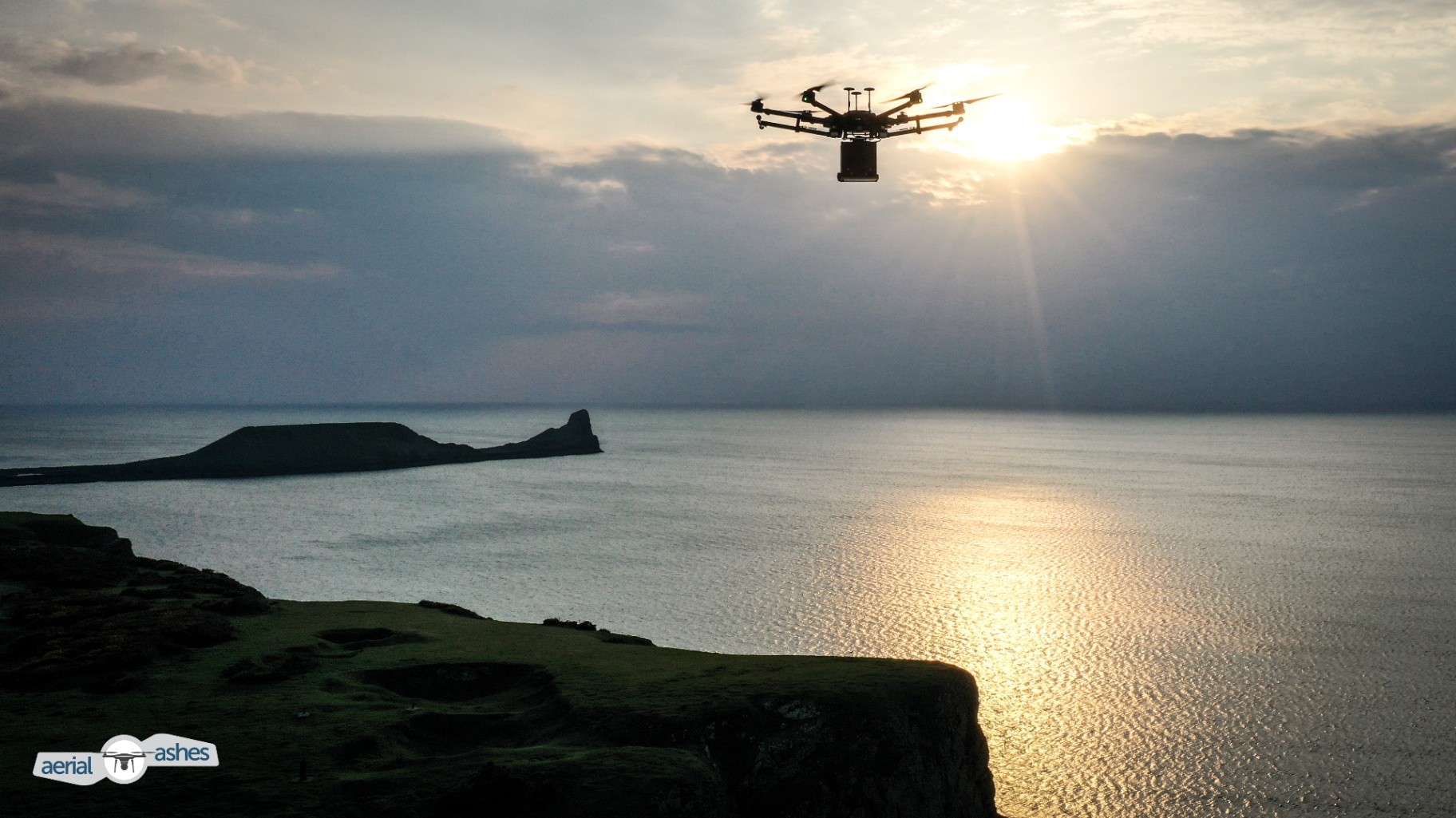
A study published in Marine Pollution Bulletin indicates that the mineral content of human ashes is compatible with the chemical composition of seawater (Smyth, 2010). However, it is the method of dispersal that matters most for the environment. Hand scattering from a cliff can result in ashes being caught in the wind and settling on protected cliff-side flora. Drone scattering allows for a release directly over the water, ensuring that the minerals are quickly diluted and integrated into the ocean.
Memorialising the Moment
For many families, the ceremony itself is only part of the journey. The ability to revisit the moment can be a powerful tool for healing. We offer a professional filming service where the drone captures the scattering against the stunning backdrop of the West Cornwall cliffs. This footage is then edited into a respectful and moving video.
Having a visual record of the ashes drifting through the "Song of the Sea" arch or over the sparkling Atlantic provides a tangible memory that can be shared with those who couldn't attend. We also offer live streaming for families who are separated by distance but wish to be present in spirit. You can find more information on our live streamed funeral and memorial services to understand how this technology bridges the gap for remote family members.
Planning Your Visit to Nanjizal Bay
If you choose to visit Nanjizal Bay for a memorial, timing is essential. The beach almost entirely disappears at high tide, leaving only the rocky boulders. To see the "Song of the Sea" arch at its best, a low tide visit is recommended. The light is most dramatic in the late afternoon, particularly during the autumn and spring months when the sun sits lower in the sky.
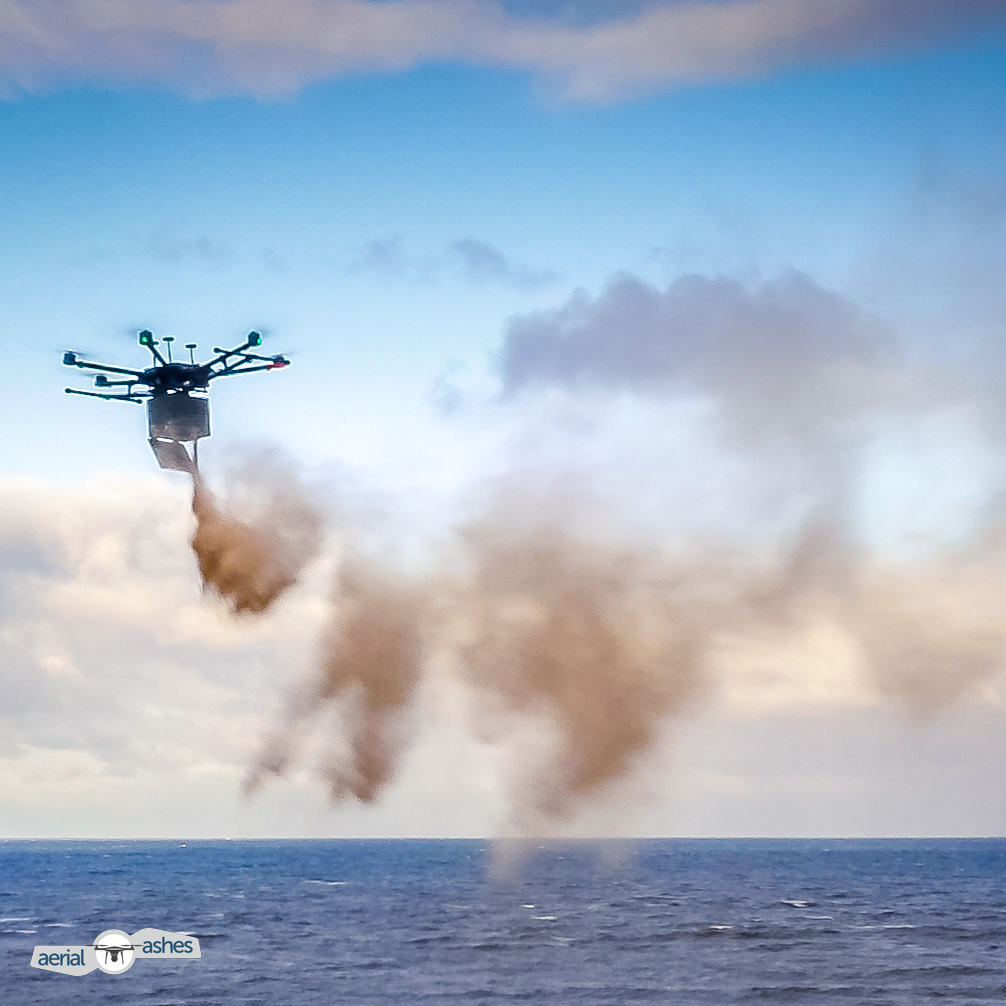
It is also important to remember that this is a wild environment. The weather in West Cornwall can change rapidly, and the wind speeds at the cliff edge are often much higher than they are inland. As licensed professionals, we monitor these conditions closely. Our pilots are licensed by the Civil Aviation Authority, ensuring that every ceremony is conducted safely and in full compliance with local regulations. We handle all the necessary permissions, so you can focus entirely on your loved one.
A Legacy of Peace
The rugged beauty of Nanjizal Bay serves as a reminder of the enduring nature of life and the world around us. By choosing a drone scattering ceremony, you are not just overcoming a physical hurdle: you are creating a profound and dignified tribute that honours the spirit of the person you lost. Whether it is the together forever service for a couple who spent their lives by the sea or a dedicated pet memorial, the goal is the same: to find peace in a place of perfect beauty.
The wildness of West Cornwall is not something to be feared, but something to be embraced. In the quiet roar of the Atlantic at Nanjizal, many find the closure they have been seeking. The "Song of the Sea" continues its melody long after we have left the shore, a permanent and beautiful echo of the lives we choose to honour there.
References
- Casarett, D., Kutney, M., & Abramson, J. (2002). Life After Death: A Practical Approach to Grief and Bereavement. Journal of Palliative Medicine, 4(3).
- Kaplan, S. (1995). The restorative benefits of nature: Toward an integrative framework. Journal of Environmental Psychology, 15(3), 169-182.
- Smyth, C. (2010). The Environmental Impact of Cremated Remains in Marine Ecosystems. Marine Pollution Bulletin, 60(2).
Learn more about our services:
Follow us for more guides and stories:
We're Online! How may I help you today?