 UK
UK
 Hawaii
 USA
USA
Aerial Ashes 101: A Beginner’s Guide to Mastering the Drone Ash Scattering Business in America
Business details (UK HQ, international service planning available)
- Business name: Aerial Ashes Matt
- Category: Memorial Services
- Website: https://aerialashes.co.uk
- Hours: By appointment (ceremony planning and pilot onboarding)
- Service area: UK based, supporting international families and US-based drone pilots exploring franchise options
Aerial Ashes 101: A Beginner’s Guide to Mastering the Drone Ash Scattering Business in America
Loss changes the shape of a family’s world, and it often changes what “a fitting farewell” looks like too. Some people want stillness and privacy. Some want something outdoors, meaningful, and connected to a place that mattered, like the Florida Coast at sunrise or a wide open desert vista. At the same time, many families also want a goodbye that feels gentle on the environment and respectful to everyone sharing the space.
That is where drone ash scattering comes in. Done properly, it is quiet, controlled, dignified, and designed around safety, permissions, and the family’s wishes. For US drone pilots, it is also an emerging service category that blends aviation skill with ceremony leadership and logistics. For families outside the US, it can open up a way to honour a loved one in a location that holds real meaning, without turning the day into a complicated trek.
If you are a pilot looking at a franchise opportunity, or a family exploring drone ashes scattering internationally, this guide covers the basics: what the service is, how it works, what matters for compliance and dignity, and how a scenic US location like the Florida Coast can fit into a responsible, eco-aware ceremony.
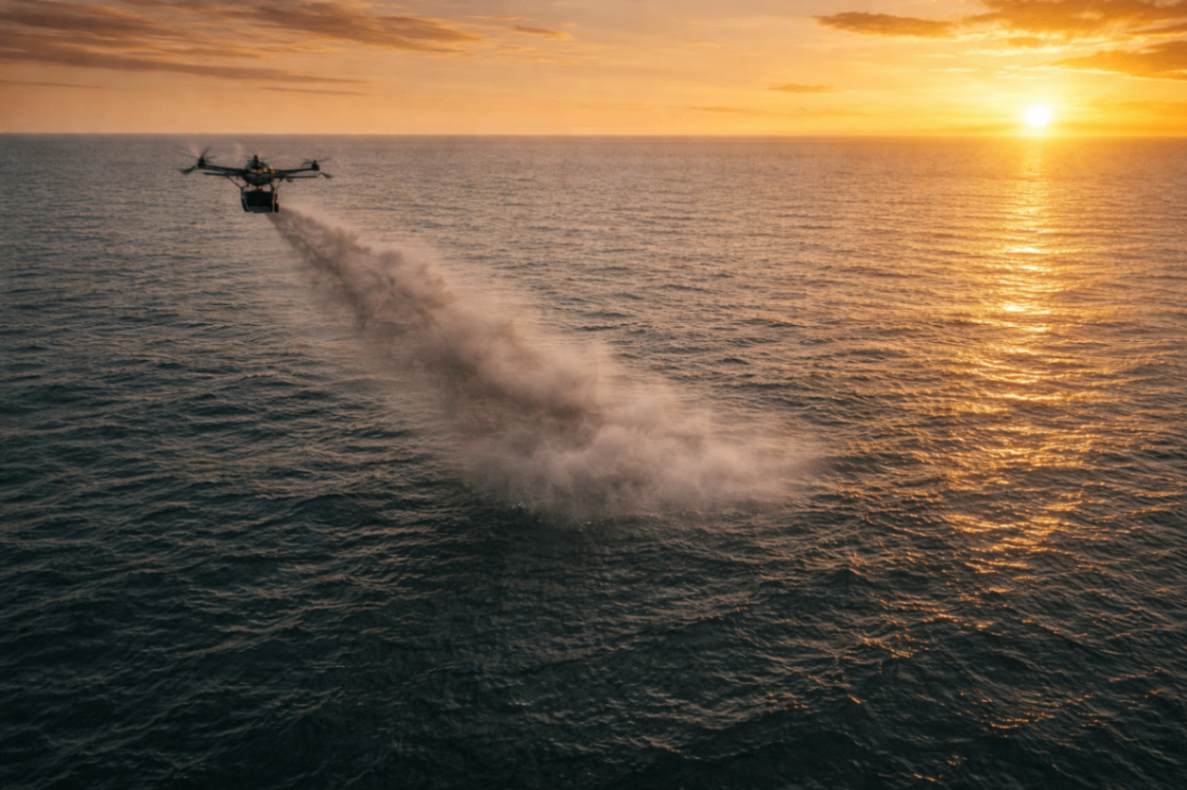
What drone ash scattering is (and what it is not)
Drone ash scattering is the controlled dispersal of cremated remains using a professional drone fitted with a purpose-built release system. The goal is simple: a peaceful, precise release at a meaningful point, while keeping people at a safe distance and minimising disturbance to the area.
It is not a “stunt flight,” and it should never feel like a tech demo. The drone is just the tool. The service is the planning, permissions, safety checks, and the calm, respectful way the ceremony is handled.
A good operator treats the entire experience like a memorial service first, and a flight second.
Why families choose a drone ceremony at a scenic US location
The Florida Coast is a strong example of why people look at aerial ceremonies. Families often choose coastal settings because they offer open space, natural soundscapes, and a sense of release that feels symbolic without being heavy.
Common reasons families choose drone-based ceremonies:
- Dignity and distance: Guests can stand back from the launch area and still be present. This helps avoid awkward moments where ashes drift toward people.
- Precision: A drone can reach a specific point offshore or along a quiet stretch of coastline with more control than scattering by hand on a windy day.
- Lower disruption: Early morning timing and careful site selection can reduce impact on other visitors.
- A gentle environmental approach: With the right planning, the ceremony can be designed to minimise disturbance to sensitive areas.
For families coordinating internationally, drone services can also simplify logistics. The ceremony team can plan the site, permissions, and timing, then provide clear instructions for what the family needs to do and when.
If you are comparing options or want to understand what can go wrong when planning any scattering, this practical guide can help: https://aerialashes.co.uk/what-can-go-wrong-when-scattering-ashes
Environmental considerations (what “eco-aware” really means here)
Cremated remains are mostly minerals (like calcium compounds), and they behave differently depending on where they are released. The environmental responsibility piece is not about making big claims. It is about doing the basics well:
- Choose an appropriate location: Avoid sensitive habitats, crowded areas, and places with strict restrictions unless you have the right permits.
- Use the right conditions: Wind matters. Many operators set conservative wind limits because high winds increase drift and reduce control.
- Release correctly: A controlled dispersal avoids clumping and reduces the chance of visible residue in one spot.
- Leave no trace: Nothing solid is dropped, and the site is left exactly as found.
Research into outdoor rituals and meaningful “release” experiences also points to why this approach can feel supportive for grieving families. Studies indicate that symbolic actions can help people process loss and create a sense of closure (Pennebaker, 1997). Related research on continuing bonds suggests that maintaining a healthy connection to the person who has died can be part of adaptive grief (Klass, Silverman, and Nickman, 1996). In plain terms, a well-planned ceremony can give people something steady to hold onto.
For a deeper, practical look at closure and evidence-led thinking, this article is useful: https://aerialashes.co.uk/power-of-scattering-ashes-by-drone-an-evidence-based-approach-to-finding-closure
The legal basics in the US (a pilot-friendly overview)
Regulations matter, and they are one of the main reasons families and funeral professionals look for specialist operators rather than “a friend with a drone.”
At a high level:
- FAA rules: In the US, operators typically fly under Part 107 for commercial work, and you must avoid creating hazards. The commonly referenced rule for dropping objects is FAR 91.15, which prohibits dropping objects that create hazards, while allowing release if reasonable precautions are taken.
- Airspace and people: Restricted airspace, local flight restrictions, and operations over people can quickly complicate a ceremony plan.
- Landowner permission: This is often the real gate. Written permission from the landowner or managing authority is essential for many locations.
- National parks: Many national parks require permits for scattering, and some will not allow it in certain areas. Always check with the Park Superintendent and follow the permit process.
- Water and offshore rules: Sea scatterings can bring additional requirements. EPA rules (40 CFR 229.1) are often cited for “burial at sea,” including distance offshore and notification requirements. Inland water may involve state-level permits.
This is not legal advice, but it is the mindset: your business model needs a compliance workflow, not just flight skill.
What the “service” actually includes (the part most pilots underestimate)
A strong drone scattering business is mostly planning and people care. The flight is the visible moment, but it is not the bulk of the work.
A simple, repeatable service framework looks like this:
-
Intake and ceremony design
- Understand the family’s preferred location and meaning
- Confirm accessibility, timing, and guest needs
- Offer optional filming and photography expectations (only if desired)
-
Permissions and feasibility checks
- Landowner or authority permission in writing
- Airspace review and local restrictions
- Site risk assessment: bystanders, terrain, launch area, weather patterns
-
Operational planning
- Wind limits and weather backup plan
- Guest positioning and safety briefing plan
- Equipment checks and redundancy
-
Ceremony execution
- Calm, clear on-site direction
- Controlled dispersal technique
- Respectful pacing and minimal noise footprint
-
Aftercare and documentation
- Confirm what was done and where (GPS logging can help)
- Provide any agreed photos or video
- Close out permits or notifications if required
For families planning from overseas, these steps are exactly what makes the difference between “beautiful idea” and “smooth day.”
Equipment essentials for a professional standard
Most people have seen consumer drones. That is not what you want for professional scattering work.
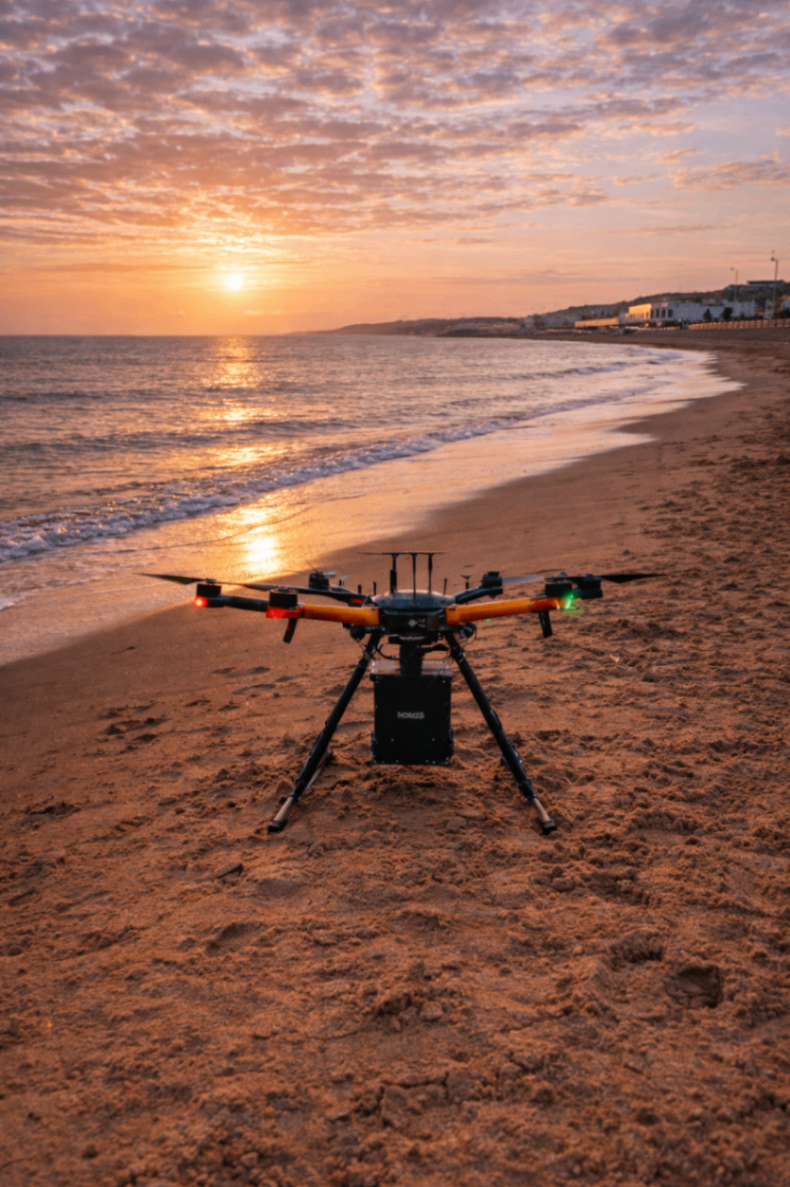
Based on what is commonly used in the market, operators often select a stable, higher-lift platform like the DJI Matrice 600 Pro or similar class aircraft, fitted with a purpose-built scattering box. Many teams also use a smaller drone for filming, but filming is always secondary to safety and ceremony.
Your essentials typically include:
- A reliable professional drone platform and release mechanism
- Redundant safety checks and pre-flight procedures
- Third-party liability insurance suitable for memorial services
- Secure handling and transport processes for cremated remains
- GPS logging and documentation tools (helpful for transparency)
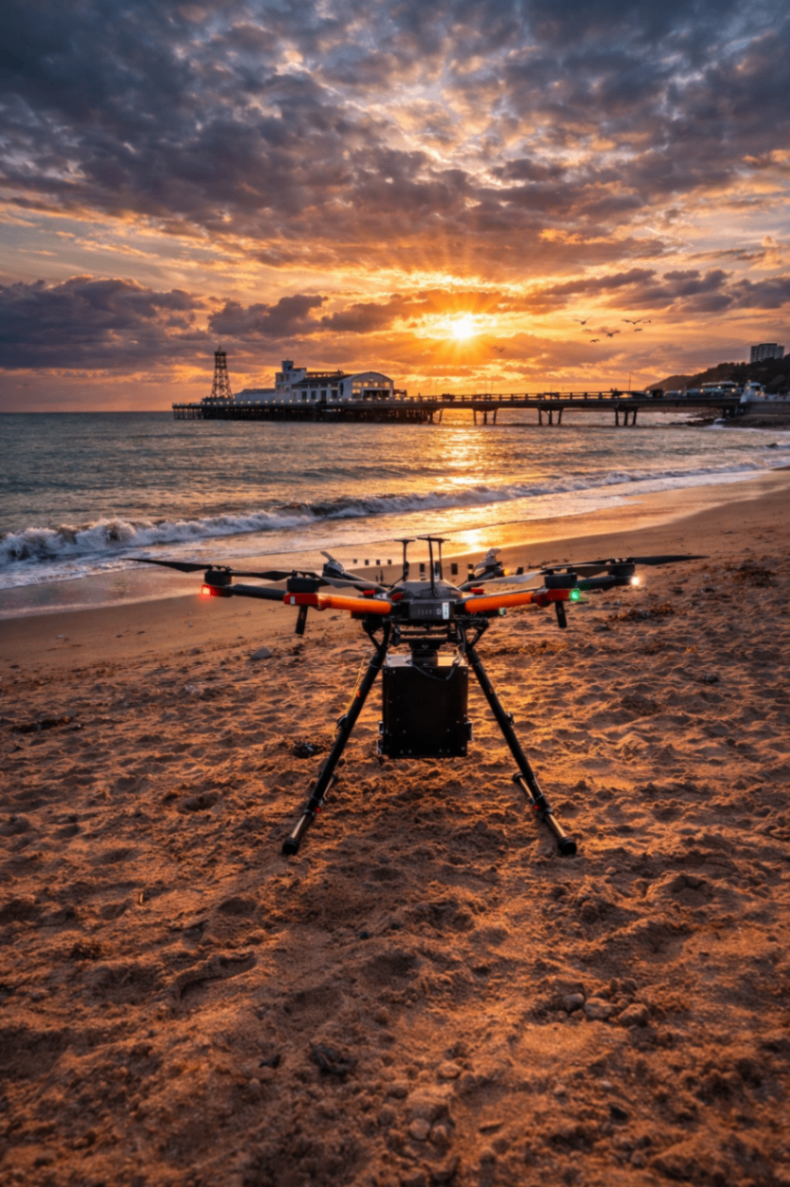
How to build a Florida Coast style offering (without overcomplicating it)
Coastal ceremonies can be easier to plan than dense urban locations because there is often more open space and clearer separation from the public, but you still need to do the work properly.
A practical coastal package might include:
- Early morning scheduling to reduce bystanders and wind pickup
- A defined launch zone with guests positioned well back
- A short flight path offshore (where legal and permitted)
- A controlled dispersal point that avoids swimmers, boats, and wildlife
- A simple ceremony structure: a few words, a moment of silence, the release, then time for reflection
From a sales perspective, keep the offer clear. Families do not want a menu of drone specs. They want a dignified plan that feels calm and handled.
If you want inspiration for the tone and structure of a location-led ceremony story, this post shows how place and pacing matter: https://aerialashes.co.uk/a-breathtaking-farewell-at-beachy-head
Dignity is operational, not just emotional
“Dignified” is often treated like a vibe. In practice, it is a checklist.
Dignity looks like:
- Clear consent and permissions before anything else
- Respectful handling of remains at every step
- Guest comfort: simple instructions, no rushing, no confusion
- No flight over uninvolved members of the public
- No messy outcomes: conservative weather limits, controlled release method
- A quiet footprint: minimal noise, minimal gear clutter, calm presence
It also looks like knowing when to say no. If wind is high, access is unsafe, or permissions are unclear, the professional move is to reschedule or change the plan.
Franchise potential for US drone pilots (what you would actually be buying)
For skilled pilots, the appeal of a franchise model is usually speed and structure: proven workflows, ceremony scripts, risk assessments, brand trust, and marketing that speaks to families in a sensitive way.
A franchise-style opportunity in this space tends to support:
- Training: ceremony delivery, family communication, and operational standards
- Compliance templates: permission requests, checklists, incident planning
- Brand assets: messaging that stays respectful and consistent
- Lead flow: inquiries from families who already want drone scattering
- Quality control: standardised release methods and safety procedures
If you are a pilot in America exploring this route, a good first step is getting familiar with how this service is positioned on our site and how we talk about safety and dignity: https://aerialashes.co.uk
For international families: how planning usually works
Families outside the US often worry about complexity. A well-run service keeps it straightforward by giving you a clean planning path.
Typical planning steps for an international family:
- Choose the US region and the type of setting you want (coast, desert, mountains)
- Confirm what is permitted at that location and what permissions are needed
- Agree the ceremony date and backup date for weather
- Confirm how cremated remains will be handled and transported lawfully
- Attend in person, or if you cannot travel, discuss what remote options are available (where appropriate and legally allowed)
If you are also arranging cremation and ceremony as one package, this page explains a combined approach in a clear way: https://aerialashes.co.uk/direct-cremation-and-asehs-scattering-ceremony
A simple “starter checklist” for pilots entering drone ashes scattering
If you are a US pilot thinking about offering drone ashes scattering, start here and keep it practical:
- Part 107 certification and a compliance mindset
- Insurance that actually covers the activity and the context (memorial services)
- A repeatable permission process (landowners, authorities, permits)
- A written safety brief you can deliver calmly every time
- Conservative weather limits and a rescheduling policy
- A reliable scattering mechanism tested for consistent dispersal
- A ceremony flow that prioritises the family, not the drone
For more detail on common planning mistakes families make, and how professionals can prevent them, this guide is worth reading: https://aerialashes.co.uk/the-top-mistakes-people-make-when-scattering-ashes
How Aerial Ashes Matt can help (families and pilots)
Aerial Ashes Matt focuses on planning-first, dignity-first drone ash scattering. That means the conversation starts with location, permissions, and what the day should feel like, then the flight plan follows.
If you are a family looking at a US farewell, you can explore how we approach ceremony design and respectful delivery through our main site: https://aerialashes.co.uk
If you are a US-based drone pilot exploring a franchise pathway, the best next step is to review our approach to safety, environmental considerations, and how we talk about closure and meaning. These pieces are good primers:
- https://aerialashes.co.uk/evaluating-the-environmental-and-public-impact-of-early-morning-drone-use-for-ash-scattering-in-national-parks-a-comprehensive-review
- https://aerialashes.co.uk/assessing-the-environmental-impact-of-scattering-ashes-by-drone-on-high-quality-grasslands-a-comprehensive-review
Meta description
Meta description: Learn how drone ash scattering works in America, including legal basics, coastal ceremony planning, environmental considerations, and how drone pilots can build a dignified memorial service through a franchise style model.
References
- Klass, D., Silverman, P. R., and Nickman, S. (1996). Continuing Bonds: New Understandings of Grief. Taylor and Francis.
- Pennebaker, J. W. (1997). Writing about emotional experiences as a therapeutic process. Psychological Science, 8(3).
- Federal Aviation Administration (n.d.). FAR 91.15 Dropping objects. Federal Aviation Regulations.
- U.S. Environmental Protection Agency (n.d.). 40 CFR 229.1 Burial at Sea. Code of Federal Regulations.
We’re Online! How may I help you today?