 UK
UK
 Hawaii
 USA
USA

Godrevy vs Gwithian: Which Is Better For Your Cornwall Ashes Scattering?
Godrevy vs Gwithian: Which Is Better For Your Cornwall Ashes Scattering?
Deciding where to say a final goodbye is one of the most significant choices a family will make. It is a decision often weighed down by the desire to find a location that truly reflects the spirit of the person who has passed. In Cornwall, the coastline offers a rugged, timeless beauty that has drawn people to its shores for centuries. Two of the most iconic spots for a memorial are Godrevy and Gwithian. While they sit side by side at the eastern end of St Ives Bay, they offer very different atmospheres for a final farewell.
The process of ashes scattering is deeply personal. It marks the transition from holding onto a physical presence to embracing a lasting memory. Many people find themselves stuck in a state of indecision, keeping the ashes on the shelf for months or even years. This often stems from a fear of making the wrong choice or the worry that a traditional ceremony might feel inadequate. Taking the time to understand the unique character of these Cornish landmarks can help transform that hesitation into a sense of peaceful resolve.
The Emotional Landscape of Coastal Memorials
Nature has a profound way of helping us process loss. According to a study published in the Journal of Environmental Psychology, natural environments, particularly "blue spaces" like the ocean, have a significant restorative effect on the human psyche (Kaplan, 1995). The sound of the waves and the vastness of the horizon provide a sense of perspective that is often hard to find in a traditional chapel or graveyard.
When you consider scattering ashes at the coast, you are choosing a landscape that is constantly in motion. This movement symbolizes the continuation of life in a different form. Cornwall, with its dramatic cliffs and sweeping sands, provides a backdrop that is both epic and intimate. Whether you are drawn to the wild energy of the Atlantic or the quiet sanctuary of the dunes, the right location is waiting for you.
Godrevy: The Dramatic Landmark
Godrevy is perhaps one of the most photographed locations in Cornwall, and for good reason. It is home to the famous Godrevy Lighthouse, which stands stoically on an island just off the headland. For many families, this lighthouse serves as a permanent, recognizable beacon. It provides a fixed point in the world that you can return to year after year to remember your loved one.
The terrain at Godrevy is wild and raw. Managed by the National Trust, the area features high cliffs, secret coves, and a large colony of grey seals. If the person you are honoring loved nature, wildlife, and the untamed power of the sea, Godrevy offers a setting that matches that intensity. The view back across St Ives Bay is breathtaking, offering a sense of connection to the wider Cornish landscape.
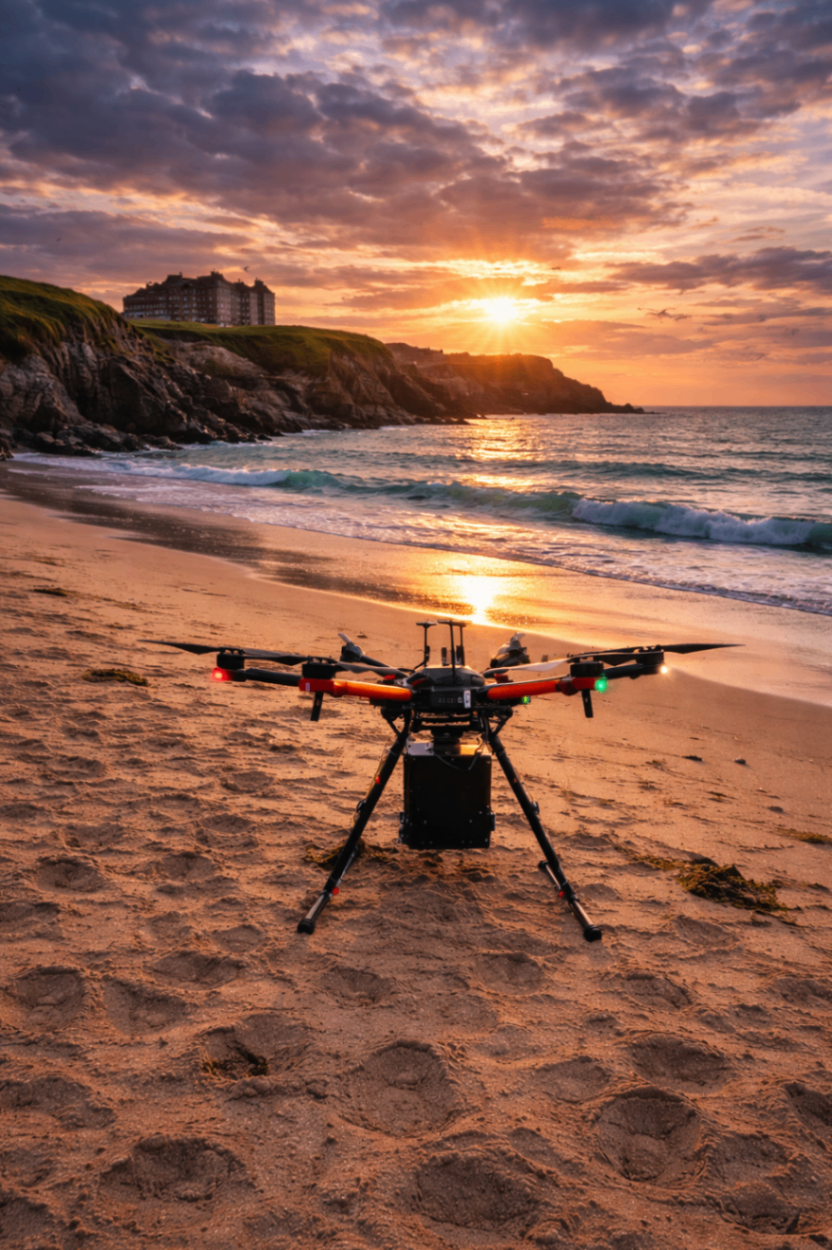
However, the ruggedness of Godrevy brings practical challenges. The cliff paths can be uneven, and some of the best vantage points are difficult to reach for those with limited mobility. This is where a professional service becomes essential. Attempting a drone ash scattering in this environment allows the family to remain in a safe, comfortable location while the ashes are carried out toward the lighthouse or over the crashing waves below.
Gwithian: The Expansive Horizon
Just a short distance from the crags of Godrevy lies Gwithian Towans. "Towans" is the Cornish word for dunes, and these vast, grassy hills provide an entirely different experience. Gwithian is defined by its space. The beach is one of the largest in the area, stretching out for miles at low tide. This openness creates a feeling of immense freedom and peace.
For a family gathering, Gwithian is often the more practical choice. The accessibility is better, with easier paths down to the sand and plenty of room for a group to stand together without feeling crowded. The dunes offer elevated vantage points where you can look out over the water toward the Godrevy Lighthouse in the distance. It provides the best of both worlds: a view of the iconic landmark but with a much softer, more serene immediate environment.
Research in the Journal of Palliative Medicine suggests that the physical act of a ritual, when performed in a meaningful location, is crucial for achieving closure (Casarett et al., 2001). The wide sands of Gwithian allow for a ceremony that feels unhurried. There is a gentleness here that contrasts with the rocky drama of Godrevy, making it ideal for those who want a memorial focused on tranquility and quiet reflection.
Moving From the Shelf to the Sea
It is common for families to feel a sense of guilt about the ashes on the shelf. You might feel like you are "stuck" or that you are failing your loved one by not having a plan yet. This delay is actually a sign of how much you care. You want the moment to be right. Transitioning from that shelf to the sea is a significant step in the grieving process. It moves the focus from the container in the cupboard to the beauty of the natural world.
Choosing between Godrevy and Gwithian is the first step in breaking that cycle of indecision. Think about the personality of your loved one. Were they someone who sought out the drama of the high cliffs and the lighthouse? Or were they more at home on a long, peaceful walk across the dunes? Once you align the location with their spirit, the decision becomes much easier. You can find more guidance on this journey by visiting are you ready to scatter your loved ones ashes.
The DIY That Went Wrong: Why Professionalism Matters
Many people initially consider a "DIY" approach to scattering ashes. They imagine a simple moment of pouring the ashes into the wind. Unfortunately, the Cornish coast is famous for its unpredictable gusts. Without professional equipment, this can lead to the "DIY that went wrong," where ashes are blown back onto the family or onto the shore rather than out to sea. This can be a distressing experience that interrupts the solemnity of the moment.
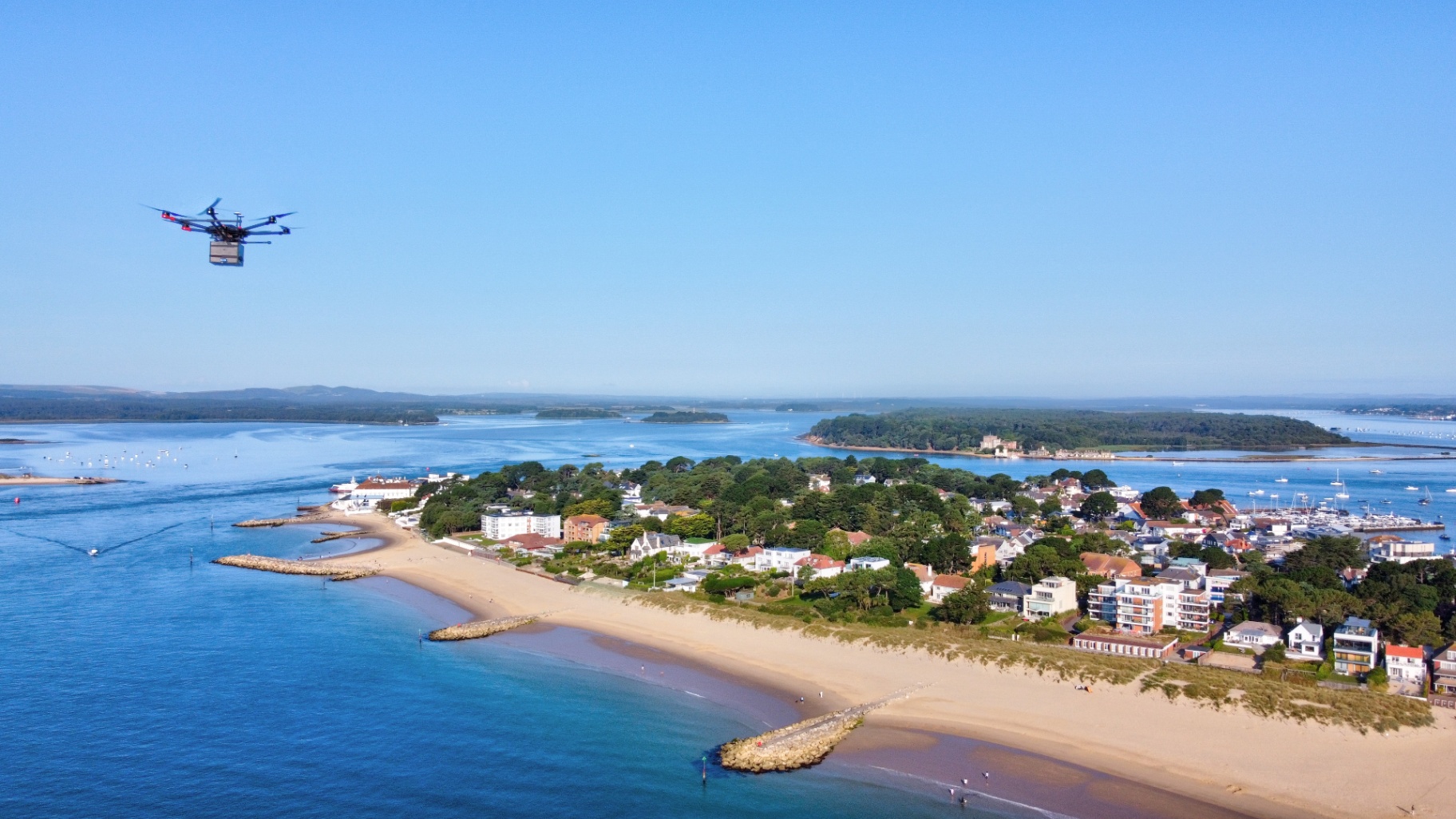
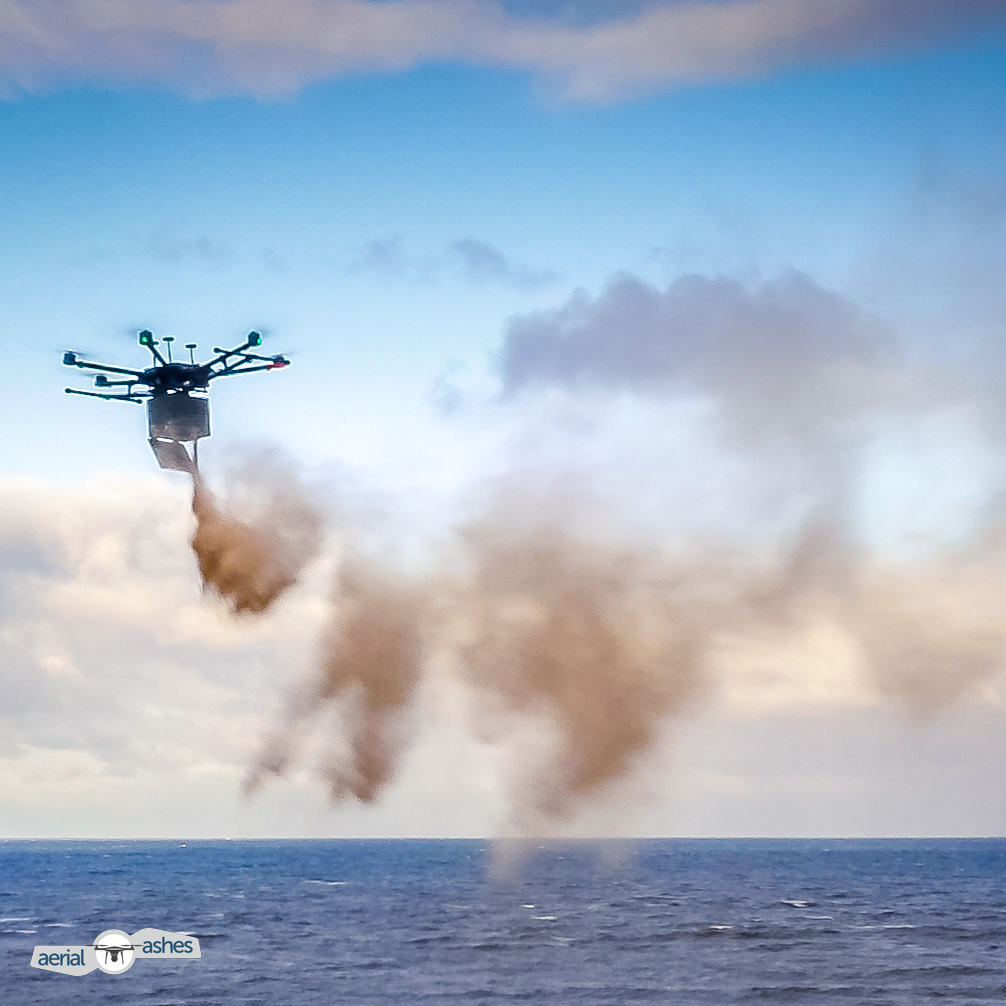
A drone ash scattering service eliminates these risks. By using specialized technology, the ashes can be released at a height and distance that ensures a graceful, dignified dispersal. The drone can fly out over the water, far beyond the reach of the shore, ensuring the ashes are taken by the sea as intended. This method also allows for beautiful aerial filming, providing a lasting record of the ceremony that can be shared with those who couldn't attend.
Comparing the Practicalities
When planning your ceremony, it is helpful to look at the two locations side by side:
- Accessibility: Gwithian is generally easier for larger groups and those with mobility issues. The dunes have clearer paths, and the beach is more expansive.
- Landmarks: Godrevy offers the lighthouse as a permanent marker. This is a powerful visual aid for future visits.
- Privacy: Both locations are popular with tourists. However, Gwithian’s sheer size makes it easier to find a private corner. Godrevy’s cliff tops can feel more exposed during peak season.
- Tides: Godrevy’s smaller coves can be cut off at high tide. Gwithian typically retains a large amount of usable beach regardless of the tide level.
Regardless of which beach you choose, we are here to help you navigate the logistics. You can book ashes scattering service through our website to ensure everything is handled with the utmost care.
The Beauty of Drone Technology in Memorials
Using a drone is not about the technology itself; it is about what the technology enables. It allows for a level of precision and dignity that was previously impossible in coastal settings. A drone can reach the perfect spot over the water at Godrevy or fly high above the Gwithian dunes to create a truly spectacular farewell.

The sight of the ashes dispersing into the sea air, framed by the blue of the Atlantic, is profoundly moving. It creates a "shared moment" for the family on the shore. As noted in a study published in Health & Place, coastal environments provide a unique "therapeutic landscape" that aids in long-term emotional recovery (White et al., 2010). The aerial perspective enhances this, giving a sense of release and peace that is hard to replicate on the ground.
Choosing Your Moment
Timing is just as important as location. The light at Godrevy during sunset is legendary, casting a golden glow over the lighthouse. Gwithian, with its vast horizon, is equally stunning at dawn or dusk. When you plan my own ceremony now, you can consider these environmental factors to ensure the atmosphere matches your vision.
We understand that this is a difficult time, and the weight of choice can feel heavy. Whether you prefer the iconic cliffs of Godrevy or the serene sands of Gwithian, our goal is to provide a service that honors your loved one in a way that is respectful, professional, and deeply meaningful.
Final Thoughts on Cornwall Ashes Scattering
Cornwall is a place of healing. Its coastline has a way of absorbing grief and returning a sense of calm. Whether you choose the lighthouse at Godrevy or the dunes at Gwithian, you are giving your loved one a beautiful resting place and giving yourself a peaceful space to return to.
If you are still unsure which location fits best, or if you want to know more about how drone ash scattering works, please explore our main website. We are dedicated to helping families find closure through dignified and beautiful ceremonies.
Moving the ashes from the shelf to the sea is a journey of love. It is about making that final, difficult decision and seeing it through with the help of those who understand the importance of the moment. We are here to support you every step of the way.
References:
- Casarett, D., Kutney, J. M., & Abramson, J. (2001). Life after death: A practical guide to the rituals of bereavement. Journal of Palliative Medicine.
- Kaplan, S. (1995). The restorative benefits of nature: Toward an integrative framework. Journal of Environmental Psychology.
- White, M., Smith, A., Humphreys, K., Pahl, S., Snelling, D., & Depledge, M. (2010). Blue space: The importance of water for preference, affect, and restorative ratings of natural and built scenes. Health & Place.
We're Online! How may I help you today?