 UK
UK
 Hawaii
 USA
USA
How to Scatter Ashes: A Beginner’s Guide to Mastering the Planning and Logistics
Choosing how to say your final goodbye is one of the most personal decisions you’ll ever make. If you’re reading this, you’re likely at a stage where you’re considering scattering ashes as a way to honour a loved one. First of all, take a deep breath. It’s entirely normal to feel a bit overwhelmed by the weight of this task. Whether it’s been weeks or years since your loss, there is no right or wrong time to take this step.
At Aerial Ashes, we see this process not as a clinical task, but as a beautiful act of release: a way to return a loved one to the elements and find a sense of eternal peace. But while the sentiment is poetic, the logistics can be a bit tricky. That’s where we come in. I’m Matt, and I’m here to guide you through the practicalities of planning a meaningful ceremony in the UK, ensuring the process is as stress-free as possible.
Understanding the "Material"
Before we dive into locations and permissions, it’s helpful to understand what you’re actually working with. Many people expect cremated remains to be like fine wood ash: soft and light. In reality, they are usually coarser, more like crushed stone or pale sand.
Because of this weight, the "cloud" effect you see in movies doesn't always happen exactly how you'd imagine. Some of the finer powder will drift on the breeze, while the denser grains will fall more quickly. Knowing this helps you manage your expectations and plan the physical act of scattering with more confidence.
Finding the Perfect Location in the UK
The UK is home to some truly stunning landscapes, from the rugged coastlines of Cornwall to the serene peaks of the Lake District. Choosing a location is often the most significant part of the planning process. Perhaps it’s a place they loved to walk, or maybe it represents the freedom they cherished.
Public Land and Parks
Generally, there are no specific laws in the UK that forbid scattering ashes on land, provided you have the permission of the landowner. However, public spaces like Royal Parks or National Trust sites often have specific guidelines. They may ask you to avoid certain delicate ecosystems or to stay away from busy footpaths to maintain the tranquility for other visitors.
Waterways and the Sea
Scattering at sea or in a river is a timeless choice. The Environment Agency doesn't require a permit for scattering ashes on most water, but they do ask that you don't drop anything non-biodegradable into the water (like plastic wreaths or urns). The rhythm of the waves provides a natural, graceful backdrop for a farewell.
Handling the Logistics and Permissions
This is often the part that causes the most anxiety. "Am I allowed to do this here?" "What if someone stops us?"
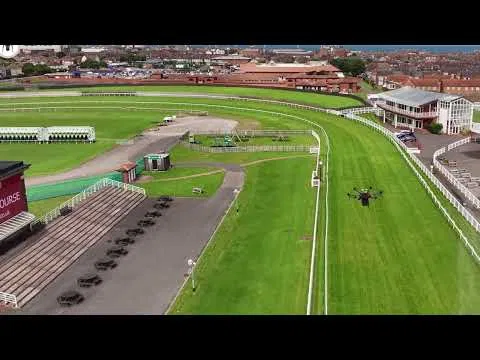
At Aerial Ashes, we believe you should be focused on the memorial, not the paperwork. When we help families plan a drone-led scattering, we handle the heavy lifting of permissions. Whether it’s a favourite racecourse or a specific coastal spot, we coordinate with local authorities and landowners to ensure everything is above board. This allows you to step into the moment with peace of mind, knowing the "rules" are all taken care of.
If you are doing this independently, always reach out to the local council or the private landowner first. A simple phone call can save a lot of stress on the day.
Mastering the Wind: The Most Important Tip
If there is one piece of advice I give every family, it’s this: check the wind.
There’s a reason "downwind" is a phrase we use often. If you are scattering by hand, you must stand with the wind at your back. This ensures the ashes drift away from you and the gathered guests, rather than towards them. It sounds like a small detail, but it’s vital for maintaining the dignity of the moment.
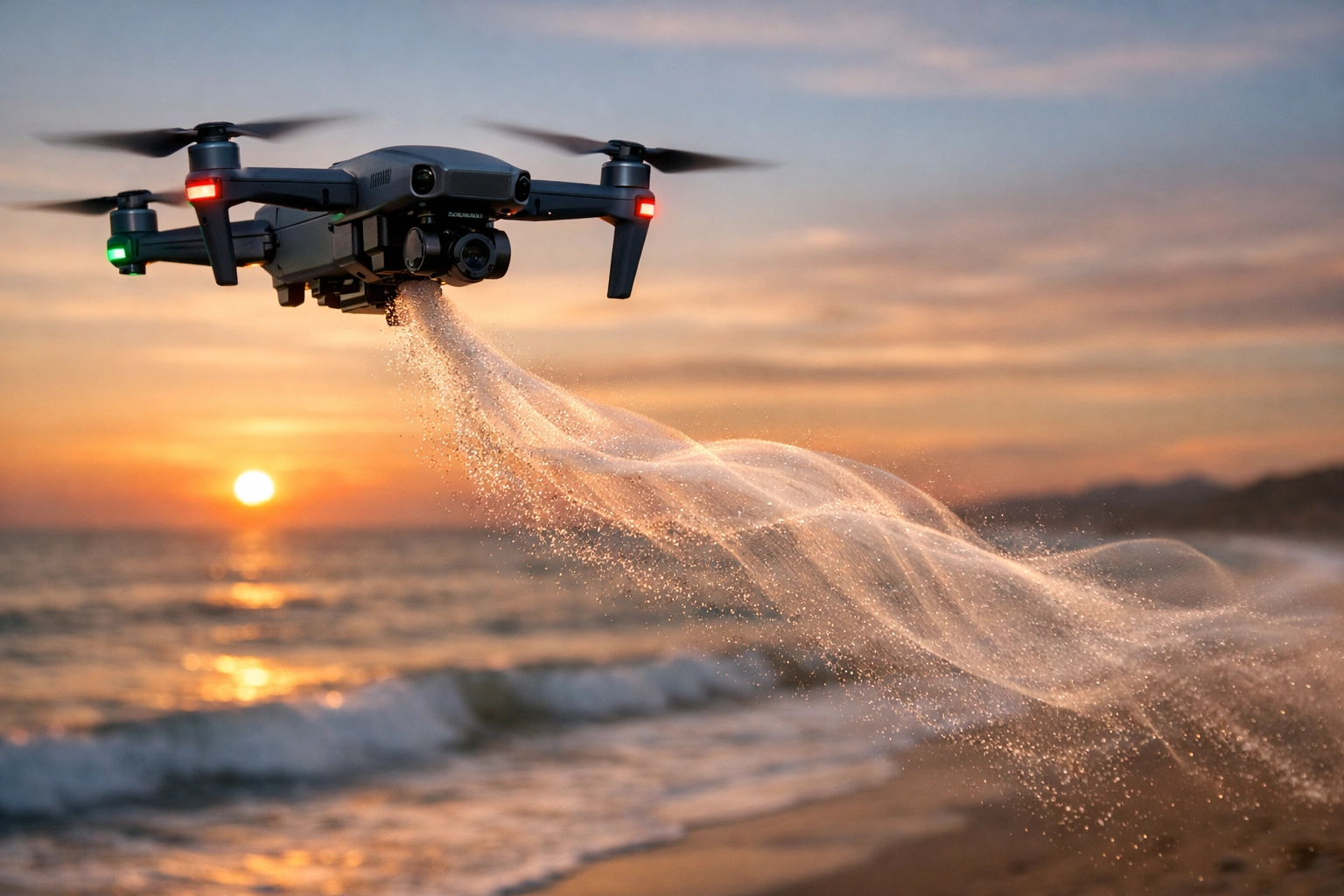
This is actually one of the reasons many families choose our drone service. By using a drone, we can fly to a specific height and position where the wind is consistent, releasing the ashes in a graceful, flowing stream that looks like a ribbon in the sky. It removes the guesswork and the risk of a "wardrobe malfunction" with the wind.
Traditional Scattering Methods
If you prefer a more "hands-on" approach, there are several traditional ways to scatter:
- Casting: Holding the container at waist height and gently "casting" the ashes into the breeze with a sweeping motion.
- Trenching: Digging a shallow groove in the soil (perhaps in the shape of a heart), placing the ashes inside, and gently covering them back up.
- Raking: Spreading the ashes over loose soil or a memorial garden and gently raking them into the earth.
- Water-Soluble Urns: Placing the ashes in a special urn that floats for a few minutes before gracefully sinking and dissolving.
Why Some Families Choose the Air
While traditional methods are beautiful, they can sometimes feel limited by physical accessibility. Maybe the perfect spot is a cliff edge that’s too dangerous to stand on, or perhaps you want the ashes to be spread over a vast area of sea rather than just the shoreline.
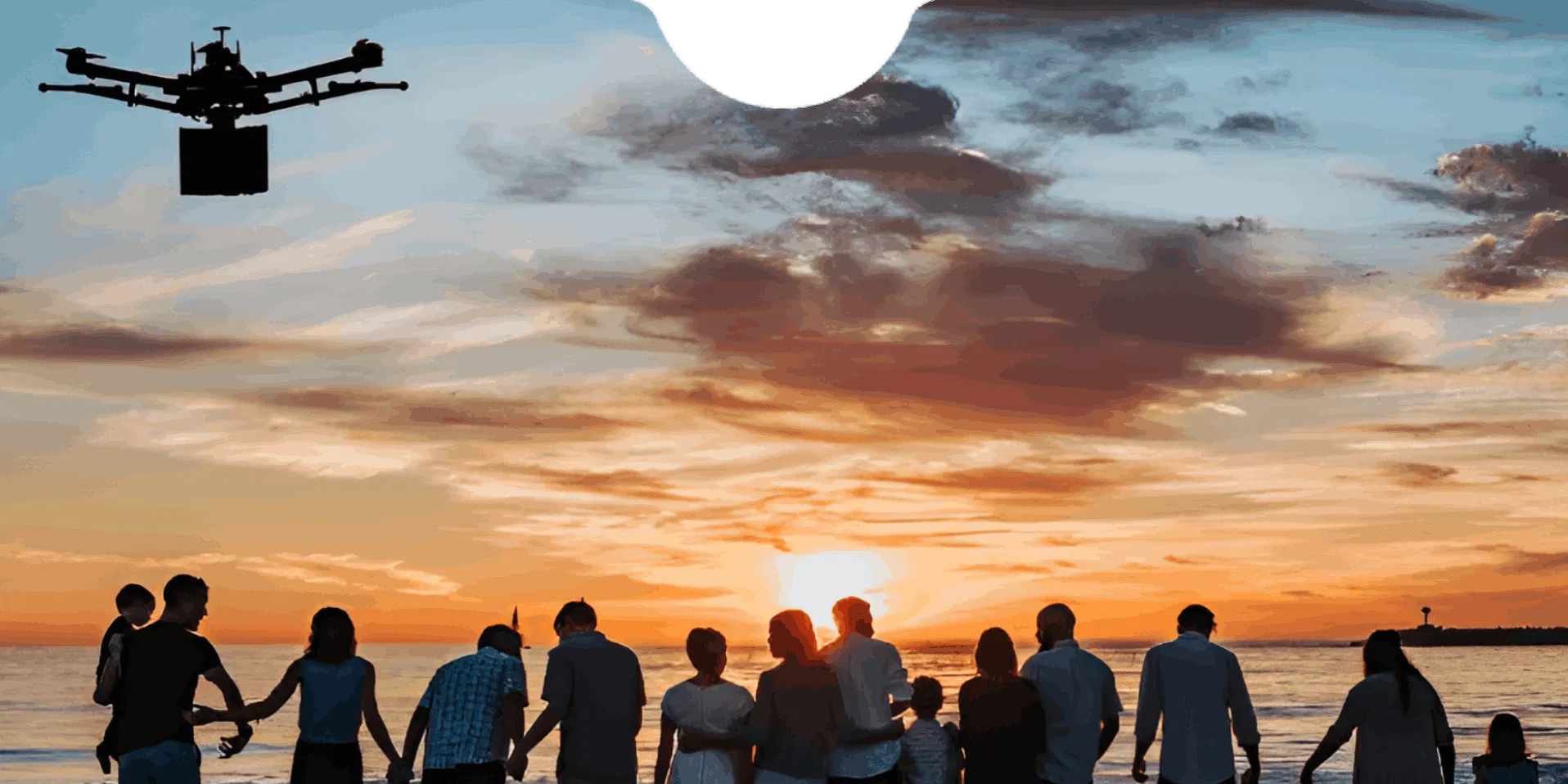
Aerial Ashes was born out of a desire to offer something different: a "loving act of release" that feels lighter and more expansive. A drone can reach places people can’t, providing a sense of freedom that is hard to replicate on the ground. It’s about more than just technology; it’s about the visual of a loved one taking flight one last time.
Planning the Ceremony: Small Touches, Big Meaning
The logistics of the "scatter" are only one part of the day. The ceremony itself is what provides the lasting comfort. You don't need a formal celebrant (unless you want one). You can keep it casual and personal.
Consider these elements to make the day feel special:
- Music: A portable speaker playing their favourite song can change the entire atmosphere.
- Words: You might want to share a few memories, read a poem, or simply say "thank you."
- Participation: We often see families take a "toast" approach, where everyone has a small glass or a handful of petals to release at the same time the ashes are scattered.
- Timing: Sunset and sunrise offer the most tranquil lighting and often the calmest weather conditions.
Dealing with the "What Ifs"
It’s okay to feel hesitant. You might wonder, "What if I'm not ready to let go?" or "What if the weather is bad?"
We always advise families to move at their own pace. If you aren't sure, wait. The ashes aren't going anywhere, and there is no deadline on grief. To help you figure out where you stand, you might want to ask yourself some introspective questions.
Regarding weather, we always keep a close eye on the forecast. If you’re working with us, we’ll be honest about whether the conditions are right for a safe and beautiful flight. If the wind is too high or the rain is too heavy, we simply reschedule. The sanctity of the moment is more important than the calendar.
Professional Standards and Trust
When dealing with something as precious as a loved one’s remains, trust is everything. Whether you are doing it yourself or hiring a professional, ensure you are working with people who respect the gravity of the occasion. We are proud members of the National Association of Funeral Directors, which means we adhere to strict professional standards.
A Final Thought on Letting Go
Scattering ashes is a way of acknowledging that while a person’s physical presence is gone, their spirit is now part of the wider world: the rhythm of the waves, the vastness of the sky, or the quiet peace of a forest.
It is a brave thing to do, but it is also a gift. It provides a focal point for your grief and a starting point for your healing. Whether you choose a simple casting by the sea or a graceful drone release, the most important thing is that it feels right for you and honours the life they lived.
If you’re feeling ready to start planning but aren't sure where to begin, we have a Memorial Assistant tool that can help you explore your options in a soft, non-pressured way.
Remember, you don't have to do this alone. We’re here to help you navigate the logistics, so you can focus on the love.