 UK
UK
 Hawaii
 USA
USA

Looking For a Serene Place to Scatter Ashes in Cornwall? Here Are 10 Things You Should Know
Looking For a Serene Place to Scatter Ashes in Cornwall? Here Are 10 Things You Should Know
Choosing a final resting place for a loved one is one of the most personal and profound decisions a family will ever make. For many, the rugged beauty and rhythmic tides of the Cornish coast offer a sense of eternal peace that a traditional cemetery simply cannot match. Cornwall is a land of myth, ancient stone, and turquoise waters, making it an ideal setting for a dignified farewell.
At Aerial Ashes Matt, we understand that the process of saying goodbye is about more than just the act itself. It is about finding a location that resonates with the spirit of the person you are honoring. Whether they were a lifelong surfer, a lover of coastal walks, or simply someone who found solace in the sound of the waves, Cornwall provides a backdrop that is both majestic and intimate.
1. Kynance Cove is a Masterpiece of Nature
If you are looking for a location that feels truly otherworldly, Kynance Cove on the Lizard Peninsula is often cited as one of the most beautiful beaches in the world. With its brilliant white sand, turquoise sea, and dark red and green serpentine rock stacks, it offers a visual serenity that is hard to find elsewhere.
The cove has a timeless quality that makes ashes scattering feel like a return to the elements. However, Kynance is also a site of significant environmental importance. When considering this location, it is essential to think about how the ceremony can be conducted without disturbing the delicate ecosystem. This is where modern technology can assist in maintaining the sanctity of the site while ensuring the ceremony remains private and undisturbed by other visitors.
2. Legal Permissions and Land Ownership
A common misconception is that you can scatter ashes anywhere in the UK without restriction. While the law is generally permissive, you do need to be aware of ownership. In Cornwall, large stretches of the coastline are managed by the National Trust or are part of private estates.
For land-based scattering, you technically need the landowner's permission. For sea and river locations, the rules are slightly different. You do not typically need a permit for scattering ashes in the ocean, but the Environment Agency provides guidelines to ensure the process does not impact local water quality or wildlife. It is always a good idea to check if your chosen spot is part of an Area of Outstanding Natural Beauty (AONB) or a Site of Special Scientific Interest (SSSI), as these may have specific local bylaws.
3. The Practicality of Drone Ash Scattering
One of the greatest challenges of traditional scattering is physical access. Cornwall’s most serene spots are often at the bottom of steep cliffs or require a long hike across uneven terrain. This can make it difficult for elderly family members or those with mobility issues to attend the ceremony.
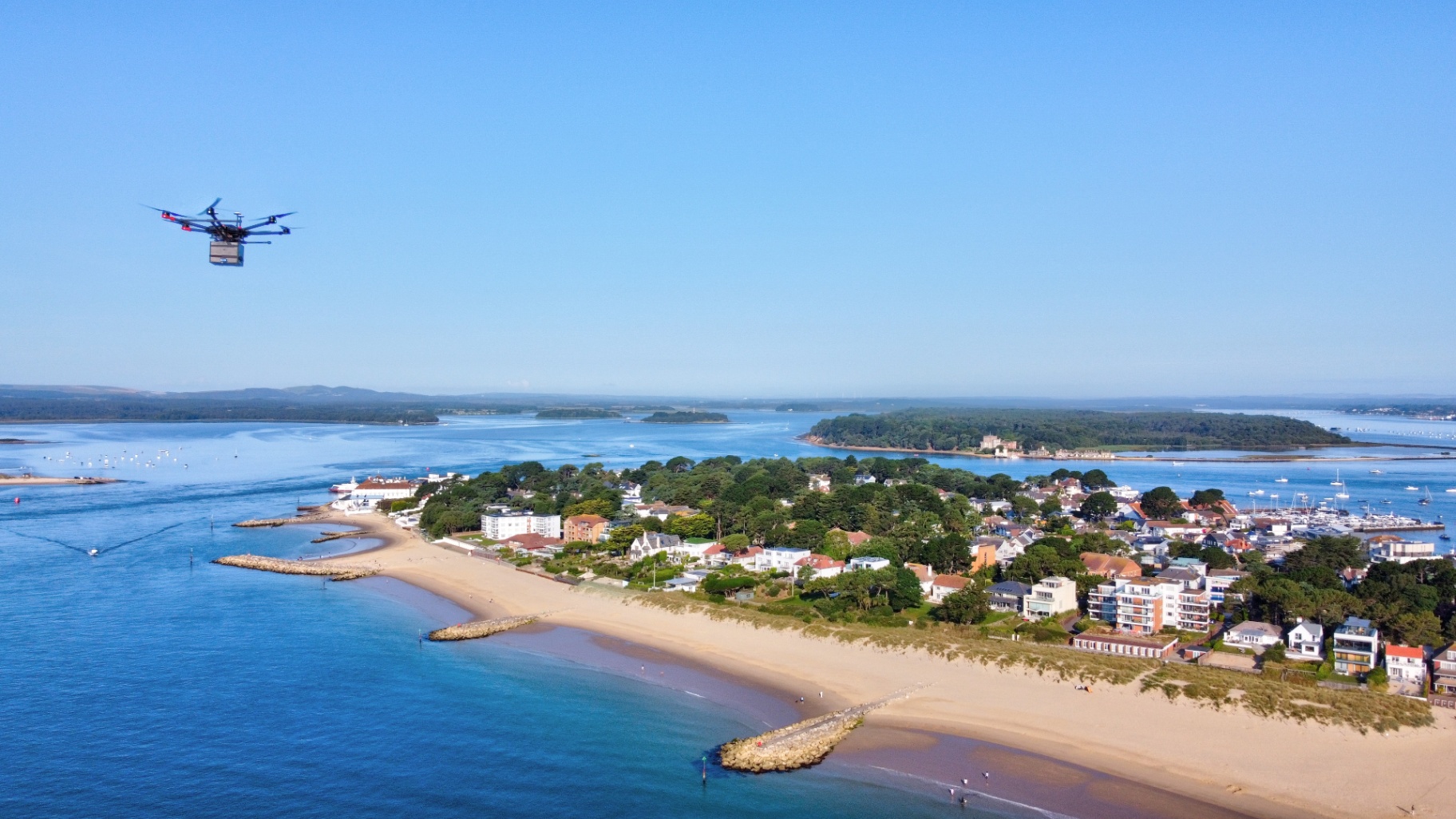
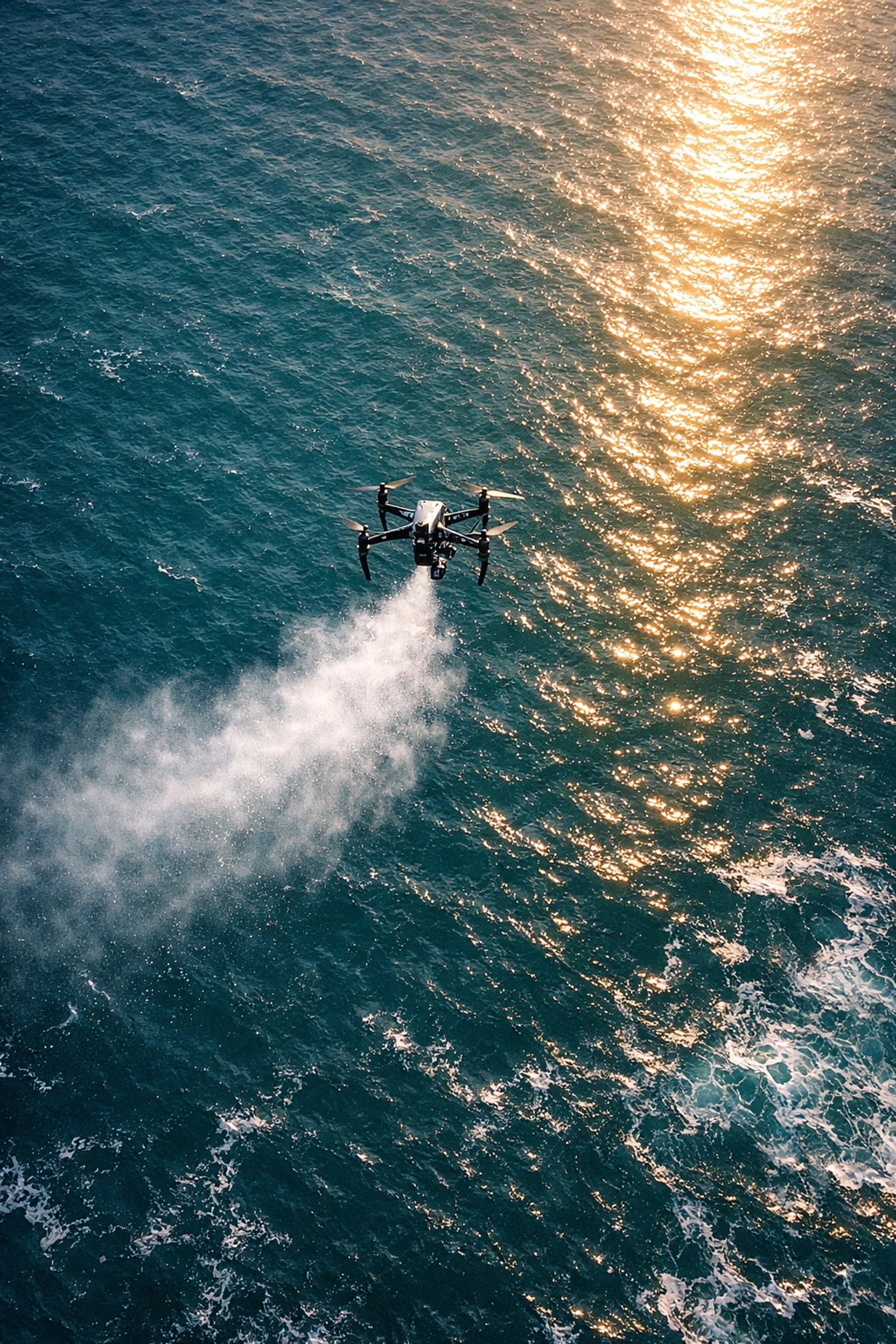
Drone ash scattering solves this problem by allowing the family to remain in a comfortable, accessible area while the drone carries the ashes out over a specific landmark or out to sea. This ensures that everyone can witness the moment together without the stress of a difficult climb. It also allows for a level of precision that manual scattering cannot achieve. A drone can reach the exact point over the water or a specific rock formation that held meaning for your loved one.
4. Environmental Considerations and "Cremains"
When we talk about ashes, we are technically referring to "cremains," which are primarily bone fragments processed into a fine powder. While they are natural, they contain high levels of calcium and phosphate. In concentrated amounts, this can affect the pH balance of the soil or water.
Research indicates that the method of dispersal is crucial for environmental health. According to a study in the Journal of Environmental Management (2017), scattering ashes over a wide area or into moving water allows the minerals to integrate naturally into the ecosystem without causing localized "burning" of vegetation. Using a drone ensures a wide, fine dispersal that is much more environmentally friendly than pouring ashes directly into a single spot on the ground.
5. Managing the Elements
The Cornish weather is famously unpredictable. A beautiful morning at Sennen Cove can quickly turn into a windy afternoon. When scattering ashes by hand, wind can be a significant and often distressing factor. It can cause the ashes to blow back toward the family or in an unintended direction.
A professional drone service is designed to handle these conditions. The release mechanism is engineered to ensure a clean, downward dispersal, even in coastal breezes. This allows the ceremony to proceed with the dignity it deserves, regardless of a light wind. If you are planning your own ceremony, you might want to look at our guide on how to prepare for the day.
6. The Psychological Benefit of Nature-Based Rituals
There is a growing body of scientific evidence suggesting that natural settings aid the grieving process. The Attention Restoration Theory, proposed by Stephen Kaplan in the Journal of Environmental Psychology (1995), suggests that natural environments allow the brain to recover from the cognitive fatigue often associated with high stress and grief.
A ceremony at a place like Kynance Cove or St Ives Bay provides what researchers call "soft fascination." The movement of the clouds and the sound of the waves provide a gentle focus that can help families process their loss. By choosing a serene coastal location, you are creating a lasting, positive memory that links your loved one to the enduring beauty of the natural world.
7. Timing and Privacy
Cornwall is a popular destination, and privacy can be hard to find during the peak summer months. If you are looking for a quiet moment at a popular beach like Porthcurno or Godrevy, timing is everything.
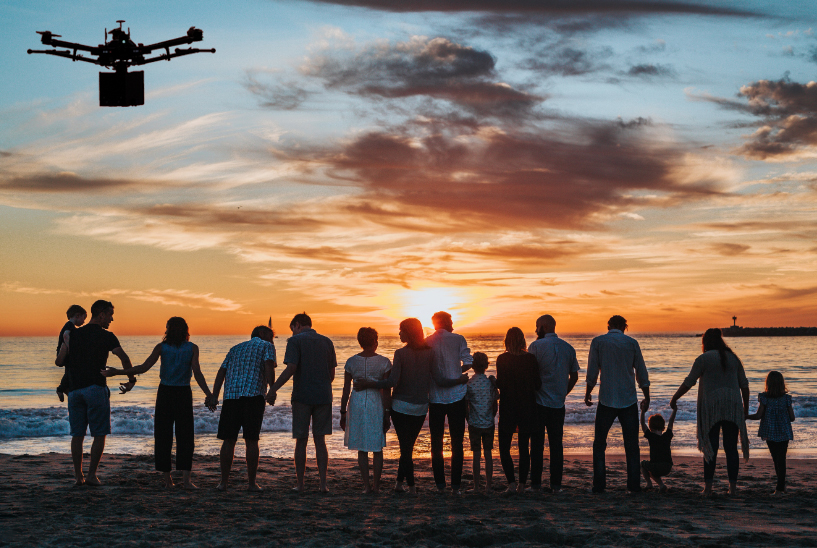
We usually recommend early morning or late evening ceremonies. Not only is the light more beautiful for photography and filming, but the beaches are also significantly quieter. The "golden hour" at sunset provides a profound atmosphere for a farewell. If you prefer a more secluded experience, we can help you find lesser-known coves that offer the same Cornish charm without the crowds. You can find more inspiration for your ceremony on our inspiration page.
8. Creating a Lasting Legacy
Many families worry that by scattering ashes, they will lose a physical place to visit and remember their loved one. However, the opposite is often true. By choosing a significant location in Cornwall, the entire coastline becomes a memorial.
Every time you visit the seaside or see the Atlantic ocean, you are reminded of that final, beautiful tribute. This "living memorial" can be much more comforting than a static headstone. For those who want a digital record of the day, aerial filming can capture the ceremony from a perspective that shows the vastness and beauty of the chosen location, providing a moving tribute that can be shared with those who couldn't attend.
9. The Importance of Professional Guidance
While it is possible to organize a scattering yourself, many families find that the logistical burden takes away from the emotional significance of the day. Working with a professional service ensures that all technical and legal details are handled.
From calculating flight paths to ensuring the drone is operated safely and respectfully, professional oversight provides peace of mind. We have spent years perfecting the art of the aerial memorial to ensure that the moment of release is seamless and beautiful. If you are interested in how this works, you can view our about us section to see our partnerships and standards.
10. Flexibility and Personalization
The beauty of choosing Cornwall is the sheer variety of landscapes. You are not limited to just the beach. You might choose a clifftop overlooking the Atlantic, a quiet estuary, or even a location near a favorite coastal town.
This flexibility allows you to tailor the ceremony to the individual. Was your loved one a fan of a particular football club? We can even incorporate that into the theme, as seen on our football memorial page. The goal is to make the experience as unique as the person you are celebrating.
Moving Forward with Peace of Mind
Scattering ashes is a final act of love. It is a way to set a spirit free in a place they cherished. Cornwall, with its dramatic cliffs and soothing tides, offers a sanctuary for both the departed and the living. By considering the practicalities of permissions, environment, and technology, you can ensure that the ceremony is as serene and dignified as the landscape itself.
If you are feeling overwhelmed by the choices, remember that you do not have to make them alone. Whether you are just starting to plan or are ready to book a service, we are here to guide you through every step of the journey. For more information on the types of services we provide, you can visit our main website or browse our blog for more location-specific advice.
References
- Casarett, D., Kutner, J. S., & Abramson, J. (2001). Life after death: A practical guide to the rituals of bereavement. Journal of Palliative Medicine.
- Kaplan, S. (1995). The restorative benefits of nature: Toward an integrative framework. Journal of Environmental Psychology.
- Romanoff, B. D., & Terenzio, M. (1998). Rituals and the grieving process. Bereavement Care.
- Environment Agency (2023). Guidance on scattering ashes in rivers and the sea. UK Government Publications.
We're Online! How may I help you today?