 UK
UK
 Hawaii
 USA
USA

Looking For a Serene Send Off? Here Are 10 Things You Should Know About Ashes Scattering at Watergate Bay
Looking For a Serene Send Off? Here Are 10 Things You Should Know About Ashes Scattering at Watergate Bay
Meta Description: Planning a memorial at Watergate Bay? Discover 10 essential tips for a serene ashes scattering ceremony at this iconic Cornwall beach, from legalities to aerial drone services.
The process of saying goodbye to a loved one is a deeply personal journey that often finds its most meaningful expression in nature. For many families, the ocean represents a sense of eternal return and vast, peaceful continuity. Choosing a location for ashes scattering is one of the final, most significant decisions in the memorial process, and Watergate Bay in Cornwall stands as one of the most breathtaking settings in the UK.
Research indicates that the environment in which we grieve can significantly impact our long-term emotional recovery. A study published in the Journal of Environmental Psychology (Kaplan, 1995) suggests that "restorative environments," particularly those involving water and wide-open spaces, help reduce the cognitive fatigue associated with intense grief. Watergate Bay, with its two miles of golden sand and dramatic Atlantic rollers, provides exactly this kind of restorative backdrop.
However, planning a memorial at such a popular and environmentally sensitive location requires careful consideration. From understanding the complex tidal patterns to navigating local permissions, there are several practicalities to manage. This guide outlines the essential factors you need to consider to ensure a dignified and serene farewell.
1. Understanding Legal Permissions and Guidelines
One of the most common questions families ask is whether it is legal to perform a ceremony on a public beach. In the UK, there are no specific laws that prohibit the scattering ashes at sea or along the shoreline, provided you have the permission of the landowner. Watergate Bay is a privately owned beach, largely managed by the local estate and the Watergate Bay Hotel.
While the owners are generally supportive of respectful memorial activities, it is vital to be mindful of the Environment Agency's code of practice. They do not require a formal permit for scattering remains over water, but they do emphasize the protection of local wildlife and water quality. You can find more detailed information in our Legal Guide to Ashes Scattering.
2. The Impact of the Massive Tidal Range
Watergate Bay is famous for its massive tidal range, which is one of the most critical factors for any beach-based ceremony. At high tide, the sea reaches the very base of the cliffs, leaving almost no sand accessible. Conversely, at low tide, the beach expands into a vast plain hundreds of meters wide.
Timing your ceremony with a retreating tide is often the most respectful approach. This ensures that the remains are gently carried out to sea by the next incoming tide, rather than remaining on the upper shore where foot traffic is heavy. If you are planning a land-based scattering, checking local tide tables is an absolute necessity to avoid being cut off by the sea or having your chosen spot submerged prematurely.
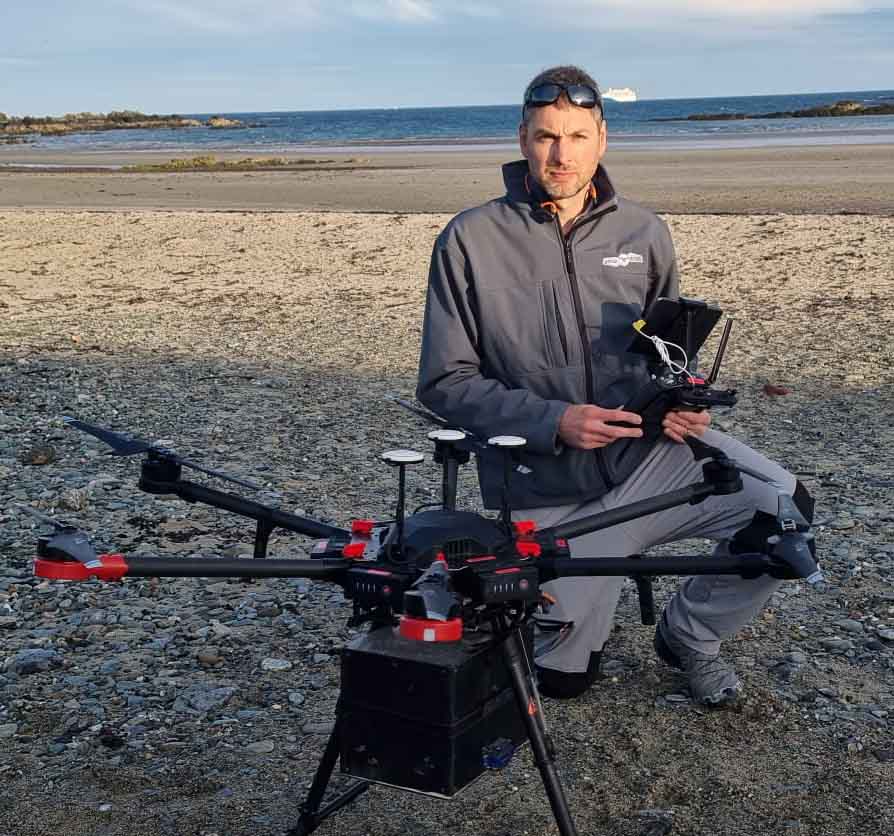
Alt text: A professional drone operator preparing for an ashes scattering ceremony at Watergate Bay.
3. Environmental Responsibility and Biodegradability
Preserving the natural beauty of the Cornish coast is a priority for everyone who visits. When planning a memorial, it is essential that only biodegradable materials are used. The Environment Agency is very clear that items such as plastic wreaths, metal urns, or non-biodegradable floral arrangements must never be left on the beach or cast into the surf.
Even small items like floral foam or plastic ribbons can cause significant harm to the local marine ecosystem. If you wish to include flowers in your ceremony, we recommend using loose petals or fully biodegradable wreaths. This ensures that your final tribute honors your loved one without leaving a lasting negative impact on the environment.
4. Navigating Unpredictable Weather and Wind
The North Cornwall coast is known for its bracing winds and quickly changing weather patterns. While a strong sea breeze can feel uplifting and symbolic, it presents significant practical challenges for a DIY scattering. High winds can cause ashes to blow back toward the mourners or move in unpredictable directions, which can be distressing during a sensitive moment.
Professional aerial scattering services, like those offered by Aerial Ashes Matt, use specialized technology to ensure the ashes are released at a safe height and distance. This allows the remains to be carried out over the water in a controlled manner, regardless of ground-level wind gusts. For more tips on avoiding common pitfalls, see our guide on 7 mistakes people make when scattering ashes.
5. Selecting the Right Location within the Bay
Watergate Bay offers different atmospheres depending on where you stand. The southern end, near the cliffs, provides a sense of enclosure and intimacy, which some families prefer for a private service. The middle section of the beach offers a vast, limitless horizon that feels expansive and grand.
When choosing a spot, consider the mobility of your guests. While the main ramp provides relatively good access, the sand can be deep and difficult to walk on for some. If you have family members who might struggle with the terrain, an aerial release allows them to remain on the firmer ground or even the clifftop while still feeling fully part of the ceremony.
6. DIY vs. Professional Aerial Scattering
A DIY ceremony is often chosen by small groups who want a physical, hands-on experience. However, it often limits the scattering to the shoreline or the very edge of the surf. This can lead to the remains being disturbed by waves or other beach users shortly after the ceremony.
In contrast, a professional drone release carries the ashes further out into the Atlantic. This creates a visible, cloud-like trail that can be seen by everyone standing on the shore. It provides a shared visual memory that is both dignified and peaceful. You can learn more about how this works on our Inspiration page.
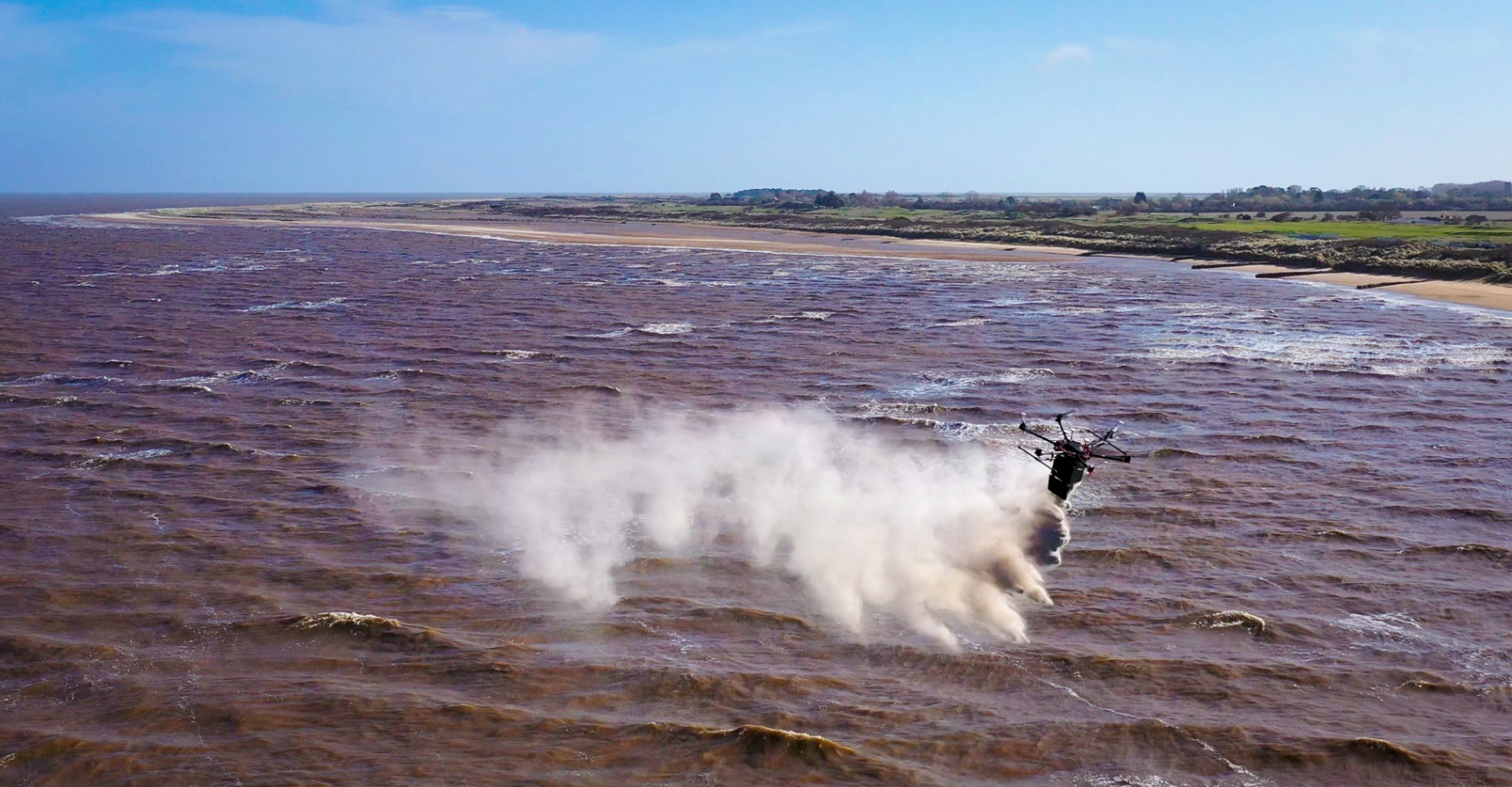
Alt text: A specialized drone performing an ashes scattering ceremony over the sea at Watergate Bay.
7. Accessibility Considerations for Mourners
Watergate Bay is a popular destination because of its accessibility compared to other Cornish coves, but it still presents challenges. The walk from the car parks to the water's edge can be strenuous, especially for elderly family members or those with limited mobility.
Research published in the Journal of Palliative Medicine (Casarett et al., 2001) emphasizes that the "participation of all family members" is a key factor in achieving closure. By using a drone for the scattering, you remove the physical barriers. Mourners can gather at a comfortable vantage point, such as the clifftop or the top of the ramp, and watch as the ashes are taken out to sea.
8. Respecting Other Beach Users
As one of the UK’s premier surfing and dog-walking beaches, Watergate Bay can be busy, especially during the summer months. It is important to find a secluded spot to avoid disrupting others and to ensure your ceremony remains private.
Scattering from the shoreline can be difficult when there are swimmers or surfers nearby. An aerial release solves this problem by taking the ashes well beyond the "break" where the surfers congregate. This ensures the remains are dispersed into the open ocean, far from the immediate shoreline and other beach-goers.
9. Finding the Best Time for Privacy
To ensure the most peaceful experience, timing is everything. Early morning or late evening ceremonies often provide the most privacy and the most stunning light. The sunsets at Watergate Bay are legendary, and a twilight memorial can be incredibly moving.
Planning your event during the "shoulder seasons" (spring and autumn) can also offer a quieter environment while still providing pleasant weather. If you are looking for more advice on picking the right beach in Cornwall, our Padstow area guide offers excellent comparisons of nearby locations.
10. The Benefits of Professional Expertise
Managing the logistics of a memorial while dealing with grief is a heavy burden. Professional services handle all the technical requirements, including checking flight paths, safety regulations, and weather monitoring. This allows the family to focus entirely on the emotional significance of the day.
Aerial Ashes Matt has been recognized nationally for our dignified approach, including features on BBC Breakfast. This expertise ensures that every ceremony is conducted with the highest level of respect and professionalism.
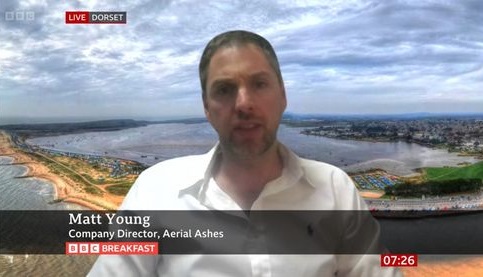
Alt text: Aerial Ashes Matt featured on BBC Breakfast discussing dignified drone memorial services.
Creating a Lasting Legacy
Watergate Bay is more than just a beautiful beach; it is a place where the land meets the infinite power of the Atlantic. Whether you choose a simple walk along the shore or a sophisticated aerial tribute, the goal is the same: to find a sense of peace and a fitting final resting place for someone special.
If you are considering a memorial in Cornwall, we invite you to explore our Beach Scattering Guide to see how other families have found closure in these stunning coastal locations.
The most important thing is that the ceremony reflects the life and spirit of the person you are honoring. By taking the time to understand the unique characteristics of Watergate Bay, you can ensure a send-off that is as serene and beautiful as the location itself.
References
- Kaplan, S. (1995). The restorative benefits of nature: Toward an integrative framework. Journal of Environmental Psychology.
- Casarett, D., Knebel, A., & Morales, L. S. (2001). Family-centered care at the end of life. Journal of Palliative Medicine.
- Marris, P. (1969). Loss and Change. Reports of the Institute of Community Studies.
Connect with us:
We're Online! How may I help you today?