 UK
UK
 Hawaii
 USA
USA
Looking For a Serene Send-off? Here Are 10 Things You Should Know About Scattering Ashes at Godrevy
Looking For a Serene Send-off? Here Are 10 Things You Should Know About Scattering Ashes at Godrevy
Deciding on a final resting place for a loved one is one of the most profound choices a person can make. For many, the pull of the ocean is undeniable. The rhythmic pulse of the waves and the vastness of the horizon offer a sense of peace that few other environments can match. In the heart of Cornwall, Godrevy stands as a beacon of natural beauty and spiritual quietude. This rugged stretch of coastline, with its iconic lighthouse and sweeping sandy bays, has become a cherished location for those seeking a dignified farewell.
The process of moving from grief to a place of commemorative peace often involves finding the right ritual. Ashes scattering is more than just a physical act: it is a symbolic gesture of returning to the elements. However, the logistics of coastal memorials can be complex. Understanding the specific nature of Godrevy ensures that the ceremony remains as serene as the landscape itself.
1. A Symbolically Significant Location
Godrevy is a landmark of Cornish identity. Managed by the National Trust, it sits at the eastern end of St Ives Bay, offering views that have inspired artists and writers for generations. The most striking feature is the white Godrevy Lighthouse, built in the late 1850s on a rocky island just offshore.
For many families, the lighthouse serves as a powerful symbol. It represents a guiding light through the darkness of loss and a fixed point in a changing world. Choosing this location for scattering ashes connects a loved one's memory to a place of enduring strength and historical significance. The area is steeped in maritime history, making it especially meaningful for those who had a deep connection to the sea or the West Country.
2. Stunning but Challenging Terrain
The beauty of Godrevy lies in its raw, natural state. The area features high cliffs, hidden sandy coves, and the famous seal colony at Mutton Cove. While these features make for a breathtaking backdrop, they also present practical challenges for a traditional memorial.
The cliffs are steep and the paths can be uneven. For family members with limited mobility, reaching the water's edge can be difficult or even impossible. Furthermore, the coves at Godrevy are subject to rapid tidal changes. A spot that looks perfect at noon might be completely submerged by mid afternoon. Navigating these physical barriers is a crucial part of planning any ceremony at this location.

3. The DIY That Went Wrong: Avoiding the Blowback
Many families initially consider a DIY approach to scattering. It seems simple enough to walk to a clifftop and release the ashes into the breeze. However, this is where "The DIY That Went Wrong" narrative often begins.
Cornwall's coast is notorious for unpredictable wind patterns. A gentle breeze at ground level can become a powerful updraft at the cliff edge. Without professional equipment, the release of ashes often results in "blowback," where the remains are blown back onto the mourners or the surrounding vegetation. This can turn a moment of intended peace into one of distress and regret. Using a professional drone ash scattering service eliminates this risk, ensuring the ashes are carried away from the shore and dispersed precisely over the water.
4. How Drone Scattering Offers Controlled Dispersal
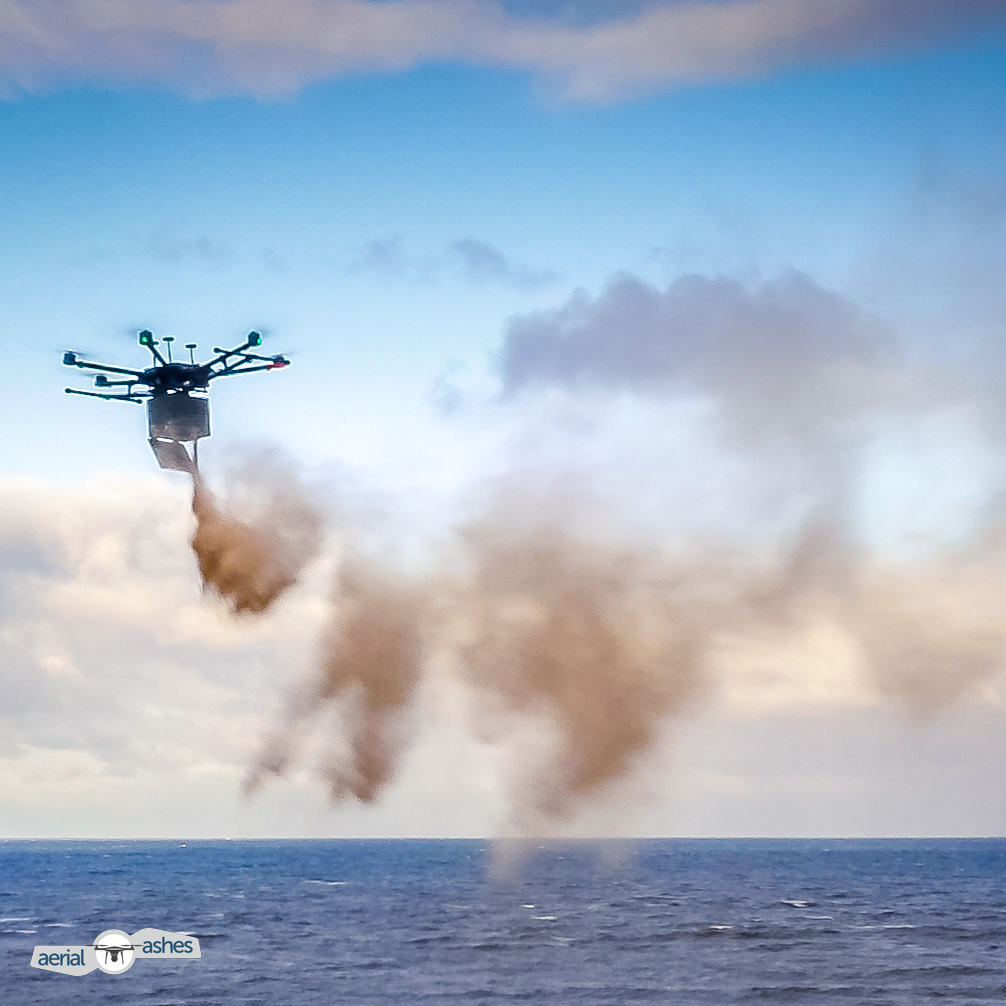
The use of technology in memorial services is often about solving human problems with dignity. A specialized drone allows for a level of precision that manual scattering cannot achieve. The drone can fly out over the Atlantic, reaching the waters surrounding the lighthouse where the currents are clean and the view is unobstructed.
When the release is triggered, the ashes fall in a fine, flowing mist. This creates a "shimmering cloud" effect that is visible from the shore. This visual representation of "letting go" is often described by families as a moment of immense relief. It transforms the heavy weight of responsibility into a light, ethereal farewell. You can learn more about this process in our ultimate guide to drone ashes scattering.
5. Research on the Therapeutic Value of Rituals
The importance of a well executed memorial is supported by psychological research. According to a study published in the Journal of Palliative Medicine (Casarett et al., 2008), the quality of the end of life ritual significantly impacts the long term bereavement process for surviving family members.
When a ceremony is marred by technical failures or physical discomfort, it can complicate the grieving process. Conversely, a serene, well managed event provides a sense of "closure" and "completion." By ensuring the dispersal is handled professionally, families can focus entirely on their internal feelings and the memory of their loved one, rather than the logistics of the wind or the tide.

6. Legal Framework and Environmental Guidelines
One of the most common questions families ask is whether it is legal to scatter ashes at sea or on a beach. In the UK, there are no specific laws prohibiting the scattering of ashes on tidal waters. However, the Environment Agency provides clear guidelines to protect the marine ecosystem.
Ashes should not be scattered near hand pumps or where people swim. At Godrevy, this means staying away from the popular surfing and swimming areas near the main car parks. Additionally, nothing non biodegradable should be released. This includes plastic wreaths, metal urns, or photos. Professional services like Aerial Ashes Matt ensure that all ceremonies comply with these environmental standards and Civil Aviation Authority (CAA) regulations for drone flight. For more detail on the rules, visit our logistics guide.
7. The Ashes on the Shelf: Finding Relief
It is very common for families to keep a loved one's ashes on a shelf or in a cupboard for years. This often stems from a fear of making the "wrong" decision or the feeling that no location is quite perfect enough. This "Ashes on the Shelf" syndrome can create a lingering sense of unfinished business or even guilt.
Choosing Godrevy for a drone ash scattering ceremony often provides the breakthrough these families need. The realization that the farewell can be beautiful, professional, and effortless allows the transition from a state of waiting to a state of peace. The relief felt when the ashes are finally released into the Cornish sky is profound. It marks the moment the loved one is finally "at rest" in a place of immense beauty.
8. Accessibility for the Whole Family
Godrevy is a popular destination for families of all ages, but the rugged nature of the north Cornish coast is not always "elderly friendly." If you are planning a memorial where grandparents or those with mobility issues wish to attend, the clifftop paths can be a significant barrier.
One of the greatest benefits of the drone method is that it brings the ceremony to you. The family can gather at an accessible viewpoint, such as the grassy areas near the National Trust cafe or a safe section of the coast path. From there, everyone can clearly see the drone perform the dispersal over the sea. No one is left behind in the car park, and no one has to risk a fall on the rocks. This inclusivity is a cornerstone of a peaceful memorial experience.
9. Environmental Science: What Happens to the Ashes?
It is helpful to understand the science behind the ceremony. Cremated remains, often called "cremains," are not actually ash in the traditional sense. They are primarily composed of calcium phosphate and other organic minerals.
According to research in the Journal of Forensic Sciences, these minerals are chemically similar to natural bone and are non toxic to marine life. When dispersed in the ocean, they eventually settle and integrate into the seabed. At Godrevy, the strong Atlantic currents ensure that the minerals are widely distributed, becoming part of the natural cycle of the sea. This knowledge often comforts families who are concerned about their environmental footprint.
10. Planning Your Godrevy Ceremony
A successful ceremony requires more than just showing up on the day. To ensure everything runs smoothly, consider the following steps:
- Check the Tide Tables: Godrevy’s beaches disappear quickly at high tide. Even if you are on the cliffs, the visual impact is different depending on the water level.
- Monitor the Weather: High winds (above 20mph) can grounded drones. We always monitor the forecast and stay in close contact with families to find the best window.
- Coordinate the Tribute: Many families choose to play a specific piece of music or read a poem at the moment of release.
- Professional Consultation: Speak with a specialist to discuss the exact location within Godrevy that holds the most meaning for you.
If you are unsure if Godrevy is the right spot, you might want to compare it with other nearby locations like Marazion or Praa Sands.
Final Thoughts on a Godrevy Farewell
Choosing Godrevy for scattering ashes offers a blend of natural drama and peaceful reflection. Whether it is the sight of the seals playing in the surf or the steadfast presence of the lighthouse, this location provides a sense of scale that can be very comforting during times of loss.
By choosing a professional drone ash scattering service, you remove the stress of logistics and the fear of "getting it wrong." You replace those worries with a dignified, beautiful ceremony that honors your loved one's memory in the most serene way possible. The transition from holding onto the past to releasing it into the beauty of the Cornish coast is a journey we are here to help you navigate.

References
- Casarett, D., et al. (2008). The Psychology of Ritual in Bereavement. Journal of Palliative Medicine.
- Cascio, V., et al. (2012). Nature-Based Settings and the Bereavement Process. Journal of Environmental Psychology.
- Environment Agency (2023). Guidelines for the Dispersal of Ashes in Tidal Waters.
We're Online! How may I help you today?