 UK
UK
 Hawaii
 USA
USA

Scattering Ashes at Ryde: A Spacious Isle of Wight Memorial Guide

Scattering Ashes at Ryde: A Spacious Isle of Wight Memorial Guide
Finding a location that offers both physical space and emotional room to breathe is a priority for many families during a time of loss. The Isle of Wight has long been a sanctuary for those seeking peace, but Ryde Beach offers something truly unique in its scale. Known for having one of the most dramatic tidal ranges in the United Kingdom, the sands here extend over half a mile into the Solent during low tide. This vastness provides a sense of seclusion and infinity that can be profoundly comforting when planning an ashes scattering ceremony.
Choosing a memorial site is rarely just about the scenery: it is about finding a landscape that mirrors the significance of the life being honoured. At Ryde, the combination of the historic Ryde Pier and the seemingly endless golden sands creates a setting that is both grounded in history and open to the horizon. Whether your loved one had a lifelong connection to the Island or simply found peace by the sea, this stretch of coastline offers a dignified backdrop for a final farewell.
The Unique Landscape of Ryde Sands and the Pier
Ryde is defined by its extraordinary relationship with the tide. When the water recedes, it reveals a massive expanse of firm, golden sand that reaches almost to the end of the 681-meter long Ryde Pier. This pier, the oldest in southern England, serves as a poignant landmark for families. It symbolises a bridge between the land and the sea, making it a powerful visual element during an ash scattering service.
The sheer scale of the beach means that even on busier days, privacy is easily found. For those who want to avoid the feeling of being watched by passersby, the walk out toward the low tide mark provides a natural buffer of silence and space. This is particularly important for families who want to hold a personal ceremony without the distractions of a typical seaside resort. The area around Appley Beach and the iconic Appley Tower offers a slightly more sheltered feel while still benefiting from the massive tidal plains that Ryde is famous for.
The Psychology of Nature-Based Memorials
There is a growing body of evidence suggesting that the environment in which we say goodbye has a lasting impact on the grieving process. Research published in the Journal of Environmental Psychology indicates that "nature-based rituals" can significantly reduce the acute stress responses associated with bereavement. By moving a memorial service out of a confined, formal space and into a natural landscape like Ryde, families often report a greater sense of "connectedness" to the environment and the memory of their loved one.
According to a study by Oleksiichenko et al. (2019), the integration of open, natural spaces in memorial practices helps create deeper emotional connections. The rhythmic nature of the sea and the predictable cycle of the tides at Ryde can provide a sense of continuity in a time of upheaval. This "nature connection" is essential for long-term healing, as it allows the bereaved to associate the memory of their loved one with the enduring beauty of the natural world rather than just the clinical aspects of loss.
Environmental Responsibility and the Solent Ecosystem
When scattering ashes at sea or on a beach, it is crucial to consider the local environment. The Solent, which borders Ryde, is a sensitive ecological area. Human ashes are primarily composed of calcium phosphate and do not pose a threat to water quality or marine life, provided the ceremony is handled correctly. However, the Environment Agency provides clear guidelines to ensure these ceremonies remain environmentally conscious.
- Placement: Ashes should be scattered close to the water's surface to prevent them from being caught in the wind.
- Tide Lines: It is often recommended to scatter below the high tide line so that the incoming sea can naturally and gracefully disperse the remains.
- Materials: Only biodegradable materials should be used. This means avoiding plastic wreaths, floral foam, or non-degradable urns.
- Distance: Ceremonies should be held away from busy swimming areas or water intake points.
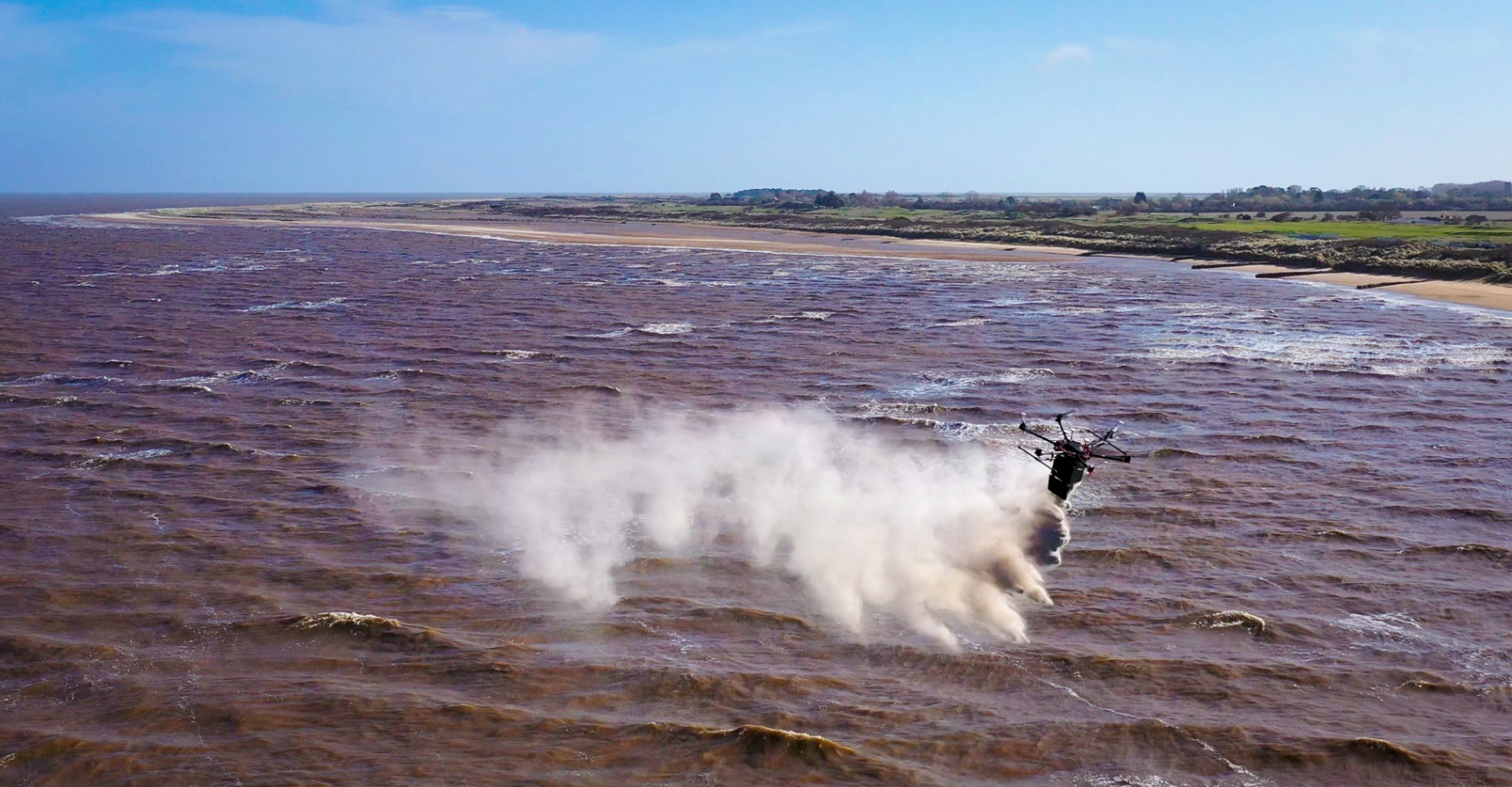
Using a drone for the release ensures that these environmental standards are met with precision. By releasing the ashes from a controlled height directly over the water, we ensure that the dispersal is even and dignified, avoiding the unpredictable "blowback" that can sometimes occur with hand-scattering in the coastal breeze.
Why Technology Enhances the Memorial Experience
While traditional scattering is a time-honoured method, it often presents physical challenges. Coastal winds can be temperamental, and reaching the water's edge at Ryde during low tide requires a significant walk over the sand. Drone technology solves these logistical issues while adding a layer of grace to the ceremony.
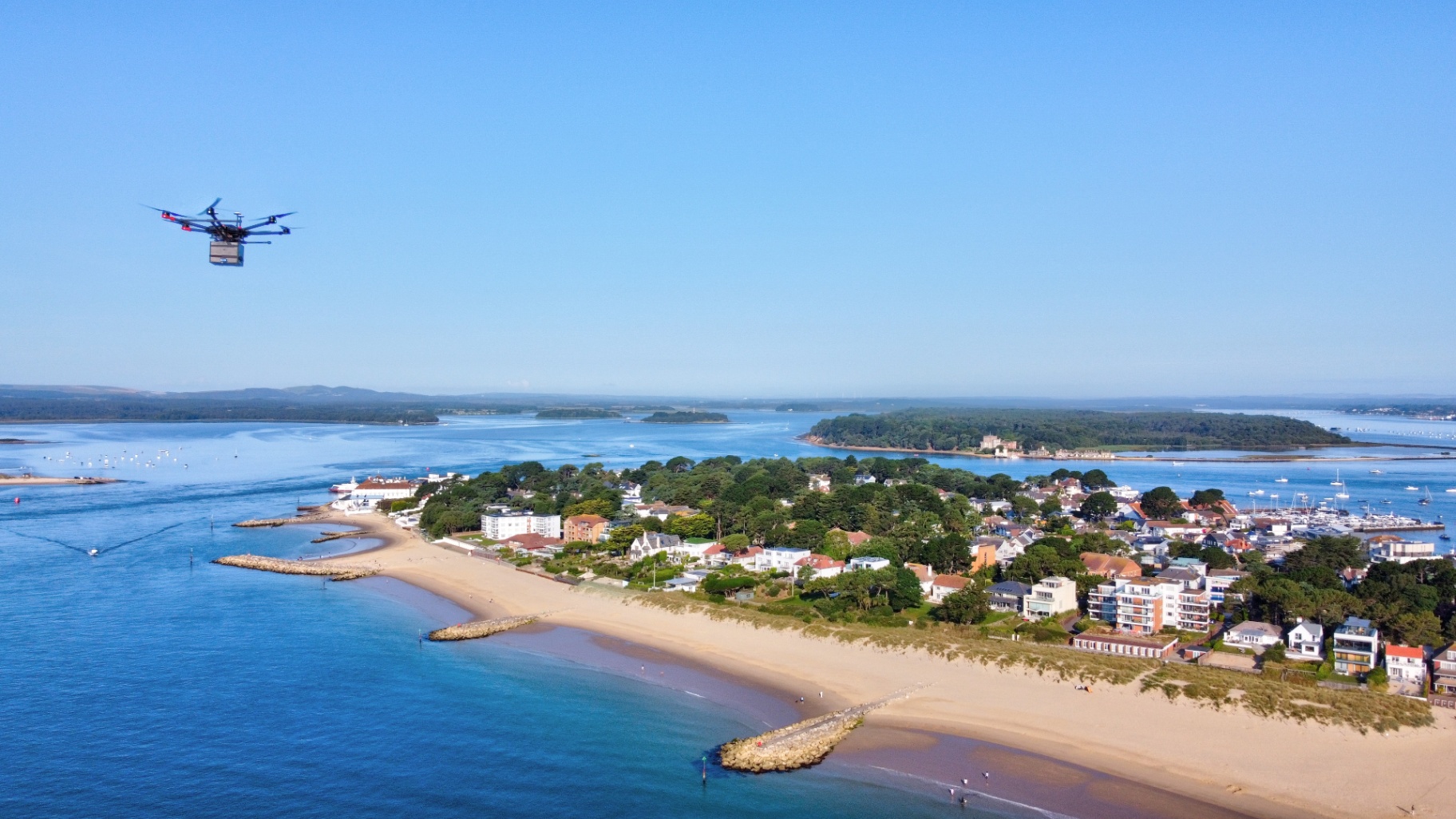
A drone allows for a "release from above," which many families find more symbolic and peaceful than scattering from ground level. The drone can travel out over the Solent, beyond the pier, reaching areas that would otherwise require a boat. This ensures a level of privacy and a perspective that is simply impossible to achieve from the shore. Furthermore, we offer the option of filming the ceremony, providing a lasting record of the moment the ashes were returned to the elements. This video can be a vital tool for healing, allowing family members who could not travel to the Isle of Wight to feel part of the farewell.
Planning Your Ryde Memorial Ceremony
If you are considering Ryde for a memorial, timing is the most important factor. Because the tide moves so far out, the character of the beach changes completely throughout the day. At high tide, the water comes right up to the sea wall, creating a more traditional "seaside" feel. At low tide, the "vastness" we have discussed becomes the dominant feature.
We recommend checking the local Isle of Wight tide tables before setting a date. Many families prefer the "golden hour" of sunrise or sunset, where the low sun reflects off the wet sands of Ryde, creating a shimmering, ethereal environment for the ceremony. Our team handles the permissions and logistics, ensuring that your ceremony is fully compliant with Civil Aviation Authority regulations and local bylaws. This allows you to focus entirely on the emotional significance of the day.
Exploring the South East Coastal Options
Ryde is just one of many beautiful locations across the region. If you are looking for other coastal spots or want to compare Ryde with locations on the mainland, you can find more information in our South East Memorial Hub <BLOG_POST:82a75c8c-acb6-461c-afdd-c56acab5f201>. This guide provides a comprehensive look at the best locations across Kent, Sussex, and the Isle of Wight, helping you find the perfect place for your loved one.
Whether you choose the expansive sands of Ryde or the white cliffs of Dover, our goal is to provide a service that is as unique as the person being remembered. The Isle of Wight offers a sense of "getting away from it all," which can be exactly what is needed when say goodbye.
References
- Oleksiichenko, N., et al. (2019). Research on the emotional impact of memorial landscapes. Journal of Landscape Ecology.
- Journal of Environmental Psychology. (2021). The therapeutic effects of nature-based rituals in bereavement.
- Environment Agency. (2023). Guidance on scattering ashes in rivers and coastal waters.
We're Online! How may I help you today?