 UK
UK
 Hawaii
 USA
USA
The Ultimate Guide to Drone Ash Scattering at Godrevy: Everything You Need to Succeed
The Ultimate Guide to Drone Ash Scattering at Godrevy: Everything You Need to Succeed
The rugged beauty of the Cornish coastline has long served as a place of reflection and remembrance. Among the many iconic locations in Cornwall, Godrevy stands out as a particularly poignant setting for a final farewell. With its sweeping views of St Ives Bay and the iconic white lighthouse standing firm against the Atlantic swells, it provides a backdrop that is both dramatic and deeply peaceful. However, planning a traditional memorial here can present physical and logistical challenges.
When families consider scattering ashes at the coast, they often imagine a quiet moment by the water. The reality of a coastal environment like Godrevy involves navigating uneven cliff paths, managing unpredictable wind speeds, and timing the tide perfectly. This is where modern technology offers a graceful solution. Using a drone for a memorial service ensures that the ceremony remains focused on the emotional experience rather than the physical struggle of reaching the shoreline.
The Natural Majesty of Godrevy
Godrevy is more than just a beach: it is a landscape defined by the elements. The area is managed by the National Trust and is home to a diverse range of wildlife, including a famous colony of grey seals at Mutton Cove. For many, this connection to nature and the "great outdoors" makes it the perfect place to honor a loved one who cherished the sea or the Cornish landscape.
The geographical layout of Godrevy includes the expansive sandy beach at low tide, the rocky outcrops near the Red River, and the high grassy headland looking out toward the lighthouse. While beautiful, these features can make a traditional ground-based ceremony difficult for larger groups or those with limited mobility. A drone ash scattering service allows the family to gather at an accessible vantage point, such as the grassy area near the National Trust car park, while the drone carries the ashes out to a precise location over the water.
Why Choose Drone Ash Scattering at the Coast?
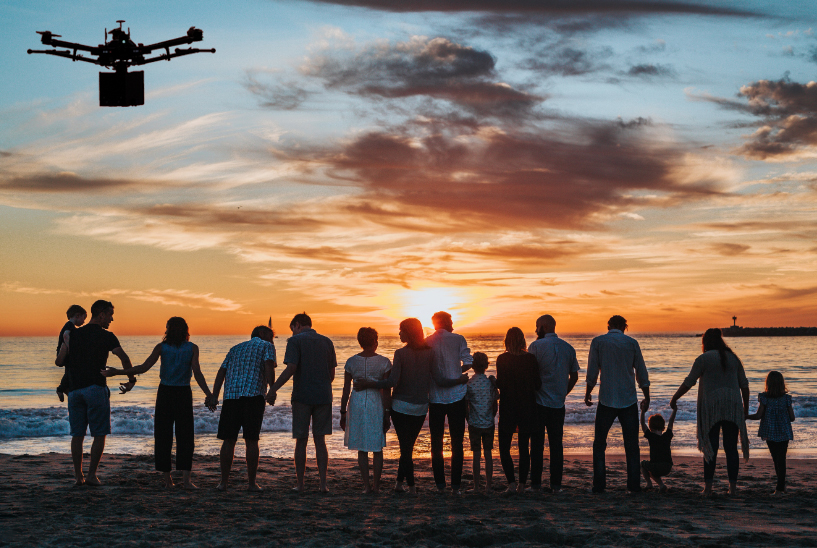
There are several practical and emotional reasons why families are increasingly turning to aerial methods for their memorial ceremonies. At a location like Godrevy, where the Atlantic wind is a constant presence, the benefits are particularly noticeable.
- Eliminating the Blowback Risk: One of the most distressing possibilities during a traditional scattering is the wind catching the ashes and blowing them back toward the mourners. By using a specialized release mechanism on a drone, the ashes are dispersed high above the water and carried away by the breeze in a controlled, dignified manner.
- Precision and Reach: A drone can reach locations that are physically inaccessible to people. Whether you want the release to happen directly in front of the Godrevy Lighthouse or over a specific reef where a loved one used to surf, a drone provides that level of accuracy.
- Inclusive Participation: Godrevy's terrain can be challenging. For elderly family members or those using wheelchairs, getting down to the water's edge is often impossible. A drone ceremony means everyone can stand together on the stable clifftops and witness the entire event clearly.
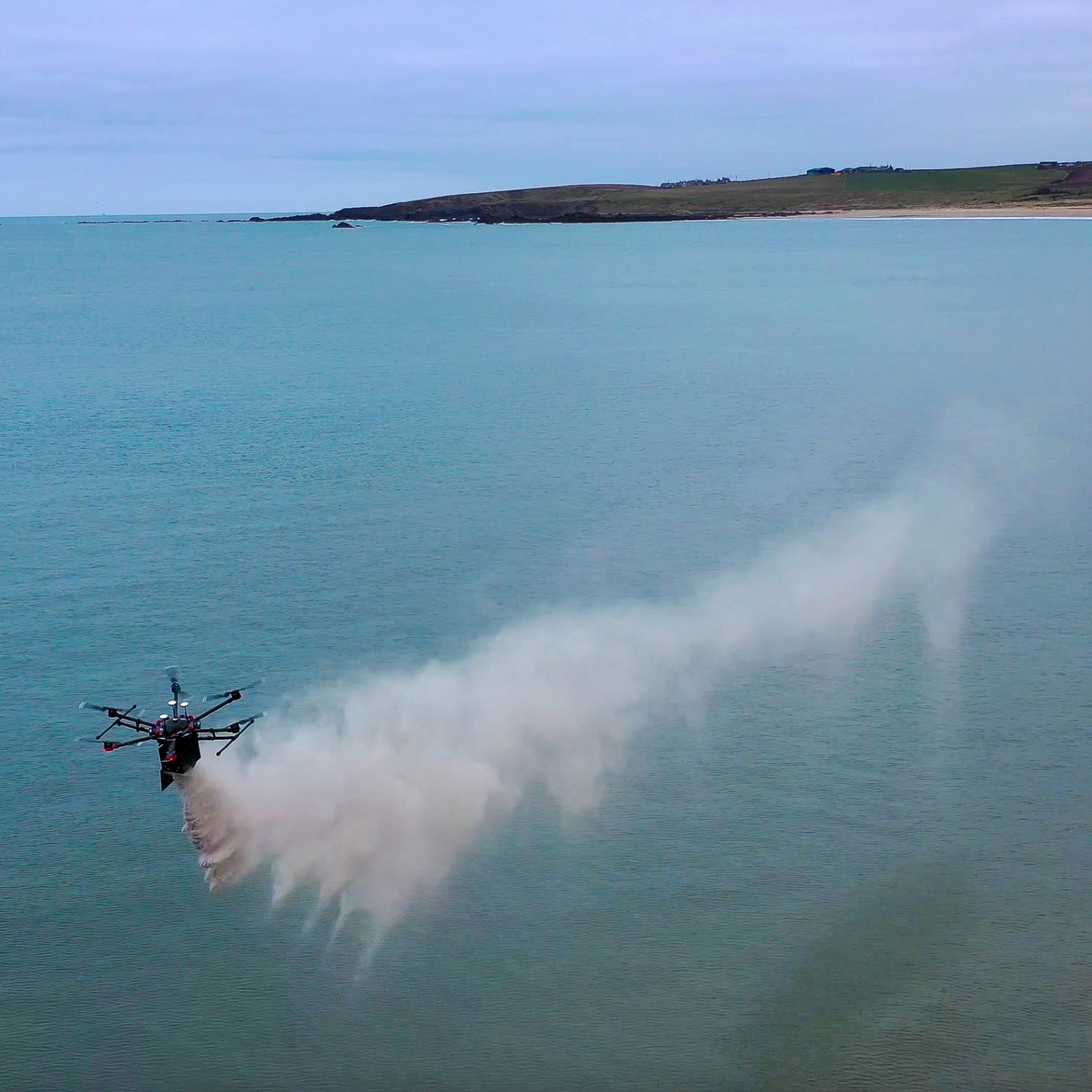
- Visual Beauty: The sight of a trail of ashes catching the light against the blue of the Atlantic is a powerful image. It creates a visible "ribbon" in the sky that slowly dissipates into the sea, providing a clear sense of release and peace.
The Science of Nature-Based Memorials
Research indicates that the environment in which we say goodbye has a significant impact on the grieving process. A study published in the Journal of Environmental Psychology (Kaplan, 1995) discusses "Attention Restoration Theory," suggesting that natural environments with "soft fascinations" like moving water and vast horizons help reduce mental fatigue and emotional stress.
Furthermore, research in the Journal of Palliative Medicine (Casarett et al., 2007) shows that personalized rituals are crucial for healthy bereavement. By choosing a location like Godrevy and a method as unique as drone ash scattering, families create a "flashbulb memory" that is associated with beauty and peace rather than the sterile environment of a crematorium.
How the Ceremony Works
Planning a drone-based memorial is a collaborative process. We aim to make it as simple as possible during what is already a difficult time. You can find more information on how to plan my own ceremony now to see the options available.
Preparation and Safety
Before the day of the ceremony, our licensed pilots conduct a thorough site survey. We check weather patterns and local flight restrictions. Godrevy is a popular spot, so we ensure the flight path avoids other beach users and respects the local wildlife, particularly the seals. The ashes are prepared in a specialized container designed for a smooth, mist-like release.
The Day of the Service
On the day, the family meets the pilot at a pre-arranged spot. We often suggest the headland area because it offers the best views of the lighthouse. After a few words, a poem, or a moment of silence, the drone takes off. It travels out over the sea to the chosen coordinates.
The Release
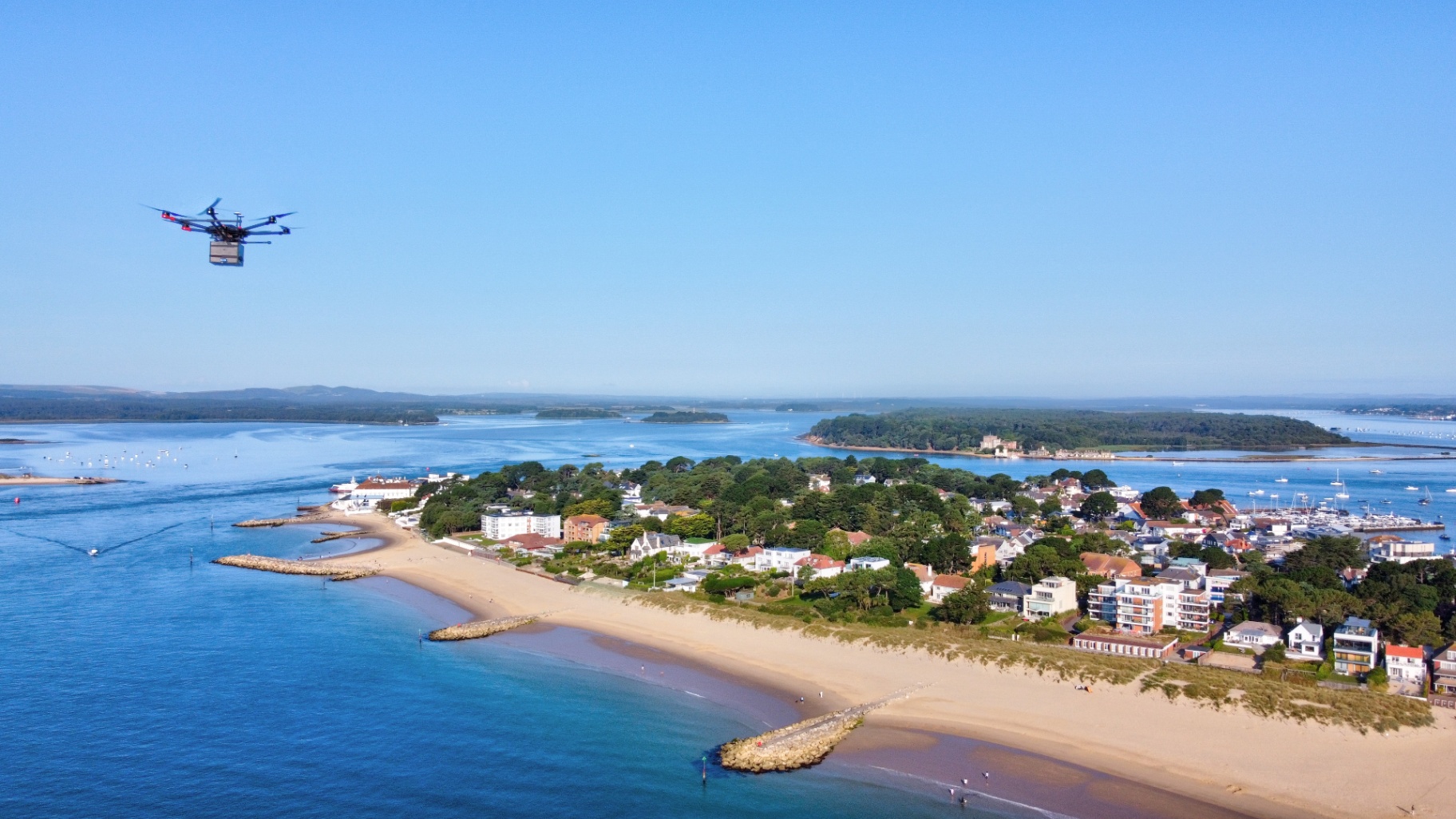
The release itself is steady and graceful. The drone hovers momentarily before the mechanism is activated, creating a soft cloud of ashes that drifts down to the waves. For those who want to keep a record of this moment, the drone’s onboard camera can capture high-definition footage of the dispersal from a respectful distance. This is often helpful for family members who couldn't travel to Cornwall for the day.
Legal and Environmental Considerations
A common question we receive is: "Is it legal to scatter ashes here?" In the UK, the rules regarding scattering ashes are generally permissive, provided you have the landowner's permission and follow Environment Agency guidelines.
For sea scatterings at Godrevy:
- Biodegradability is key: Only the ashes should be released. We do not release plastic wreaths or non-organic materials into the ocean.
- Distance from Intakes: The release must happen away from any water filtration or intake pipes.
- CAA Regulations: As professional operators, we handle all the Civil Aviation Authority (CAA) requirements. This includes maintaining a safe distance from people and ensuring the drone is operated by a qualified pilot.
If you are unsure whether you are ready for this step, we have a helpful guide on are you ready to scatter your loved ones ashes which explores the emotional readiness required for a final dispersal.

Practical Tips for Godrevy
If you are planning a visit to Godrevy for a memorial, here are a few practical tips to ensure the day goes smoothly:
- Check the Tide: At high tide, the beach at Godrevy almost disappears, leaving only the rocks. At low tide, you have miles of golden sand. While the drone isn't affected by the tide, your ability to walk along the beach might be.
- Dress for the Atlantic: Even on a sunny day, the wind at Godrevy can be biting. Advise your guests to wear sturdy shoes and windproof clothing.
- Parking: Use the National Trust car parks. They are well-maintained, but they can get very busy during the summer months and school holidays.
- The Godrevy Cafe: Many families find it helpful to gather at the local cafe after the ceremony to share stories and a meal. It provides a warm, communal space to decompress after the emotional event.
Creating a Lasting Legacy
Choosing Godrevy for a drone ash scattering ceremony is about more than just a beautiful view. It is about finding a way to say goodbye that feels right for the person you have lost. It is a way to turn a difficult day into a profound experience of beauty and peace.
Whether you are looking for a book ashes scattering service or just want to explore the possibilities, we are here to help you navigate the process. Our goal is to provide a service that is as dignified and professional as it is environmentally conscious.
A Modern Approach to Tradition
The world of memorial services is changing. People are looking for alternatives to traditional burials that feel more connected to the natural world. Drone technology allows us to bridge the gap between ancient desires (returning to the sea) and modern capabilities (precision and safety).
If you’re interested in the technical side or even considering this as a career path, you can explore our drone memorial business opportunity or use our drone job calculator copy to see how the industry is growing. For us, however, the focus always remains on the families we serve and the peaceful moments we help create.
Godrevy will always be there: the lighthouse will continue to blink, and the Atlantic will continue to roll in. By scattering ashes here, you make your loved one a part of that eternal landscape. It is a powerful way to ensure that every time you see a photo of that lighthouse or visit the Cornish coast, you feel a sense of connection and peace.
References
- Kaplan, S. (1995). The restorative benefits of nature: Toward an integrative framework. Journal of Environmental Psychology.
- Casarett, D., et al. (2007). The rituals of death and dying: A guide for palliative care. Journal of Palliative Medicine.
- Environment Agency (2022). Guidance on scattering ashes in rivers and the sea.
We're Online! How may I help you today?