 UK
UK
 Hawaii
 USA
USA

5 Steps How to Plan a Serene Drone Ash Scattering at Westward Ho! (Easy Guide for Families)
5 Steps How to Plan a Serene Drone Ash Scattering at Westward Ho! (Easy Guide for Families)
Choosing a final resting place is one of the most significant decisions a family makes during the grieving process. It is a choice that balances the wishes of the departed with the emotional needs of those left behind. In recent years, many families have looked toward the coast of Devon, specifically the unique and expansive shoreline of Westward Ho!, as a place of final peace. The vastness of the Atlantic Ocean combined with the rhythmic sound of the waves provides a backdrop that feels both eternal and deeply personal.
A drone ash scattering offers a modern, dignified way to return a loved one to nature. Unlike traditional shore-based scatterings, where wind direction can cause complications or where physical access to the water's edge may be difficult, a drone provides a controlled and beautiful release. At Aerial Ashes Matt, we specialize in ensuring these moments are handled with the highest level of professionalism and care. This guide outlines how you can plan a serene memorial at one of Devon’s most iconic beaches.
The Significance of Westward Ho! as a Memorial Location
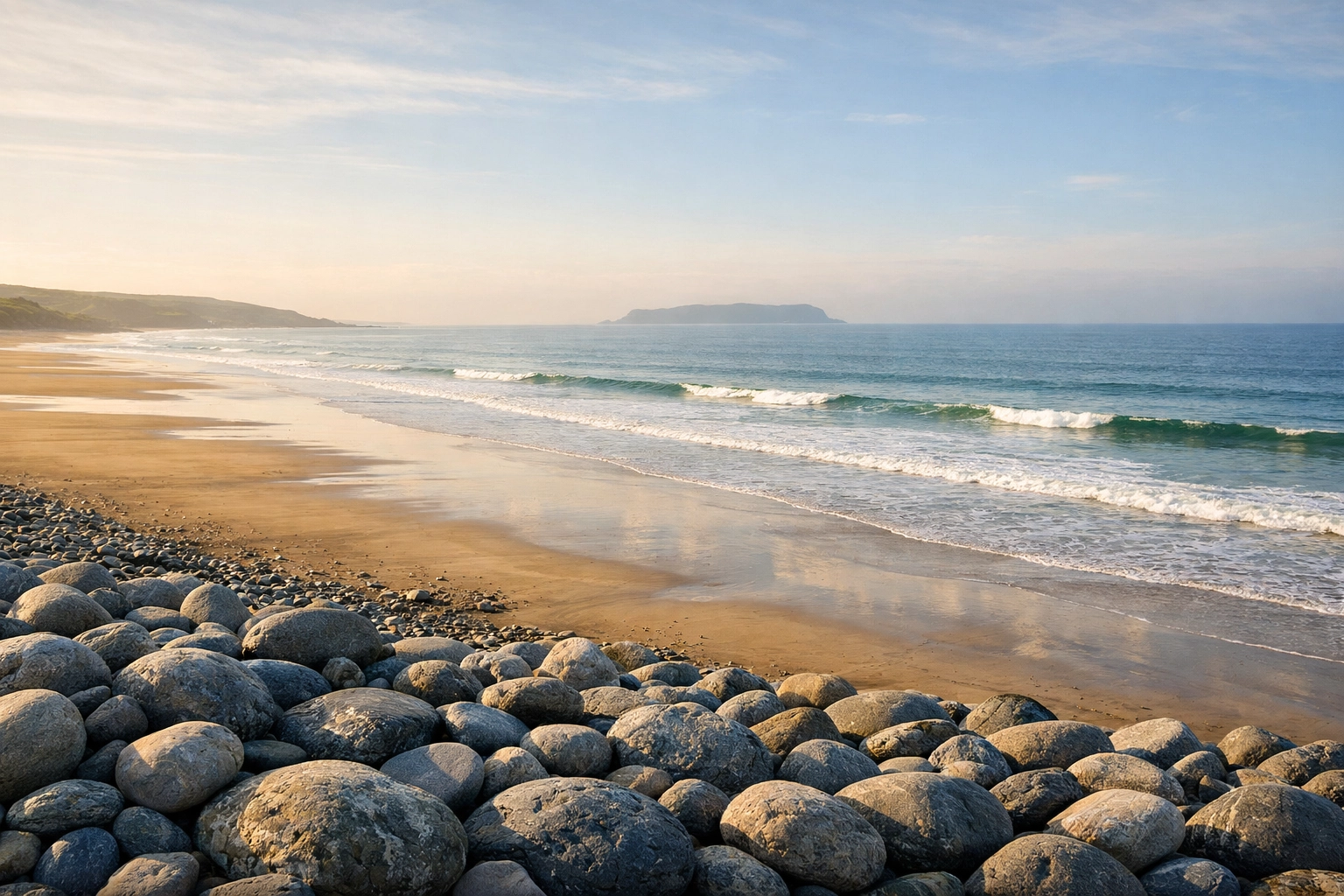
Westward Ho! is unique in the UK for being the only town named after a book (the Victorian novel by Charles Kingsley). It is defined by its long, sandy beach and the famous Pebble Ridge that protects the Northam Burrows. For many families, this location represents a connection to the raw beauty of the North Devon coast. The views toward Lundy Island and the sheer scale of the horizon offer a sense of perspective that can be very comforting during a time of loss.
Research indicates that proximity to coastal environments, often referred to as "blue spaces," has a profound impact on mental well-being and the processing of grief. According to a study published in the Journal of Environmental Psychology (White et al., 2013), individuals interacting with coastal settings experience significant reductions in stress and an increased sense of psychological restoration. By choosing Westward Ho! for scattering ashes, you are providing your family with a setting that naturally fosters reflection and calm.
Step 1: Selecting the Ideal Vantage Point
The first step in planning a ceremony at Westward Ho! is to visit the location and select a vantage point that feels right for your family. The beach is over two miles long, offering plenty of space for privacy.
- The Pebble Ridge: This natural barrier provides an elevated view of the sea and the sand. It is an excellent spot for family members to stand while the drone ascends.
- Northam Burrows Country Park: Located just behind the beach, this area offers a more grassy, open environment if some family members find walking on the sand or pebbles difficult.
- The Sand: At low tide, the beach expands significantly, offering a vast canvas for a memorial.
We recommend visiting at different tide times to see how the landscape changes. Because the drone carries the ashes out over the water, your group does not need to be right at the water’s edge. This allows guests of all ages and mobility levels to participate comfortably. You can find more inspiration for coastal locations on our inspiration page.
Step 2: Consultation with Aerial Ashes Matt
Once you have a feel for the location, the next step is to reach out to us for a consultation. As the person handling sales and coordination, my goal is to make this process as easy as possible for you. We understand that this is a sensitive time, and we aim to provide clarity rather than complexity.
During our initial conversation, we will discuss your specific needs. This includes:
- The date and preferred time of day.
- The number of people attending.
- Any specific music or words you would like to include during the release.
- The amount of ashes to be dispersed.
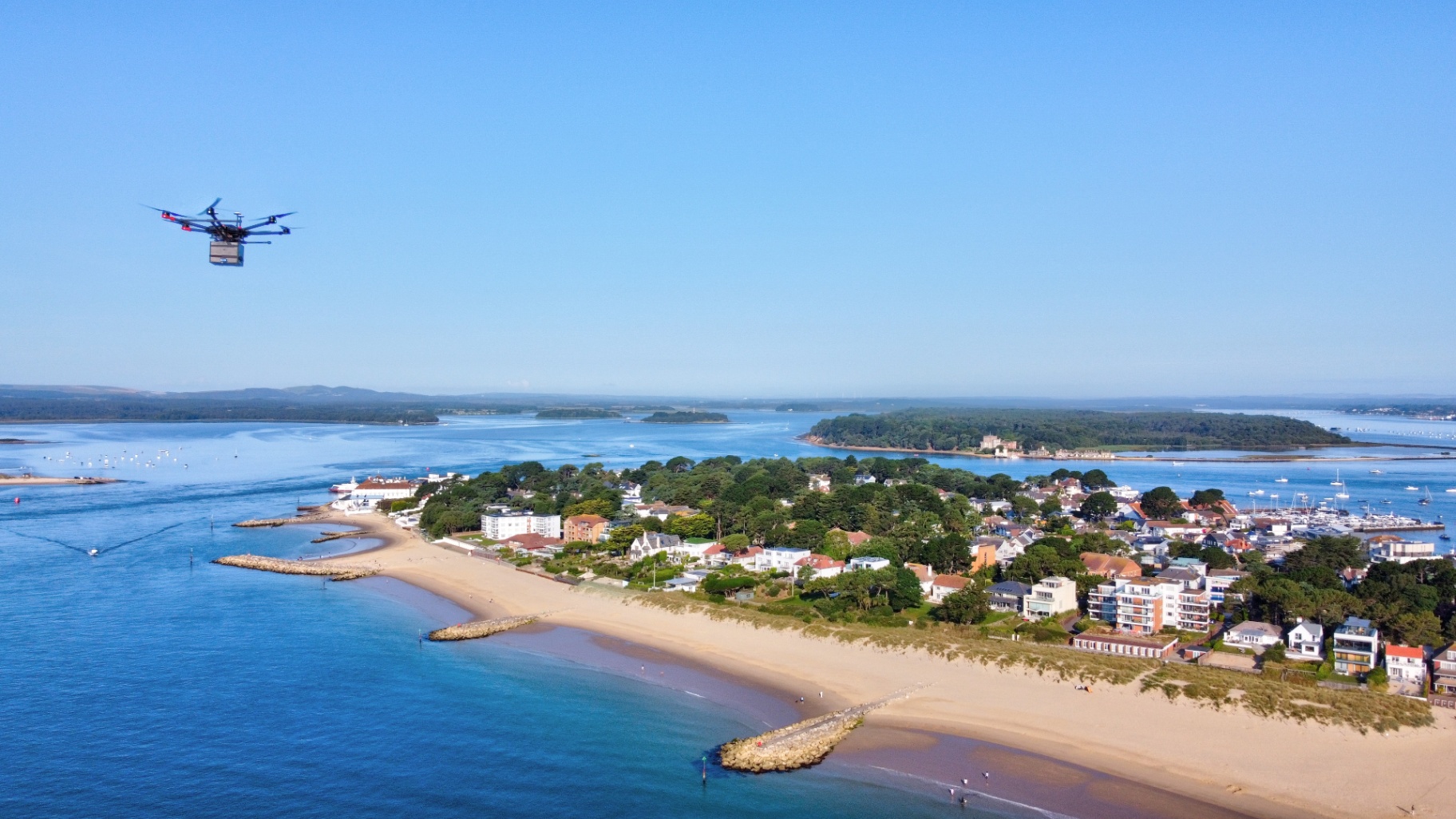
We use professional-grade technology to ensure a smooth and dignified release. Our drones are equipped with specialized dispersal units designed specifically for drone ash scattering, ensuring that the process is gentle and respectful. You can learn more about our team and our approach on our about us page.
Step 3: Navigating Permissions and Regulations
One of the primary concerns families have is whether they are allowed to scatter ashes at the beach. In the UK, the regulations regarding ashes scattering are generally permissive, especially when it involves the sea or coastal waters.
According to guidelines often cited by environmental agencies, cremated ashes are essentially sterile minerals and do not pose a risk to the marine environment. When scattering at sea, there is no formal requirement for a license from the Environment Agency, provided the scattering does not happen near water intake points or sensitive habitats.
Because we operate drones, we handle the technical side of permissions. This includes checking for any local airspace restrictions and ensuring that our flight plan is safe and compliant with Civil Aviation Authority (CAA) regulations. While water scatterings at the coast often have "automatic permission" in a general sense, we always conduct a site survey to ensure we are respecting the local community and the environment. This professional oversight allows you to focus entirely on the memorial itself. For more details on the logistics of sea-based ceremonies, visit our scattering ashes at sea page.
Step 4: Monitoring Weather and Logistics
Westward Ho! is beautiful, but like all of the North Devon coast, it is subject to the elements. The wind and tides play a major role in the timing of a drone ash scattering.
Weather monitoring is a critical part of our service. We track wind speeds and precipitation closely in the days leading up to the ceremony. Drones require relatively calm conditions to fly safely and to ensure the ashes drift beautifully toward the horizon rather than back toward the shore. If the weather is unsuitable on your chosen day, we work with you to find the next available window of calm.
We also coordinate the timing with the tides. At Westward Ho!, the tide can come in quite quickly. We often suggest scheduling the ceremony for a period of receding tide or low tide to give your family the maximum amount of space on the beach. This logistical planning ensures that the day runs smoothly without any environmental distractions.
Step 5: The Memorial Day Experience
On the day of the ceremony, we meet you at the pre-arranged location at Westward Ho!. We keep the setup discreet and professional, allowing your family to have your own private space.
The ceremony typically follows a simple but profound structure:
- The Gathering: Family and friends gather at the chosen vantage point.
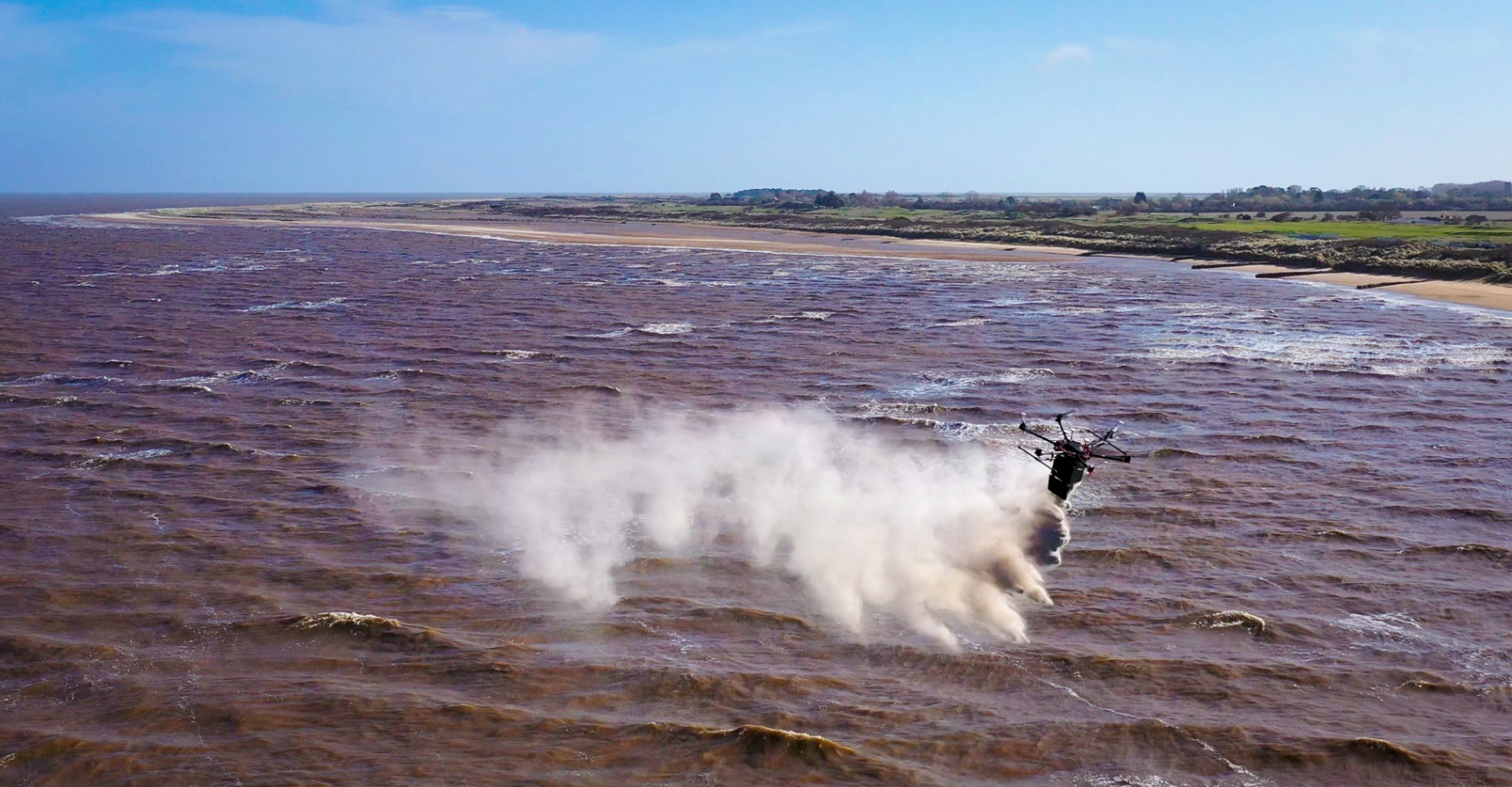
- The Ascent: The drone takes off and flies out over the Atlantic, usually reaching a distance and height that provides a beautiful perspective for those watching from the shore.
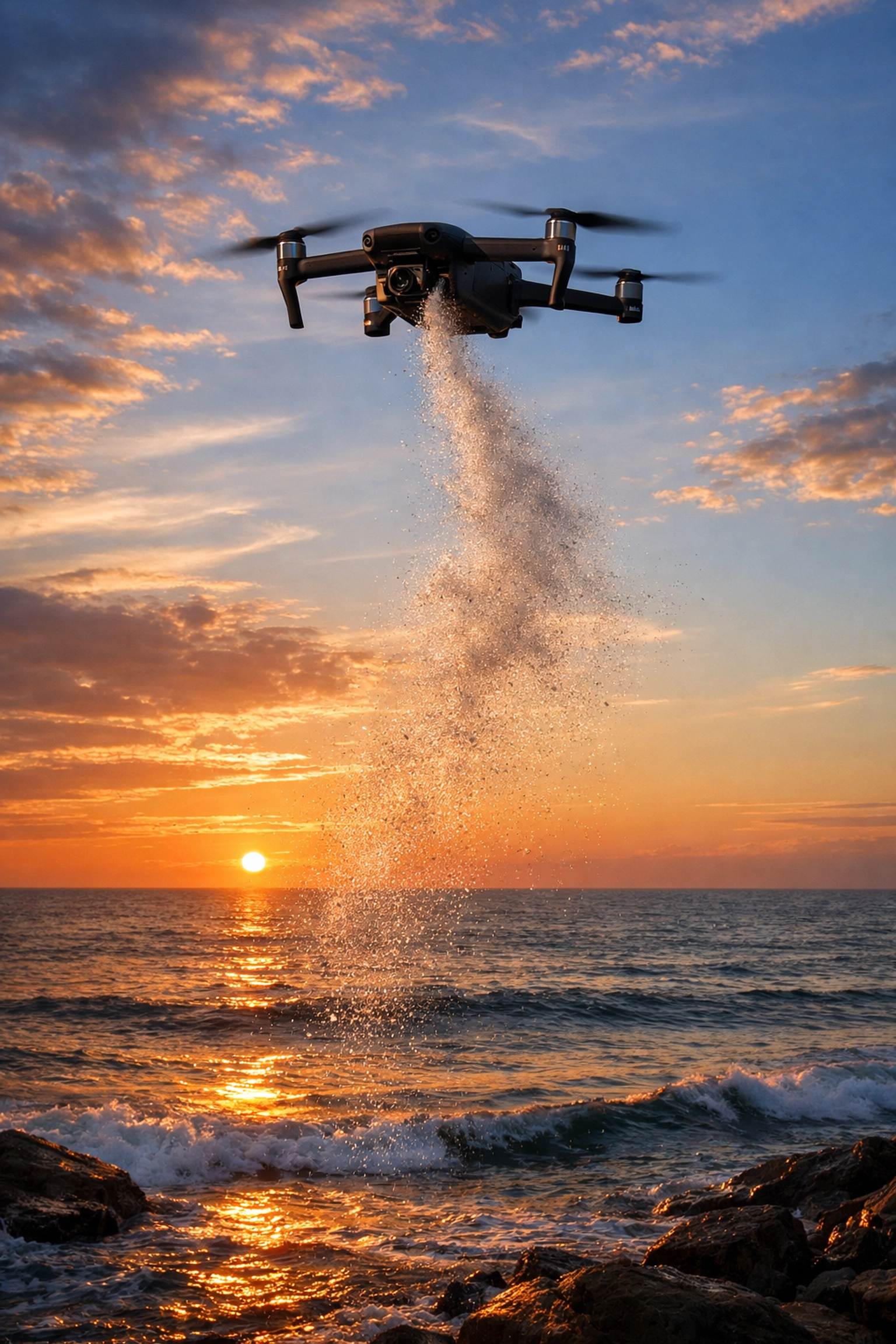
- The Release: The ashes are released smoothly from the drone. From the shore, this looks like a gentle trail of silver or white mist caught in the sea breeze, slowly merging with the ocean.
- The Reflection: Many families choose to play a favorite song or read a poem during this moment. The drone can also hover for a few moments of silence before returning to the shore.
Research into mourning rituals suggests that the act of "letting go" is a crucial step in the healing process. A study in the Journal of Palliative Medicine (Casarett et al., 2001) found that personalized memorial services that involve a symbolic act of release can provide higher levels of closure and satisfaction for the bereaved. The aerial perspective of a drone release serves as a powerful symbol of freedom and peace.
Why Choose a Professional Drone Memorial?
While some families attempt to scatter ashes by hand at the shoreline, they often encounter difficulties with wind blowing the ashes back or the tide making the water inaccessible. A drone removes these barriers. It allows the ashes to be scattered further out to sea, where the water is deep and the horizon is clear.
Furthermore, we provide an environmentally conscious service. We ensure that no plastic or non-biodegradable materials enter the water. Our focus is entirely on a clean, natural return to the earth. If you are still in the early stages of planning and aren't sure if you are ready, our guide on being ready to scatter ashes might be a helpful resource.

Planning Your Visit to North Devon
If you are traveling from outside of Devon to Westward Ho!, you might consider staying in the area for a few days. The peace of the North Devon coast can be very therapeutic. The South West Coast Path runs right through the town, offering stunning walks that allow for further reflection after the ceremony.
The town itself is friendly and welcoming, with local cafes where families can gather afterward to share stories and memories. By choosing this location, you are creating a lasting landmark for your loved one, a place you can return to in the future to feel connected to them once more.
Summary of Benefits for Families
- Accessibility: No need to scramble over rocks or walk long distances to the water.
- Professionalism: We handle all technical, legal, and safety aspects.
- Dignity: A smooth, controlled release that avoids the common pitfalls of hand-scattering.
- Beauty: The aerial view of the Devon coast provides a stunning, cinematic tribute.
- Peace of Mind: Knowing that your loved one’s final journey was handled with care and respect.
At Aerial Ashes Matt, we are committed to helping families find peace through these unique memorial services. We believe that every life deserves a beautiful farewell, and the shores of Westward Ho! provide one of the most serene settings in the UK to achieve that.
We're Online! How may I help you today?
References
Casarett, D., Kutney, J. M., & Abramson, J. (2001). Life after death: A practical guide to the mourning process and memorialization. Journal of Palliative Medicine.
White, M. P., Alcock, I., Wheeler, B. W., & Depledge, M. H. (2013). Coastal proximity, health and well-being: Results from a longitudinal panel survey. Journal of Environmental Psychology.