 UK
UK
 Hawaii
 USA
USA
Looking For a Peaceful Farewell? Here Are 10 Things You Should Know About Ashes Scattering at Bedruthan Steps
Looking For a Peaceful Farewell? Here Are 10 Things You Should Know About Ashes Scattering at Bedruthan Steps
Grief is a deeply personal journey that often requires a physical space for expression and release. For many families in the UK, the Cornish coastline represents a place of ancestral connection, childhood holidays, or simply a final horizon where the land meets the infinite sea. Bedruthan Steps, with its towering granite stacks and rhythmic Atlantic swells, stands as one of the most majestic locations for a final farewell.
Choosing a location for scattering ashes is a decision rooted in the desire for peace, dignity, and a sense of "coming home" to nature. However, the practicalities of a coastal memorial can often be more complex than they first appear. Understanding the landscape, the environmental requirements, and the modern methods available can transform a potentially stressful event into a serene experience of closure.
1. The Physical Landscape and Accessibility Challenges
Bedruthan Steps is famous for its 149 steep, narrow steps carved into the cliffside. These steps are frequently closed by the National Trust due to rockfalls or storm damage. Even when open, they present a significant barrier for many people. If your family includes elderly relatives, young children, or anyone with limited mobility, reaching the shoreline is often impossible.
A memorial service should include everyone who loved the departed. When physical access is restricted, it can create a sense of exclusion. This is where drone ash scattering becomes a vital tool. By using technology, the ceremony moves from the inaccessible shoreline to the safe, level clifftops. Everyone can stand together, looking out over the Atlantic, while the drone performs the release precisely where you wish.
2. The Emotional Weight of "Ashes on the Shelf"
Many families find themselves keeping an urn on a sideboard or tucked away in a cupboard for years. This is often referred to as "The Ashes on the Shelf" phenomenon. It usually stems from a place of love, but over time, it can begin to feel like a weight of unfinished business or a lingering sense of guilt.
Moving from this state of suspension to a state of relief is a crucial part of the grieving process. Research in the Journal of Palliative Medicine suggests that ritualizing the final placement of remains helps survivors transition through the later stages of grief. Choosing a location as powerful as Bedruthan Steps allows you to replace that "heavy" feeling with a memory of light, wind, and the vast ocean.

3. Avoiding the "DIY That Went Wrong"
The North Cornwall coast is notorious for its sudden, powerful gusts of wind. A common "DIY" mistake is attempting to scatter ashes manually from a clifftop or a windy beach. This often results in the "blowback" effect, where the remains are caught by the wind and blown back onto the mourners or the surrounding vegetation.
This experience can be traumatic and far from the dignified farewell you envisioned. Using a professional service ensures that the ashes scattering is controlled and graceful. Our specialized drones use a custom release mechanism that dispenses the remains in a steady, visible stream, ensuring they reach the water or the air exactly as planned, regardless of the coastal breezes.
4. The Science of Awe and Healing
The environment you choose for a memorial has a measurable impact on your psychological well-being. According to a study by Keltner and Haidt published in the Psychological Review (2003), the experience of "awe" : defined as the feeling of being in the presence of something vast that transcends our current understanding : can have profound healing effects.
Bedruthan Steps is an "awe-inspiring" location by every definition. The sight of the massive sea stacks, named after the giant Bedruthan, creates a sense of perspective. Standing on the cliffs and witnessing a drone ash scattering ceremony allows the brain to shift away from internal ruminations of loss and toward a broader connection with the natural world. This transition is a key step toward finding peace.
5. Environmental Stewardship and SSSI Status
Bedruthan Steps is not just a beauty spot: it is a designated Site of Special Scientific Interest (SSSI). The clifftops are home to rare flora and fauna that can be sensitive to changes in soil chemistry. Cremated remains have a high pH level and high salt content, which can be detrimental to delicate plants if dumped in a concentrated pile.
A professional scattering ashes service via drone is the most environmentally conscious choice. The drone disperses the remains over a wide area above the sea or the surf line. This prevents any negative impact on the protected land and ensures that your loved one’s final act is one of harmony with the environment. You can learn more about our commitment to responsible memorials on our about us page.
6. The Precision of Modern Technology
When you choose a drone for your ceremony, you are choosing precision. Unlike manual scattering, where you are limited by where you can stand, a drone can reach the exact point over the water that holds meaning for you. Whether it is directly over a specific rock formation or further out toward the horizon, the control is absolute.
This precision also allows for better photography and videography of the moment. Many families find comfort in having a record of the ashes merging with the sea spray. It provides a visual anchor for the memory of the day. If you are interested in how this technology works, you might find our ideal memorial assistant page helpful in planning your vision.

7. Navigating Legal and Safety Regulations
Flying a drone at a sensitive location like Bedruthan Steps requires more than just owning the equipment. The Civil Aviation Authority (CAA) has strict regulations regarding flight paths, proximity to people, and commercial operations. Furthermore, permission from the National Trust or local authorities is often required for ceremonies on their land.
We handle all the legalities and safety assessments. This means you do not have to worry about whether the ceremony is compliant with local laws. We ensure that every flight is conducted safely and respectfully, keeping the focus entirely on the memorial and the person being honored.
8. The Unpredictability of Cornish Weather
The weather in Cornwall can change in a heartbeat. A sunny morning at Carnewas can turn into a misty afternoon very quickly. Professional drone pilots are experts at reading these conditions. We monitor wind speeds and visibility constantly to ensure the ceremony happens during a safe window.
Because we are experienced with the local microclimates of the Cornish coast, we can advise on the best times of day for your ceremony. This level of professional oversight takes the guesswork out of the day, allowing you to focus on your family and your memories. You can view our recommended suppliers for more localized support in the South West.
9. Creating a Lasting Point of Return
One of the most beautiful aspects of scattering at Bedruthan Steps is the permanence of the landscape. The sea stacks : Queen Bess, Samson, and the others : are enduring markers. Even years later, you can return to the clifftop, look out at those same rocks, and know exactly where your loved one was set free.
This "point of return" is vital for long-term healing. Research in the Journal of Environmental Psychology (2015) indicates that "place attachment" can provide significant emotional support during bereavement. Knowing that a loved one is part of such a majestic and permanent landscape offers a sense of continuity that a cemetery or a shelf at home simply cannot match.
10. Dignity as a Priority
At the heart of everything we do is the concept of dignity. A memorial should not feel like a technical exercise: it should feel like a sacred moment. The quiet hum of a drone, the gentle release of ashes into the Atlantic breeze, and the shared silence of family on the clifftop create a modern tradition that is both respectful and profoundly moving.
We believe that every person deserves a farewell that reflects the beauty of the life they lived. By removing the physical struggle of the steps and the unpredictability of manual scattering, we allow the dignity of the moment to shine through. If you are ready to explore this option, you can plan your own ceremony now to see how we can help.
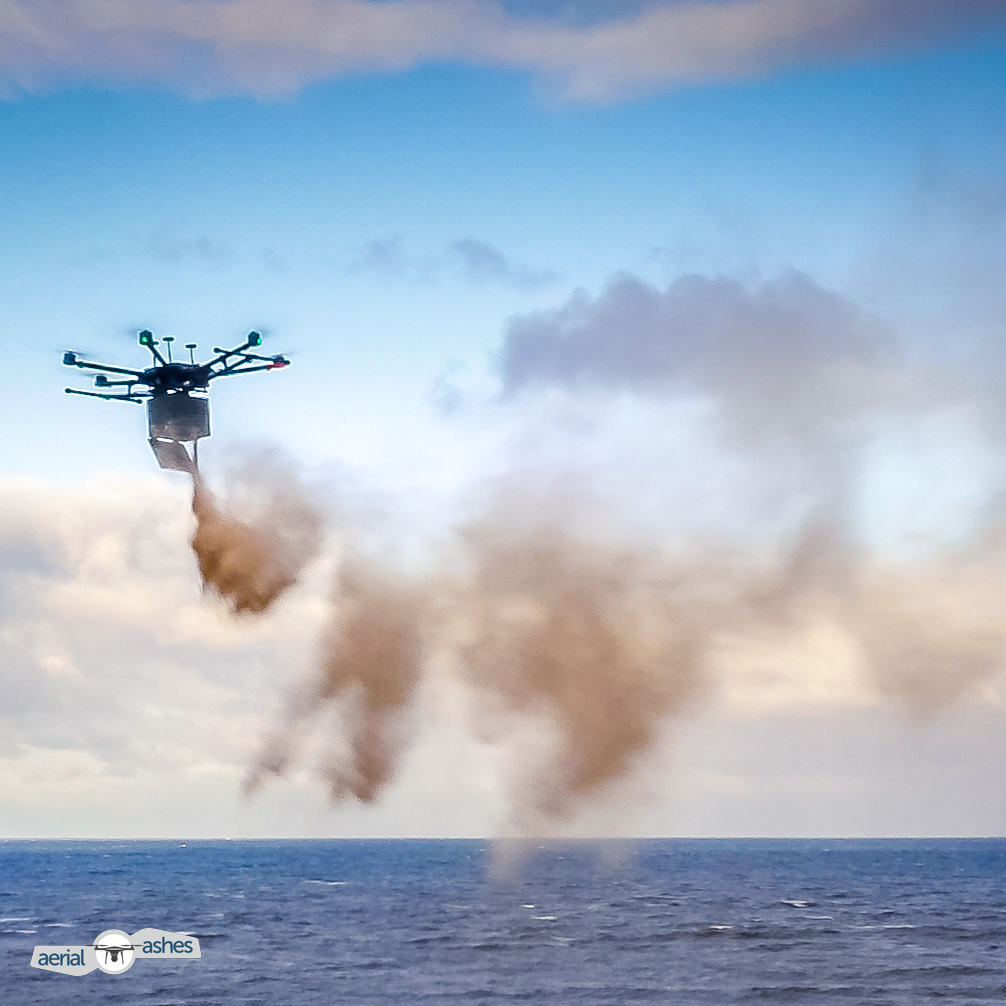
How the Ceremony Works
When you book a service with Aerial Ashes Matt, we guide you through every step:
- The Meeting: We usually meet at the Carnewas at Bedruthan car park, which is easily accessible.
- Preparation: The ashes are placed into our specialized, eco-friendly release canister.
- The Flight: The drone takes off and flies out over the sea stacks to your chosen location.
- The Release: On your signal, the mechanism releases the ashes in a steady, visible stream.
- The Return: The drone returns quietly, and you are left with the peace of the Cornish coast.
Moving Forward with Peace
Choosing Bedruthan Steps for an ashes scattering is a way to honor a loved one with the grandeur of the natural world. It is about moving from the heaviness of loss to the lightness of a peaceful farewell. Whether you are just starting to think about a memorial or have been holding onto an urn for years, we are here to provide a professional, dignified solution.
If you are considering a drone memorial but want to know more about the practical side, feel free to visit our contact us page. We also offer information for those looking into broader options, such as direct cremation finalisation.

References
- Keltner, D., & Haidt, J. (2003). Approaching awe, a moral, spiritual, and aesthetic emotion. Psychological Review.
- Journal of Palliative Medicine (2018). The Role of Ritual in Post-Death Grief Processing.
- Journal of Environmental Psychology (2015). Place Attachment and the Restorative Power of Coastal Landscapes.
- Journal of Experimental Psychology (2012). The Psychological Benefits of Natural Environments.
We're Online! How may I help you today?