 UK
UK
 Hawaii
 USA
USA

Looking For a Coastal Memorial? Here Are 10 Things You Should Know About Scattering Ashes at Gwithian Towans
Looking For a Coastal Memorial? Here Are 10 Things You Should Know About Scattering Ashes at Gwithian Towans
Deciding on a final resting place for a loved one is a journey that often begins long before you reach the shoreline. For many families, the process is stalled by the weight of the decision. You might find yourself living with the ashes on the shelf, where an urn sits in a hallway or on a mantelpiece for months or even years. This often stems from a place of deep respect. You want the moment to be perfect, but the logistics of organizing a coastal farewell can feel overwhelming.
Moving from that sense of lingering guilt to a place of relief happens when you find a location that truly resonates. Gwithian Towans, located on the northern edge of St Ives Bay in Cornwall, is one of those rare places that offers both dramatic beauty and a profound sense of peace. It is a landscape where the Atlantic Ocean meets miles of golden sand and ancient dunes.
1. Understanding the Landscape of the Towans
The first thing to understand is the name itself. In the Cornish language, "Towans" means sand dunes. Gwithian Towans forms part of a massive dune system that stretches for three miles. This isn't just a flat beach. It is a dynamic, living environment that changes with the seasons and the weather.
The dunes provide an elevated vantage point, offering views that stretch across the bay toward St Ives. When you are considering ashes scattering, the height of the dunes can offer a private space away from the main beach users. It allows for a moment of reflection while looking out over the water before the ceremony begins.
2. The Symbolic Presence of Godrevy Lighthouse
At the northern end of the beach sits Godrevy Lighthouse. Perched on a rocky island just offshore, it serves as a powerful focal point for any memorial. Lighthouses are universal symbols of guidance, safety, and a light in the dark. For many families, having this landmark in the background provides a sense of direction during a difficult time.
The lighthouse has inspired countless artists and writers, including Virginia Woolf. Incorporating such a landmark into your ceremony can help create a lasting mental image. When you look at a photograph of the lighthouse in years to come, you will remember it as the silent guardian of your loved one’s final journey.
3. The Science of Coastal Healing
There is a biological reason why so many people feel drawn to the coast when they are grieving. Research published in the Journal of Environmental Psychology indicates that coastal "blue spaces" are more effective at reducing stress and improving mood than green inland spaces (White et al., 2013).
The sound of the waves at Gwithian provides a natural acoustic blanket, creating a private "sound shell" for your service. The negative ions found in sea air are also thought to help regulate serotonin levels. Choosing a coastal memorial isn't just about the view. It is about placing yourself in an environment that naturally supports the healing process.
4. Tide Management is Your Top Priority
If you are planning a ceremony on the sand, you must consult the tide tables for Hayle and Gwithian. At high tide, the water can reach the very base of the dunes, leaving almost no beach at all. This can lead to a DIY that went wrong scenario where families arrive only to find their chosen spot underwater.
For the most serene experience, aim for a falling tide. This reveals the vast expanse of the "Great Sands" and ensures you have plenty of room to walk and find a secluded spot. Low tide also leaves behind reflective pools of water and smooth sand, providing a clean and beautiful canvas for a beach-based memorial. You can learn more about planning these details in our Beach Scattering Guide.
5. Managing the Cornish Wind
The North Cornwall coast is known for its bracing winds. While a sea breeze can feel refreshing, it poses a significant challenge for scattering ashes. When ashes are released by hand, they are incredibly light. A sudden gust of wind can cause the ashes to blow back toward the family, sticking to clothing or hair.
This "blowback" is one of the most common reasons families regret a DIY attempt. It transforms a dignified moment into one of distress and confusion. When we talk about professional solutions, we are often talking about managing these environmental variables so you don't have to worry about the direction of the wind.

6. Navigating Accessibility Challenges
Gwithian is stunning, but it is not the most accessible beach for everyone. The paths leading from the car parks down to the water’s edge are often steep, sandy, and uneven. For elderly family members or those with limited mobility, reaching the shoreline can be a physical struggle.
If you are planning a large family gathering, consider how everyone will reach the site. It is heartbreaking when a close relative has to stay in the car park because the terrain is too difficult. This is where modern memorial methods can bridge the gap, allowing the ceremony to take place over the water while the family watches from an accessible vantage point on the dunes.
7. Legal Guidelines and Permissions
In the UK, there are no specific laws that prohibit the scattering ashes on tidal waters or beaches. However, the Environment Agency provides clear guidelines to protect the local ecosystem. You do not need a license to scatter ashes at sea, but you must ensure that you are not near any water extraction points or sensitive nature reserves.
For the land-based dunes at Gwithian, which are often managed by local councils or the National Trust, it is always best to check local bylaws. Usually, the rule is to stay away from busy paths and ensure no non-biodegradable items are left behind. You can find more detailed information in our Legal Guide.
8. Environmental Responsibility
Human ashes are composed of calcium phosphate and do not pose a threat to the marine environment. They are essentially a natural mineral. The environmental concern arises from what people often scatter with the ashes.
It is vital to avoid throwing plastic wreaths, metal urns, or photos into the sea. If you wish to include flowers, ensure they are loose petals or fully biodegradable blooms with no plastic ribbons or wire. Keeping the Cornwall coast pristine is a way of honoring both your loved one and the landscape they loved.
9. Choosing Between the Sands and the Sea
Gwithian offers two distinct types of memorial experiences. The first is a beach-based scattering on the sand. This is intimate and tactile, but it is highly dependent on the tide and foot traffic from surfers and dog walkers.
The second option is a sea-based scattering. Releasing the ashes directly into the Atlantic waves provides a sense of finality and freedom. The water carries the ashes out into the Celtic Sea, connecting your loved one to the global ocean. This method often feels more "permanent" as the sea is ever-changing yet always there.
10. The Modern Choice: Professional Drone Scattering
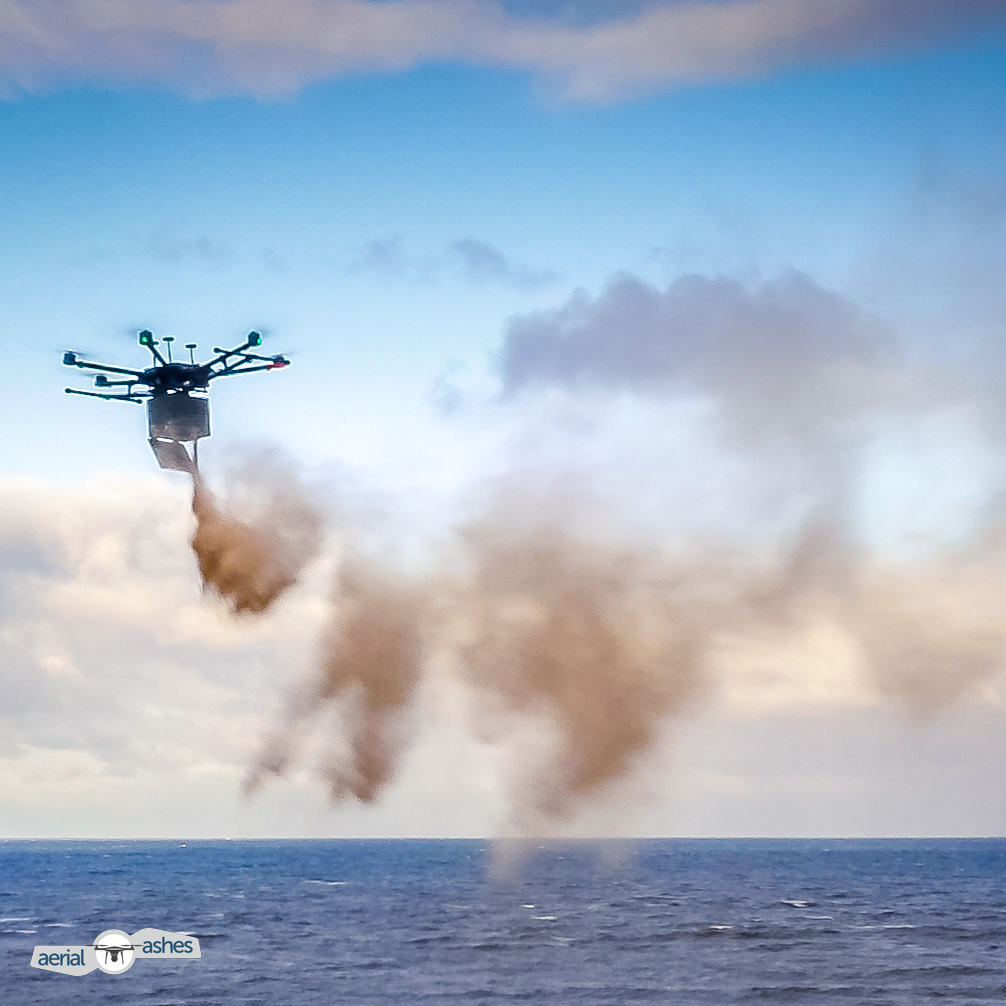
For many, the solution to the challenges of wind, accessibility, and privacy is found in technology. Professional drone scattering, such as the service provided by Aerial Ashes Matt, allows for a level of precision that a hand-release cannot match.
A drone can fly past the breaking waves, beyond the reach of tourists and the difficulties of the dunes, to release the ashes over the deep blue water. This ensures:
- Dignity: The release is controlled and smooth, avoiding any wind blowback.
- Inclusivity: Family members can stand together at an accessible viewpoint and watch the ceremony clearly.
- Visibility: The ashes create a visible white plume against the water, providing a clear moment of goodbye that everyone can see.
- Precision: We can fly specifically toward the Godrevy Lighthouse or a particular coordinate that held meaning for your loved one.
Transitioning from Grief to Peace
Choosing Gwithian Towans for a memorial is a beautiful way to move from the stagnation of the ashes on the shelf to a place of active remembrance. It is about taking a difficult task and turning it into a profound experience. Whether you choose to walk the sands yourself or utilize a professional drone service, the goal is the same: to find peace in a place of natural beauty.
Planning a memorial is a significant step in the grieving process. It marks the transition from holding on to letting go. By understanding the tides, the wind, and the legalities of the Cornish coast, you can ensure that your farewell at Gwithian is as steady and enduring as the lighthouse itself.
Aerial Ashes Matt is here to help you navigate these choices. We specialize in providing a serene and dignified alternative to traditional scattering, ensuring that your loved one’s final journey is handled with the care and professionalism it deserves.
Summary of Key Considerations
- Check the tide times for Hayle and Gwithian before setting a date.
- Be mindful of the steep dune paths for family members with mobility issues.
- Prepare for the wind to avoid distressing blowback during a hand-scattering.
- Ensure all floral tributes are 100% biodegradable.
- Consider a professional drone service to ensure a private and dignified release over the ocean.
If you are ready to move forward and want to discuss how we can help you create a meaningful memorial at Gwithian Towans, please visit our main website to explore our services.
References
- White, M. P., Alcock, I., Wheeler, B. W., & Depledge, M. H. (2013). Coastal proximity, health and well-being: Results from a longitudinal panel survey. Health & Place.
- Journal of Environmental Psychology (2011). The positive effects of "Blue Space" on mental health and stress reduction.
We're Online! How may I help you today?