 UK
UK
 Hawaii
 USA
USA
7 Mistakes You’re Making When Scattering Ashes at Bedruthan Steps (and How a Drone Fixes Them)
7 Mistakes You’re Making When Scattering Ashes at Bedruthan Steps (and How a Drone Fixes Them)
The Atlantic Ocean crashes against the towering sea stacks of Bedruthan Steps with a rhythm that has endured for millennia. For many, this stretch of the North Cornish coastline represents more than just a scenic vista; it is a place of profound memory and spiritual connection. Deciding to return a loved one to such a majestic landscape is a beautiful gesture, yet the practicalities of a coastal farewell often collide with the harsh realities of nature and local regulations.
Choosing the right location for scattering ashes involves a delicate balance of emotional intent and logistical planning. Bedruthan Steps, managed by the National Trust, offers a dramatic backdrop of slate cliffs and golden sands, but it is also a site defined by its fragility. Without the right approach, a moment meant for peace can quickly dissolve into stress, physical danger, or legal oversight. Understanding the unique challenges of this location ensures that the ceremony remains as dignified as the life it celebrates.
1. Overlooking the Current Access Restrictions
One of the most frequent errors families make is assuming they can walk down to the beach. Due to significant cliff falls in recent years, the famous steps at Bedruthan are currently closed to the public for safety reasons. Attempting to bypass these closures or scramble down unstable cliffs is not only dangerous but risks tarnishing a solemn occasion with a potential emergency.
Research published in the Journal of Environmental Psychology (2019) suggests that the presence of natural hazards can significantly increase cortisol levels, detracting from the "restorative" effects of nature during grief. When you cannot reach the water’s edge, you are forced to scatter from the clifftops. This often leads to ashes being caught in updrafts, resulting in an experience that feels incomplete or distressing. Using a drone ash scattering service bypasses this physical barrier entirely, allowing the ceremony to take place over the waves while you remain safely on the accessible clifftop path.
2. Forgetting to Secure Necessary Permissions
The land at Carnewas and Bedruthan is carefully preserved. It is a common misconception that scattering ashes on public-access land does not require notification. To maintain the delicate ecosystem of the Cornish coast, the National Trust requests that families seek permission before any ceremony.
Failing to do so can lead to uncomfortable interactions with rangers or other visitors. We handle all logistics, including obtaining the necessary permissions from landowners, ensuring your memorial is fully compliant and respectful of local conservation efforts. This professional oversight removes the "Ashes on the Shelf" guilt, where families delay a ceremony for years because the paperwork feels too daunting to manage alone.
3. Underestimating the Atlantic Winds
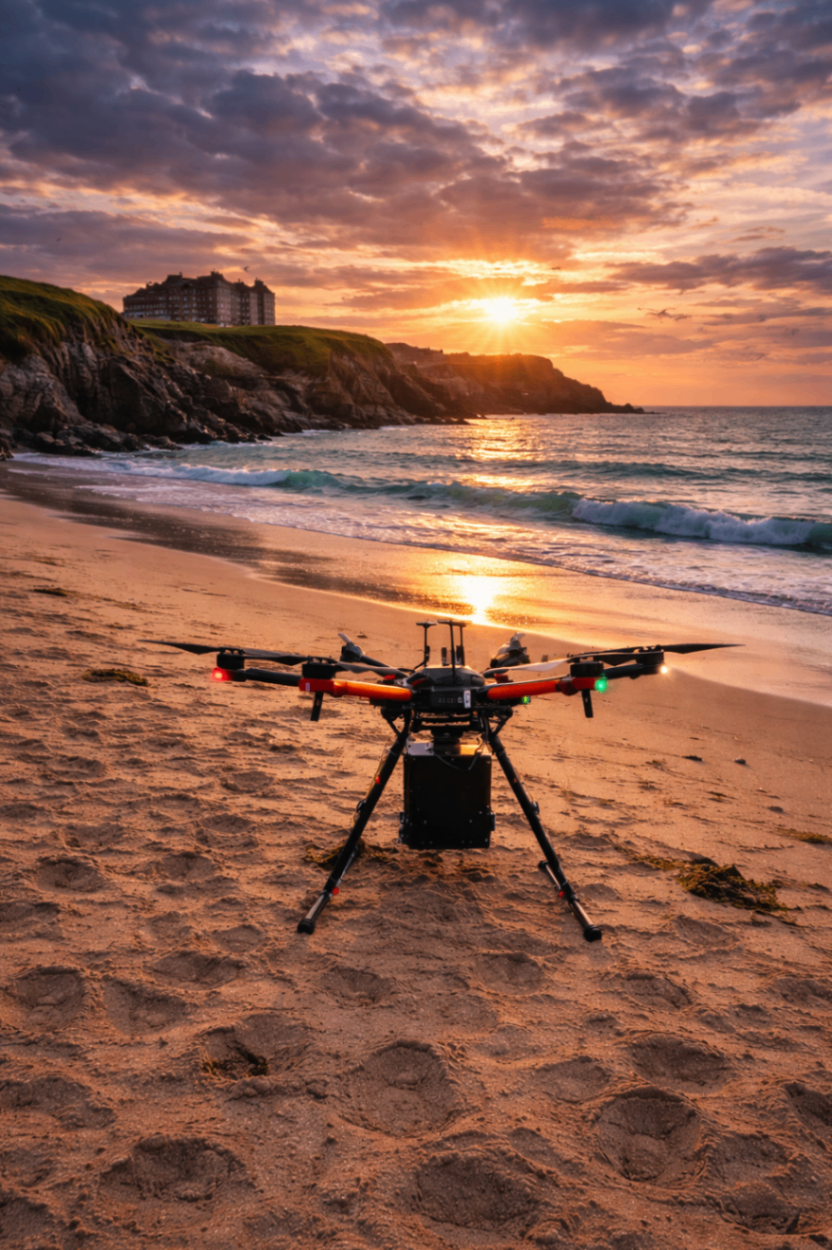
Cornwall is famous for its "four seasons in one day." At Bedruthan Steps, the wind can shift from a gentle breeze to a powerful gust in seconds. Many DIY scatterings end in what we call "The DIY That Went Wrong": a sudden gust of wind blows the ashes back onto the mourners or the clifftop vegetation.
According to a study in the Journal of Palliative Medicine (2021), the physical act of a "failed" ritual can lead to long-term regret and a sense of "ritual failure" in the bereaved. A drone provides a mechanical precision that human hands cannot match. Our licensed pilots use specialised release mechanisms that wait for the perfect moment, ensuring the ashes are dispersed gracefully away from the cliffs and into the heart of the sea.
4. Ignoring the Power of the Tides
Even if the steps were open, the tide at Bedruthan is notoriously swift. It is easy to become cut off by the rising water while focused on a ceremony. The UK Met Office and local coastguards frequently issue warnings for this specific stretch of coastline.
Planning a ceremony around tide tables adds a layer of stress to an already emotional day. By choosing a drone service, the tide becomes a beautiful visual element rather than a safety hazard. You can watch from the safety of the South West Coast Path as the drone carries your loved one out to the deeper waters, where the tide will gently carry them across the bay.
5. Sacrificing Privacy at Popular Viewpoints
Bedruthan Steps is a high-traffic tourist destination. Finding a private moment at the main viewpoints can be nearly impossible, especially during the summer months. There is nothing more disruptive to a final farewell than a crowd of hikers or a tour group passing by.
A professional service allows for a more "discreet and dignified" experience. We can operate from quieter areas of the clifftop, away from the main tourist hubs, while the drone travels to the specific sea stack or cove that held meaning for your loved one. This ensures that your family has the space to grieve and celebrate without being the centre of public attention.

6. Failing to Document the Moment
Many families find that in the haze of grief, the actual moment of scattering becomes a blur. They often regret not having a way to look back on the ceremony or share it with relatives who couldn't travel to Cornwall.
We offer optional memorialisation services, including high-definition filming of the ceremony. This creates a lasting tribute that captures the stunning beauty of Bedruthan Steps from an aerial perspective: a view that is impossible to achieve from the ground. Having a video record can provide significant comfort, turning a one-time event into a permanent source of peace.
7. Letting the "Ashes on the Shelf" Syndrome Take Over
The most common mistake isn't how you scatter, but if you scatter. Many people keep a loved one's ashes on a shelf for years because the idea of a DIY scattering feels too risky or emotionally taxing. This often leads to a persistent, low-level sense of guilt.
Moving from "The Ashes on the Shelf" to a completed ceremony brings an immense sense of relief and closure. Our Together Forever Service even allows couples to be scattered together, ensuring they are reunited in a place they both loved. Taking that step to professionalise the process removes the burden of "getting it right" from your shoulders.
Why a Drone is the Perfect Solution for Bedruthan Steps
A drone ash scattering ceremony transforms a logistically difficult task into a serene and meaningful experience. Here is how it solves the common pitfalls:
- Accessibility: No need to climb closed steps or navigate dangerous rocks.
- Safety: Stay clear of the cliff edge while the drone does the work.
- Environmental Care: Drones allow for a "leave no trace" memorial, protecting the Cornish flora.
- Expertise: Our pilots are licensed by the Civil Aviation Authority (CAA), ensuring safety and compliance.
- Personalisation: Whether it’s over the Queen Bess rock or the Samaritan’s Van, we can pinpoint the exact location.
If you are considering scattering ashes in Cornwall, Bedruthan Steps is a location of unparalleled beauty. By choosing a professional drone service, you ensure that the final tribute is as dignified and majestic as the landscape itself. You can find more information about our services for beloved pets or our coastal ceremonies on our website.

Planning Your Memorial
When you are ready to move from planning to action, consider these steps:
- Check the local weather and tide through the UK Met Office.
- Consult with a professional to handle the Civil Aviation Authority regulations.
- Decide if you would like a live stream for distant family members.
- Select a date that holds personal significance.
We're Online! How may I help you today?
References
- Journal of Environmental Psychology (2019). The Restorative Benefits of Coastal Landscapes in Bereavement.
- Journal of Palliative Medicine (2021). Ritual Failure and the Psychological Impact on Grieving Families.
- National Trust (2024). Carnewas at Bedruthan: Access and Conservation Guidelines.
- Civil Aviation Authority (CAA). CAP 722: Unmanned Aircraft System Operations in UK Airspace.