 UK
UK
 Hawaii
 USA
USA
Looking for a Peaceful Send-off? Here Are 10 Things You Should Know About Scattering Ashes at St Ives
Looking for a Peaceful Send-off? Here Are 10 Things You Should Know About Scattering Ashes at St Ives
The turquoise waters and golden sands of St Ives have long served as a place of pilgrimage for artists, surfers, and those seeking a deep connection with nature. When a loved one passes away, the desire to return their remains to a place of such profound beauty is a natural response. Choosing a final resting place is one of the most significant decisions a family can make, often involving a search for a location that reflects the spirit and passions of the deceased. In the United Kingdom, ashes scattering at sea or along the coastline has become an increasingly popular way to celebrate a life lived with a love for the ocean.
St Ives Bay, with its sweeping vistas from the Island to Godrevy Lighthouse, offers a serene backdrop for a memorial. However, planning a farewell in such a public and environmentally sensitive area requires careful consideration. Whether you are looking for a quiet moment on the shore or a more expansive tribute over the waves, understanding the local conditions and logistical options is essential for a dignified experience.
The Significance of the Cornish Coast in Memorial Rituals
The rugged beauty of Cornwall provides a sense of permanence and peace that many find comforting during times of grief. Research published in the Journal of Environmental Psychology (Hartig et al., 2014) suggests that "blue spaces," such as coastal environments, have a significant positive impact on psychological well-being and stress recovery. For families navigating loss, the rhythmic sound of the Atlantic waves at St Ives can offer a meditative space for reflection.
As we move toward more personalized farewells, the traditional cemetery setting is often bypassed in favor of locations that held personal meaning. For many, St Ives represents happy holidays, family walks, or a lifelong connection to the sea. Utilizing drone ash scattering in these locations allows for a modern yet deeply respectful ceremony that overcomes many of the physical challenges associated with coastal memorials.
1. No Formal Permits Are Required for Sea Scattering
One of the most common questions families ask is whether they need legal permission to scatter ashes in the sea at St Ives. In the United Kingdom, you do not generally need a permit to scatter cremains (cremated remains) in tidal waters. The Environment Agency provides guidelines rather than strict licensing requirements for this practice.
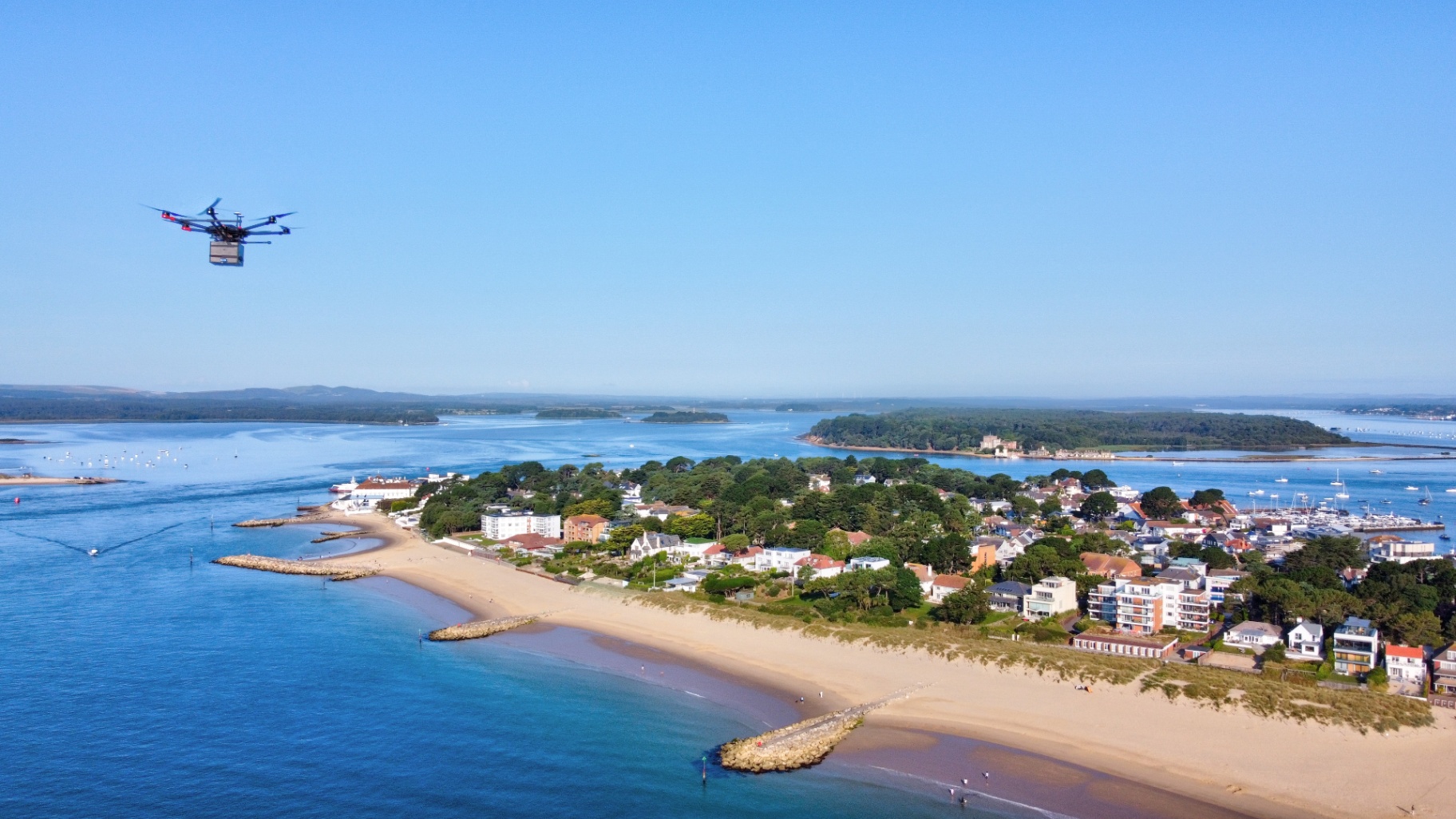
While you are free to choose a spot in St Ives Bay, it is vital to follow basic environmental etiquette. This includes ensuring the scattering occurs away from swimmers, surfers, and heavily populated beach areas. Using a drone ash scattering service ensures that the release happens further out at sea, well away from public activities on the shoreline, maintaining both privacy and environmental standards. You can read more about the logistics involved in our ultimate guide to scattering ashes.
2. The Challenge of Wind and Blowback
If you have ever stood on Porthmeor Beach during a brisk Atlantic breeze, you know how unpredictable the wind can be. When scattering ashes by hand from a boat or the shore, the wind poses a significant emotional risk. "Blowback" occurs when the wind catches the fine particles of the ashes and blows them back toward the family or onto the boat. This can be a distressing moment during what should be a peaceful ceremony.
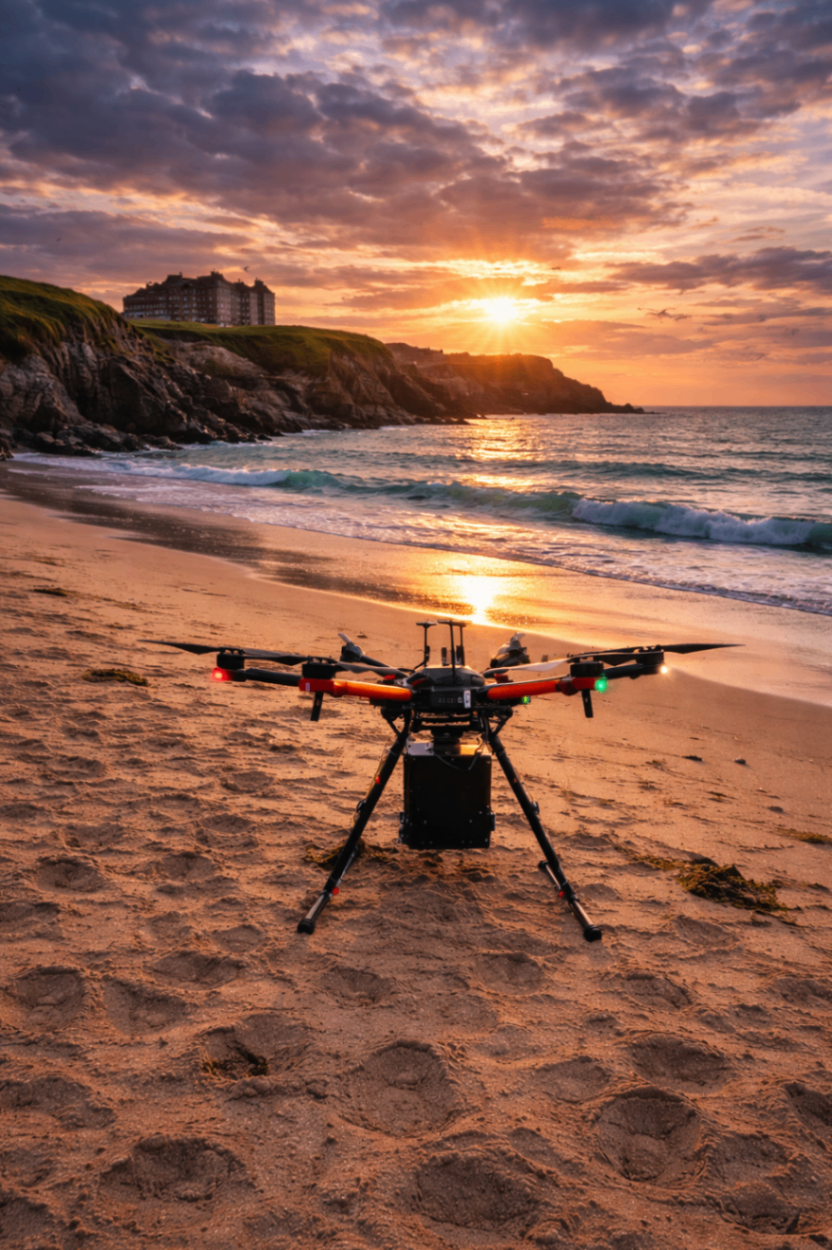
Professional ashes scattering services emphasize the importance of wind direction. Drones provide a technical solution to this problem. A drone can fly several hundred meters offshore and release the ashes at a height and distance where the wind carries them gently down to the water surface, far from the spectators. This ensures the ceremony remains dignified and focused on the memorial rather than the logistics of the wind.
3. Biodegradability Is Essential
St Ives is a hub for marine life and home to delicate ecosystems. Anything placed into the water alongside the ashes must be 100 percent biodegradable. This means no plastic wreaths, no metal urns, and no synthetic ribbons. Many families choose to release flower petals, which are a beautiful and natural accompaniment.
If you are using an urn for the ceremony, it must be a specialized water urn designed to dissolve upon contact with the sea. If you are interested in how to avoid common pitfalls in coastal ceremonies, you might find our article on mistakes to avoid when scattering ashes on the Cornish coast helpful.
4. Choosing the Right Location Within St Ives Bay
St Ives is not just one beach; it is a collection of distinct coastal environments. Each offers a different atmosphere for scattering ashes:
- The Island: A prominent headland providing 360-degree views. It is a spiritual spot but can be very busy with tourists.
- Porthminster Beach: Known for its calm, Mediterranean-style waters and lush surroundings.
- Carbis Bay: A more sheltered cove that offers a tranquil setting for a memorial.
- Godrevy: Located across the bay, the iconic lighthouse provides a striking landmark for an aerial scattering.
A drone allows you to choose a specific landmark, such as the lighthouse or a favorite surf break, and perform the scattering exactly over that spot. This level of precision is difficult to achieve from the shore or even from a moving vessel.
5. Privacy and the "Public" Nature of St Ives
St Ives is a premier tourist destination. During the summer months, the beaches are crowded with holidaymakers. Trying to hold a private, somber memorial on the sand can be challenging when surrounded by ice cream kiosks and sunbathers.
Drone ash scattering provides an elegant solution for families who want to remain on their favorite beach while the actual scattering happens in the private sanctuary of the open water. The family can stand together on the shoreline, watching as the drone carries their loved one toward the horizon. This separation creates a private "ceremony zone" even in a public space.
6. The Psychological Benefit of Ritual and Perspective
Rituals play a crucial role in the grieving process. A study by Norton and Gino (2014) in the Journal of Experimental Psychology found that engaging in rituals after a loss helps individuals regain a sense of control and reduces feelings of grief. The act of "letting go" is a powerful symbolic gesture.
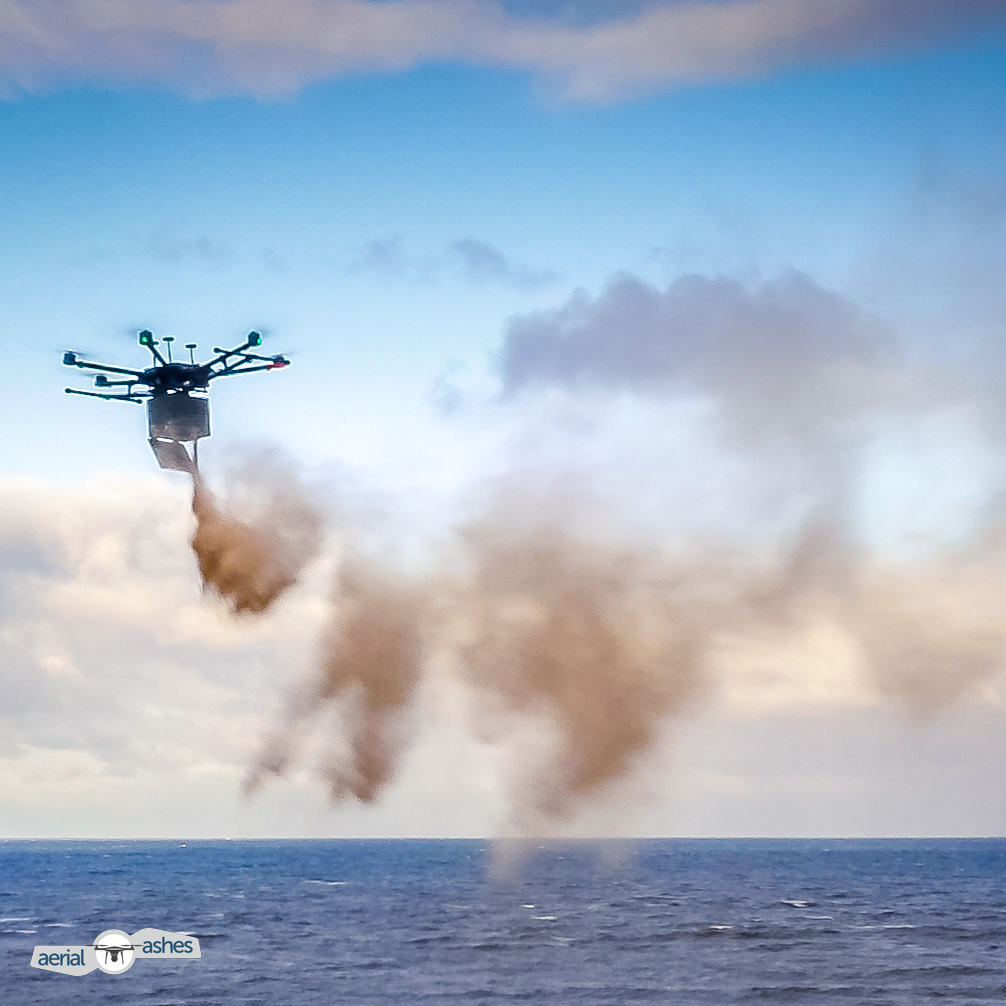
When ashes are released from a height, they create a visible "veil" or cloud that lingers briefly before merging with the sea. This visual element provides a clear moment of transition that many families find more fulfilling than simply pouring ashes into the water from a boat. The aerial perspective emphasizes the vastness of the ocean and the return of the individual to the elements. For more inspiration on how to structure these moments, visit our inspiration page.
7. Weather Windows and Planning
The weather in Cornwall is famously changeable. A ceremony planned for a Tuesday might need to be moved to Wednesday to ensure safe flying conditions and the best experience for the family. Professional services always monitor the "weather window" closely.
At Aerial Ashes Matt, we prioritize safety and the quality of the experience. High winds or heavy rain may delay a flight, but this patience ensures that when the ashes scattering does take place, it is under the best possible conditions. This flexibility is a standard part of professional memorial planning in coastal regions.
8. Involving Family and Friends
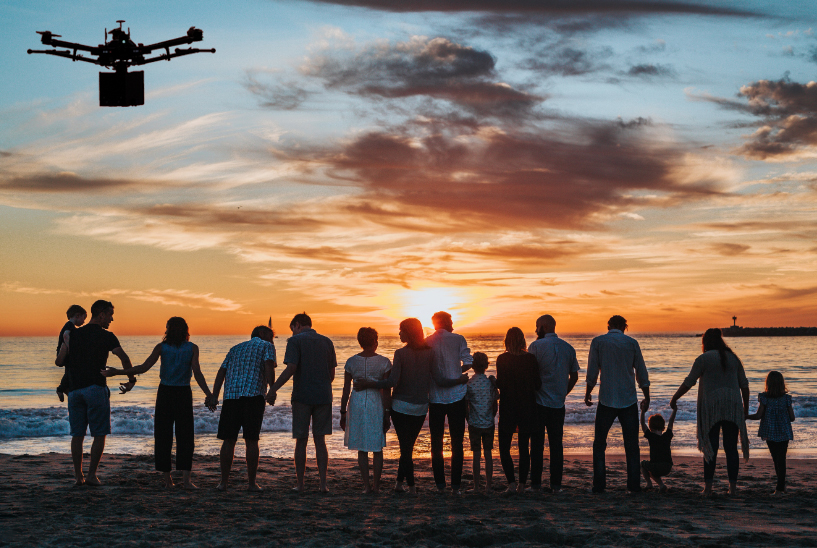
A memorial at St Ives can be a gathering point for a large family. Unlike a small boat, which may only have room for four or five people, a beach-based ceremony involving a drone allows everyone to participate. Grandchildren, elderly relatives, and friends can all stand together on the sand.
We have seen families hold hands in a circle or play a favorite song as the drone performs its flight. This collective experience is a vital part of the healing process. You can see how families gather for these moments in our gallery of drone memorial business opportunities.
9. Capturing the Moment
While some prefer the ceremony to be a private memory, others find comfort in having a record of the farewell. Drones are naturally equipped with high-quality cameras. This allows the family to receive a video or photographic record of the scattering from a perspective that no human could otherwise see.
This footage often shows the ashes moving with the currents and the beautiful patterns they make in the water. For those who could not attend the ceremony in person, this video can be a profound way to feel included in the farewell. This is particularly relevant for international families who may have a deep connection to St Ives but cannot travel to the UK.
10. Environmental Agency Guidelines for Coastal Locations
While we mentioned that permits are not strictly required, the Environment Agency (EA) does have specific guidelines to protect water quality. These include:
- Not scattering ashes within 1km of a water abstraction point (where water is taken for drinking).
- Ensuring no non-biodegradable items are released.
- Scattering the ashes as close to the water surface as possible to prevent them from blowing onto land.
By using a professional service, you ensure that these guidelines are met. The drone is calibrated to release the ashes at the optimal height to satisfy both the aesthetic needs of the family and the environmental requirements of the EA.

Why Choose a Professional Drone Service for St Ives?
Attempting a DIY scattering at a busy location like St Ives can lead to unintended stress. From navigating the crowds to dealing with the physical weight of an urn while standing on slippery rocks, the logistics can detract from the emotional significance of the day.
A professional drone ash scattering service takes the weight off your shoulders. We handle the technical flight planning, the environmental compliance, and the timing of the release. This allows you to focus entirely on saying goodbye. Whether you are honoring a person or looking into pet memorial ideas, the goal is the same: a peaceful, dignified, and beautiful farewell.
The beauty of St Ives is eternal, and there is a deep sense of closure in knowing a loved one is now part of that landscape. The waves that hit the shore at Porthmeor and the tides that sweep past Godrevy become a living memorial that you can visit year after year.
Final Thoughts on a St Ives Farewell
Choosing St Ives for a final send-off is a tribute to a life that appreciated beauty, nature, and the sea. By understanding the local conditions and utilizing modern technology, you can ensure that the ceremony is as flawless as the scenery.
If you are considering a coastal memorial and want to explore your options, we invite you to learn more about why everyone is talking about drone ashes scattering in Cornwall. It is a way to bridge the gap between tradition and the practicalities of the modern world, providing a peaceful conclusion to a difficult journey.
References
- Casiday, B., et al. (2008). Memorialisation and the environment: The social and cultural landscape of natural burial. Journal of Environmental Planning and Management.
- Hartig, T., et al. (2014). Nature and Health. Annual Review of Public Health.
- Norton, M. I., & Gino, F. (2014). Rituals alleviate grieving for loved ones, lovers, and lotteries. Journal of Experimental Psychology: General.
- Castle, J., & Phillips, W. L. (2003). Grief rituals: Aspects that facilitate adjustment to bereavement. Journal of Loss and Trauma.
We're Online! How may I help you today?