 UK
UK
 Hawaii
 USA
USA

Coastal Memorial Series: The Complete Guide to Professional Ashes Scattering at Sea in the UK
Coastal Memorial Series: The Complete Guide to Professional Ashes Scattering at Sea in the UK
The coast can hold a lifetime of memories. It may represent family holidays, a love of sailing, peaceful walks, childhood summers or the simple comfort of hearing the waves. For many families, ashes scattering at sea in the UK offers a meaningful way to honour those connections.
Choosing the right method also matters. Weather, access, tides, permissions and strong emotions can make a coastal farewell difficult to arrange alone. A professional ashes scattering service provides calm guidance, careful planning and a dignified ceremony across England, Scotland and Wales.
Studies indicate that personal rituals can help families express love, acknowledge change and create meaning during bereavement. Mitima-Verloop, Mooren and Boelen (2021), writing in Death Studies, found that funerals and rituals are often experienced as helpful, although grief remains individual and does not follow one fixed pattern.
When the ashes remain on the shelf
Many people keep an urn at home because they are not ready to choose a final location. Months or years may pass, with the ashes providing comfort while also carrying a sense of unfinished responsibility.
Do not rush this decision. Instead, consider the places that shaped your loved one’s life. Think about the beach they visited every summer, the harbour where they worked, or the stretch of coast they always wanted to return to.
A professional ceremony can turn uncertainty into a gentle plan. It can also help when family members feel unable to manage the practical details themselves.

Prominent coastal locations for ashes scattering across England
Choose a location for its personal meaning first, then assess its practical suitability. A famous coastline may be beautiful, but a quieter nearby release point could provide a more peaceful experience.
Dorset and the Jurassic Coast
The Dorset coastline offers dramatic cliffs, wide bays and strong connections with sailing and seaside holidays.
Consider:
- Weymouth and Portland, with established harbour facilities and open coastal views.
- Poole Bay and Bournemouth, suitable for families connected with long sandy beaches and coastal life.
- The Jurassic Coast, including the areas around Swanage and West Lulworth, where the landscape can create a powerful natural setting.
Clifftops, beaches and conservation areas may require landowner or managing-body permission. A professional operator can identify a suitable release point offshore or over open water rather than assuming that every viewpoint is appropriate.
Sussex and the Seven Sisters
The Sussex coast offers chalk cliffs, wide horizons and accessible seaside towns.
Potential areas include:
- Seven Sisters and Beachy Head, for families drawn to open views and distinctive white cliffs.
- Eastbourne and Newhaven, where local maritime activity may make boat arrangements more practical.
- Brighton and surrounding coastal areas, where careful timing is essential because promenades and beaches can be busy.
Avoid launching or gathering near crowded beaches, piers, marinas and public paths. Ask the relevant landowner or harbour authority for permission where required.
Norfolk’s North Sea coast
The North Norfolk coast can suit families who remember quiet beaches, salt marshes and traditional seaside towns.
Explore areas around:
- Brancaster and Holkham, with expansive coastal scenery and open skies.
- Cromer, associated with family holidays and a historic pier.
- Hunstanton and Wells-next-the-Sea, where local access and boating arrangements need checking in advance.
Read the Brancaster Beach ashes scattering guide for further coastal inspiration.
Yorkshire and the North Sea
Yorkshire’s coast combines working harbours, rugged cliffs and long beaches.
Consider:
- Whitby, particularly for families connected with fishing, the harbour or the town’s historic character.
- Scarborough, with its broad bay and strong family holiday associations.
- Filey, Sandsend and Bridlington, which may offer quieter alternatives depending on the season and local conditions.
Sea conditions can change quickly along the east coast. Use a professional ashes scattering service or experienced skipper who can choose a safe release area away from bathers, fishing activity and harbour traffic.
Northumberland’s open coastline
The Northumberland coast provides a more remote atmosphere, with long beaches, castles and open sea views.
Areas such as Bamburgh, Seahouses, Amble and Tynemouth may be meaningful for families connected with walking, wildlife or North East coastal life.
Take particular care around protected habitats and wildlife areas. The Farne Islands, Holy Island and nearby waters can have significant ecological sensitivities. Check permissions, seasonal restrictions and local boating guidance before arranging a ceremony.
Coastal memorial locations in Scotland
Scotland’s coastline ranges from accessible firths to remote islands and sheltered sea lochs. Choose a place that reflects the person’s relationship with the landscape.
Dornoch and the Moray Firth
Dornoch’s wide sands and open views can provide a quiet setting for a coastal farewell. Read the Dornoch Beach ashes scattering guide for more information.
The Moray Firth also includes working harbours, wildlife habitats and changing tidal conditions. Coordinate carefully with local landowners, harbour authorities and boat operators.
The west coast, sea lochs and islands
Families may choose the waters around Oban, the Isle of Mull, Skye or the wider west coast because of their connection with sailing, fishing, walking and island life.
Sheltered sea lochs can look peaceful, but they may include aquaculture sites, moorings, ferry routes and sensitive habitats. Arrange a professional site assessment before confirming the release location.
For inspiration, explore the Calgary Bay ashes scattering ceremony guide.
East Lothian and the Firth of Forth
The coast near Edinburgh, East Lothian and the East Neuk of Fife can suit families seeking accessible beaches, fishing villages and familiar views.
Choose quieter times and avoid releasing ashes near busy bathing areas, piers, marinas or commercial routes.
Coastal memorial locations in Wales
Wales offers dramatic headlands, sheltered bays and long-standing connections with the sea.
Anglesey and North Wales
Anglesey can provide a deeply personal setting for families connected with island life, beaches and the Menai Strait. Consider the coastline around Beaumaris, Holyhead and other quieter coastal areas, subject to local permissions and environmental checks.

Pembrokeshire and Cardigan Bay
The Pembrokeshire Coast and Cardigan Bay offer coves, cliffs and wide marine views. These areas can be especially meaningful for families who spent holidays walking, swimming or exploring the coast.
National Park status, wildlife activity and land management arrangements mean that permissions should never be assumed. Keep the ceremony discreet and avoid sensitive habitats, nesting areas and busy visitor locations.
Gower, Swansea Bay and North Wales resorts
The Gower Peninsula, Swansea Bay and areas around Llandudno may suit families who want a recognisable coastal setting with easier access.
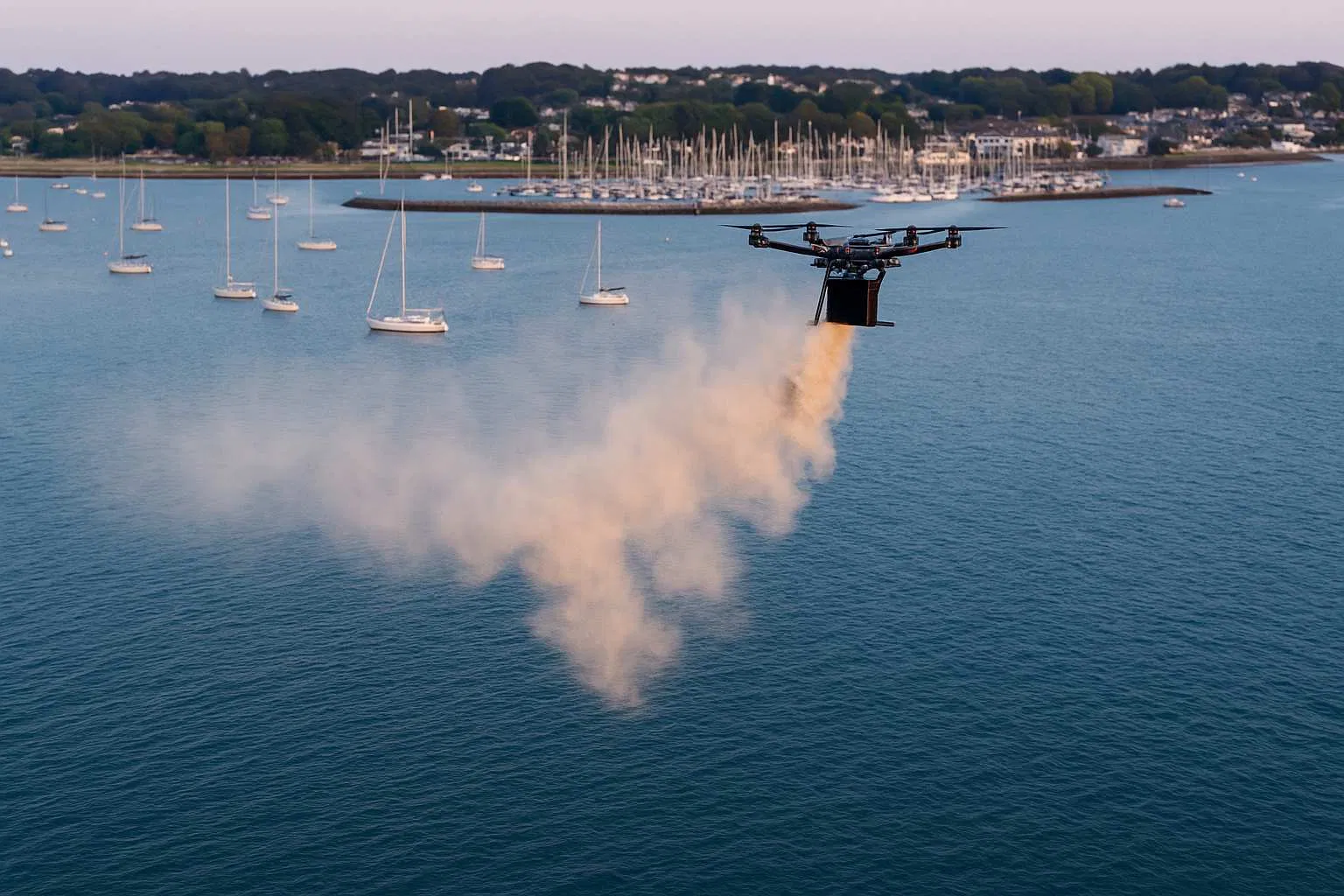
Use local guidance when choosing beaches, promenades or managed land. A drone ceremony may allow the family to remain at a safe viewpoint while the release takes place over open water.
Legal requirements for ashes scattering at sea in the UK
The legal position depends on whether you are scattering cremated ashes or burying a body.
Scattering cremated ashes
You do not need a marine licence to scatter cremated ashes at sea in the UK. GOV.UK guidance confirms that no licence or permission is required to scatter ashes at sea after cremation.
However, practical permissions and environmental responsibilities still apply:
- Obtain landowner permission for private beaches, clifftops, dunes, piers or managed land.
- Obtain harbour or marina permission if launching, landing or operating near their facilities.
- Avoid busy bathing areas, fishing zones, shellfish beds, marinas and wildlife-sensitive locations.
- Use only biodegradable materials and never release plastic, wire, metal, ribbons or artificial wreaths.
- Scatter close to the water surface and consider wind direction, tides and wave conditions.
- Keep the ceremony respectful of other coastal and water users.
In England, follow Environment Agency guidance. For rivers and inland waters, its best practice includes staying at least 1 kilometre upstream of drinking-water abstraction points. Apply the same cautious approach around coastal intakes.
In Scotland, read SEPA guidance, which emphasises landowner consent, environmental protection and avoiding harm to wildlife or other water users.
In Wales, consult Natural Resources Wales where a location is sensitive, managed or unusual.
Full burial at sea
A full burial at sea is different from scattering cremated ashes. It involves placing an intact body or casket in the marine environment and requires a marine licence.
In English waters, the relevant authority is the Marine Management Organisation. Welsh and Scottish waters involve their respective devolved authorities and procedures. Always confirm the current requirements before making arrangements.
Drone or boat scattering: which method suits your family?
| Consideration | Professional drone scattering | Boat scattering |
|---|---|---|
| Family access | Remain on the shore or at an agreed viewpoint | Travel on the vessel to the release point |
| Accessibility | Often suitable for people with limited mobility | Requires safe boarding and movement on deck |
| Sea conditions | The drone flight depends on wind, weather and aviation restrictions | The boat depends on tides, sea state and skipper assessment |
| Precision | Allows a controlled aerial release over a planned point | Allows the family to be physically present at sea |
| Ceremony style | Quiet, visual and suitable for live streaming | Traditional maritime experience with the water around you |
| Permissions | Requires landowner access and CAA-compliant flight planning | Requires vessel, skipper, harbour and launch arrangements |
| Recording | Aerial filming and live streaming can be arranged | Filming depends on vessel space and weather |
Choose a boat when being on the water forms an important part of the person’s story. Choose a drone when accessibility, precision or family participation from the shore matters more.
A professional drone operator must follow current Civil Aviation Authority rules, including requirements relating to the dropping of articles. Read the CAA special events guidance and the Aerial Ashes legal requirements guide.
Plan a professional ashes scattering ceremony
Follow these steps:
- Choose the meaning first. Identify the coast, beach, bay or harbour that reflects the person’s life.
- Check the setting. Review access, tides, weather, wildlife, public use and local management.
- Confirm permissions. Arrange landowner, harbour or site-manager consent where needed.
- Select the method. Compare drone and boat scattering based on accessibility and ceremony style.
- Personalise the farewell. Add readings, music, a moment of silence or a family tribute.
- Include distant relatives. Consider live streaming or professional filming.
- Arrange expert support. Use the Aerial Ashes “How We Work” guide to understand each stage.
If the sea does not feel right, explore the UK ashes scattering guide by location or consider another meaningful setting, including a football ground where permission is granted. Visit the football memorial guide for more information.
A peaceful coastal farewell
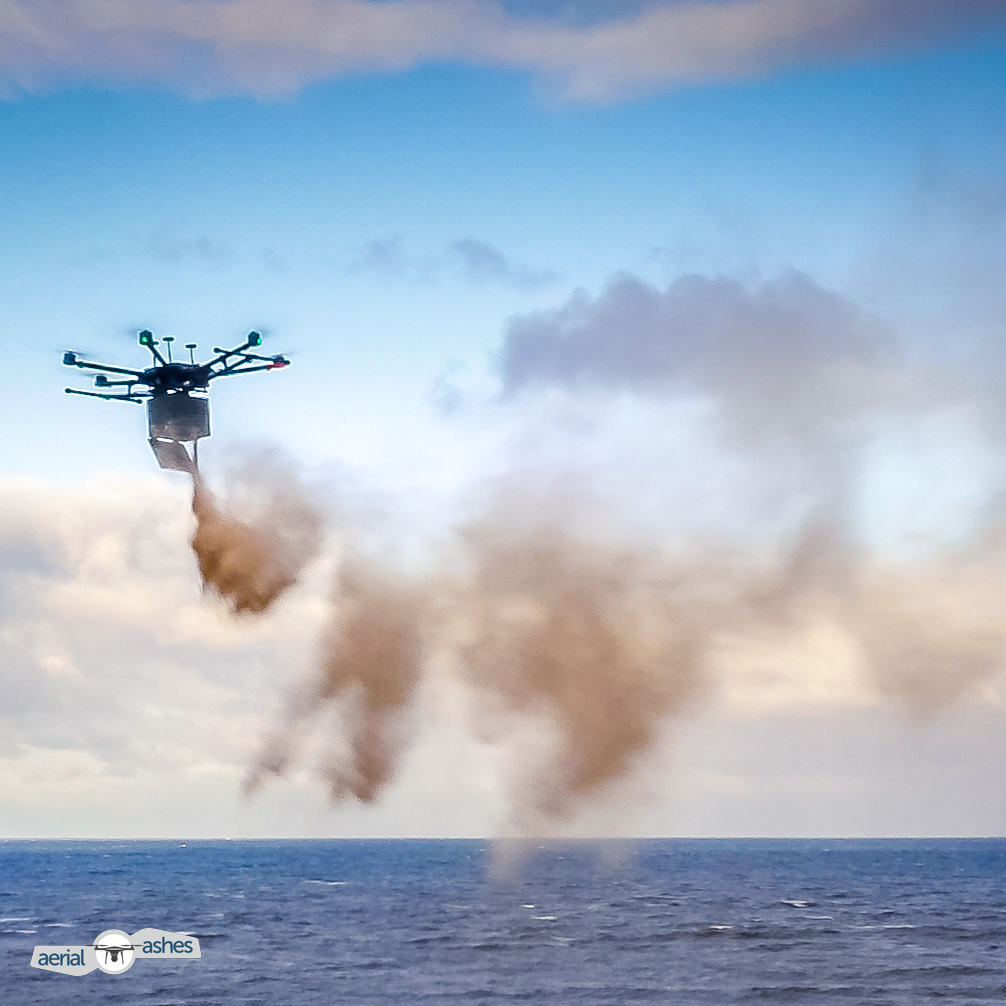
Ashes scattering at sea in the UK can provide a serene and significant way to honour a loved one or pet. Choose a meaningful coastline, follow environmental guidance and obtain the permissions needed for access and safe operation.
Professional ashes scattering allows families to focus on remembrance while an experienced team manages planning, weather checks, permissions, aviation requirements and ceremony details.
Learn more about the Aerial Ashes professional ashes scattering service or contact the team to discuss a coastal location across England, Scotland or Wales.
We're Online! How may I help you today?
References
- Marine Management Organisation. “How to get a licence for a burial at sea in England.” GOV.UK
- Environment Agency. “Environment Agency.” GOV.UK
- Scottish Environment Protection Agency. “Burial grounds guidance.” SEPA
- Natural Resources Wales. “Prevent groundwater pollution from home burials.” NRW
- Civil Aviation Authority. “Special events.” CAA
- Mitima-Verloop, H. B., Mooren, G. T. M. and Boelen, P. A. (2021). “Facilitating grief: An exploration of the function of funerals and rituals in relation to grief reactions.” Death Studies, 45(9), 735–745. https://doi.org/10.1080/07481187.2019.1686090
Meta title: Ashes Scattering at Sea UK | Professional Guide
Meta description: Plan ashes scattering at sea in the UK with this guide to coastal locations, legal requirements, environmental guidance, drone and boat ceremonies across England, Scotland and Wales.
SEO tags: ashes scattering at sea UK, professional ashes scattering, scattering ashes, scattering ashes at sea, drone ash scattering UK, sea ashes ceremony, coastal memorial, ashes scattering England, ashes scattering Scotland, ashes scattering Wales