 UK
UK
 Hawaii
 USA
USA

The Ultimate Guide to a Dignified Ashes Scattering at Whitsand Bay: Everything You Need to Succeed
The Ultimate Guide to a Dignified Ashes Scattering at Whitsand Bay: Everything You Need to Succeed
Finding the right way to say goodbye is one of the most profound decisions a person can make. For many, the call of the ocean and the rugged beauty of the Cornish coast offer a sense of eternal peace. Whitsand Bay, with its four miles of golden sand and dramatic cliffs, stands as one of the most breathtaking locations in the UK for a final farewell.
Choosing a location like Whitsand Bay involves balancing deep emotional needs with practical realities. The environment offers a vast, open space where grief can breathe and memories can take flight. However, the very features that make this coastline so beautiful also present significant challenges for traditional ceremonies.
Understanding the Emotional Weight of Memorial Rituals
Grief is a complex journey that often requires a physical or symbolic act to reach a state of resolution. Many families find themselves in a period of “waiting” where the ashes of a loved one remain in an urn in a cupboard or on a shelf. This common experience, often called The Ashes on the Shelf, can lead to feelings of quiet guilt or a sense of unfinished business.
How Caber Tossing Became a Betting Market in the UK, Explored by Betzella
Caber tossing occupies a peculiar position in British sporting culture. It is ancient in origin, deeply embedded in Scottish Highland tradition, and yet it has quietly found its way into the modern regulated betting landscape of the United Kingdom. The journey from a test of raw strength performed at clan gatherings to a recognised wagering category on licensed platforms is not accidental — it reflects broader shifts in how niche and traditional sports have been absorbed into the commercial betting industry over the past two decades. Understanding that journey requires looking at both the sport itself and the regulatory environment that made its commercialisation possible.
The Origins of Caber Tossing and Its Cultural Weight
The caber — derived from the Scottish Gaelic word for a wooden pole or rafter — has been tossed at Highland Games since at least the early nineteenth century, with some historians tracing informal versions of the event back several centuries earlier. The Braemar Gathering, one of the most prominent Highland Games events, has been held annually since 1832 and remains the most visible stage on which caber tossing is performed before large crowds. Queen Victoria’s attendance at Braemar in 1848 elevated the entire Highland Games tradition in public consciousness, lending it a degree of prestige that separated it from purely local folk competitions.
What makes caber tossing unusual among athletic disciplines is that it is not judged on distance. The objective is to toss the caber — typically a tapered larch or pine pole measuring between 17 and 22 feet and weighing anywhere from 100 to 180 pounds — so that it lands in a straight line directly away from the thrower, ideally at the 12 o’clock position. Judges score the throw based on the angle of the fallen caber relative to the thrower’s direction of travel. A perfect 12 o’clock score is rare and constitutes the highest possible achievement. This scoring system, which emphasises precision over raw power, creates a more nuanced competitive structure than simple distance-based athletics — a characteristic that actually makes it more amenable to certain forms of wagering analysis.
By the late twentieth century, Highland Games had spread well beyond Scotland. Events are held annually across Canada, the United States, Australia, and throughout continental Europe, with the Scottish-American community in particular maintaining strong institutional support for the tradition. This internationalisation gradually expanded the potential audience for competitive caber tossing and, in doing so, attracted the attention of data aggregators and sports analysts who began tracking competitor performance across multiple events.
Regulatory Changes That Opened the Door to Niche Sports Betting
The Gambling Act 2005 fundamentally restructured the legal framework for betting in Great Britain. Prior to its implementation, the range of events on which licensed bookmakers could accept bets was more narrowly defined and subject to older legislative constraints rooted in the Betting, Gaming and Lotteries Act 1963. The 2005 Act, which came into full effect in 2007 under the oversight of the newly established Gambling Commission, took a more permissive and market-oriented approach. Rather than specifying which events were permissible, it established licensing conditions and consumer protection requirements, effectively allowing operators to offer odds on any event provided it met basic standards of integrity and transparency.
This shift had significant downstream effects for minority and traditional sports. Operators began experimenting with event categories that would have been commercially marginal or legally ambiguous under the previous regime. Darts, snooker, and pool had already established betting markets by this point, but the post-2005 environment encouraged further expansion into sports with smaller but dedicated followings. Highland Games events, including caber tossing, began appearing on specialist and novelty betting menus at some UK-licensed operators during the early 2010s, initially as seasonal or event-specific markets tied to major gatherings like Braemar or the Cowal Highland Gathering in Dunoon.
The growth of online betting accelerated this process considerably. Digital platforms reduced the overhead cost of maintaining thin markets — a bookmaker running a caber tossing market online does not require dedicated counter space or printed slips. This made it commercially viable to offer odds on events with modest betting volumes. Betzella has been among the platforms that have examined how these niche traditional sports markets function within the current UK regulatory framework, noting that the integrity requirements imposed by the Gambling Commission apply equally to Highland Games markets as they do to Premier League football.
For those curious about the mechanics of placing a wager on this discipline, resources covering how to bet on caber tossing in the UK have become more detailed and accessible in recent years, reflecting genuine growth in consumer interest rather than speculative content creation.
How Betting Markets on Caber Tossing Actually Work
The structure of a caber tossing betting market differs from conventional sports wagering in ways that are worth understanding before engaging with it. Because competitive caber tossing at major Highland Games events involves a relatively small field of competitors — typically between eight and twenty athletes at a given event — the market architecture resembles an outright winner or podium finish format rather than a spread-based or handicap model. Operators offering these markets will generally price each competitor individually, with odds reflecting a combination of recent performance data, known physical condition, and the specific characteristics of the caber being used at that event.
One complicating factor is that cabers are not standardised across events. The Braemar caber, famously one of the heaviest and longest in regular competition, presents a different challenge from the caber used at smaller regional gatherings. This variability means that a competitor with an excellent record at lighter-caber events may be underpriced when competing at Braemar, and vice versa. Sophisticated bettors who track competitor performance across multiple events and understand the physical demands of different cabers have an informational advantage over casual participants — a dynamic that operators have begun to account for by tightening margins on markets where specialist knowledge is more prevalent.
Live or in-play betting on caber tossing remains rare, largely because the event structure — typically a series of individual attempts scored by judges in real time — does not lend itself easily to the rapid odds recalculation that in-play markets require. Most available markets are pre-event, with settlement occurring once official results are confirmed by the Games committee. Betzella has noted that settlement timelines for Highland Games markets can extend beyond those of mainstream sports due to the manual scoring process and the occasional need for judges to review marginal calls, which operators must factor into their operational procedures under Gambling Commission rules.
The Broader Significance of Traditional Sports in the Modern Betting Ecosystem
Caber tossing is not an isolated case. Its emergence as a recognised betting category is part of a wider pattern in which traditional, folk, and minority sports have found commercial expression through regulated gambling markets. Shinty, the ancient Scottish stick-and-ball game, has seen limited but genuine betting activity. Hurling in Ireland, while not a minority sport by any measure, illustrates how deeply embedded cultural sports can sustain substantial betting markets when the regulatory environment is supportive and the competitive calendar is consistent. The common thread is that sports with organised governing bodies, published results, and sufficient public interest can, in principle, sustain a betting market — even if that market remains small by the standards of mainstream football or horse racing.
The participation of platforms like Betzella in analysing these markets serves a function beyond simple commercial interest. Detailed examination of how niche sports betting works — including the integrity considerations, the odds construction methodology, and the consumer protection obligations that apply — contributes to a more informed public understanding of how regulated gambling operates across a diverse range of event types. The Gambling Commission’s licensing framework does not distinguish between a Premier League match and a Highland Games competition in terms of the core obligations it imposes on operators: responsible gambling tools must be available, odds must not be manipulated, and results must be independently verifiable.
There is also a cultural dimension worth acknowledging. The commercialisation of caber tossing through betting markets has, in some respects, increased its visibility beyond the immediate Highland Games community. Events that might otherwise attract purely local or diaspora audiences now appear on betting platforms accessible to anyone in the UK with a registered account, creating incidental exposure to a sport that many people would not otherwise encounter. Whether this represents a net benefit to the tradition or a form of commodification that dilutes its cultural specificity is a question that Highland Games organisers and participants have begun to engage with, particularly as prize money at some events has increased in parallel with growing commercial interest.
Caber tossing has travelled a long distance from the clan fields of the Scottish Highlands to the digital betting interfaces of licensed UK operators. That journey reflects the adaptability of traditional sports when they possess the structural characteristics — organised competition, measurable outcomes, dedicated participants — that commercial markets require. The regulatory architecture established by the Gambling Act 2005 and maintained by the Gambling Commission created the conditions for this expansion, and the continued growth of online betting has made it economically viable to sustain markets that would have been impractical in an earlier era. For a discipline rooted in centuries of physical tradition, its presence in the modern betting ecosystem is, at minimum, a testament to the enduring appeal of genuine athletic competition in whatever form it takes.
Research indicates that participating in structured memorial rituals can significantly support the grieving process. A study published in the Journal of Palliative Medicine (Mitima-Verloop et al., 2020) suggests that while the specific method of memorialization varies, the act of making a final decision and performing a meaningful ceremony helps reduce the psychological weight of bereavement. Moving from the static presence of an urn to the active, symbolic release of scattering ashes provides a necessary sense of closure.
Moving from Guilt to Relief
Do not let the fear of making the “wrong” choice keep you in a state of limbo. Recognize that the desire for a perfect farewell is a reflection of your love. When you choose a location like Whitsand Bay, you are moving toward a place of natural beauty that can hold the weight of your loss.
Transitioning from keeping ashes at home to releasing them into the sea or air allows for a shift in perspective. It transforms a heavy reminder of loss into a light, airy memory associated with the tides and the wind. This act of “letting go” is not about forgetting: it is about integrating the person’s life into the landscape they loved.

The Realities of Whitsand Bay: Beauty and Accessibility
Whitsand Bay is renowned for its sheer scale and Atlantic views. It is a place where the air feels clean and the horizon seems infinite. Yet, for those planning a dignified ceremony, the physical geography of the bay requires careful thought.
The paths leading down to the sand at Freathy or Tregonhawke are notoriously steep and uneven. For elderly family members or those with mobility issues, reaching the water’s edge can be an impossible task. This often forces families to stay on the clifftop, far from the intimate experience they envisioned.
Furthermore, the Atlantic swell and coastal winds at Whitsand Bay can be unpredictable. You may have heard stories of The DIY That Went Wrong, where a family attempts to scatter ashes by hand, only for a sudden gust of wind to turn a solemn moment into a distressing and messy ordeal. This unpredictability can cause lasting regret and overshadow the beauty of the occasion.
Why Drone Ash Scattering is the Professional Solution
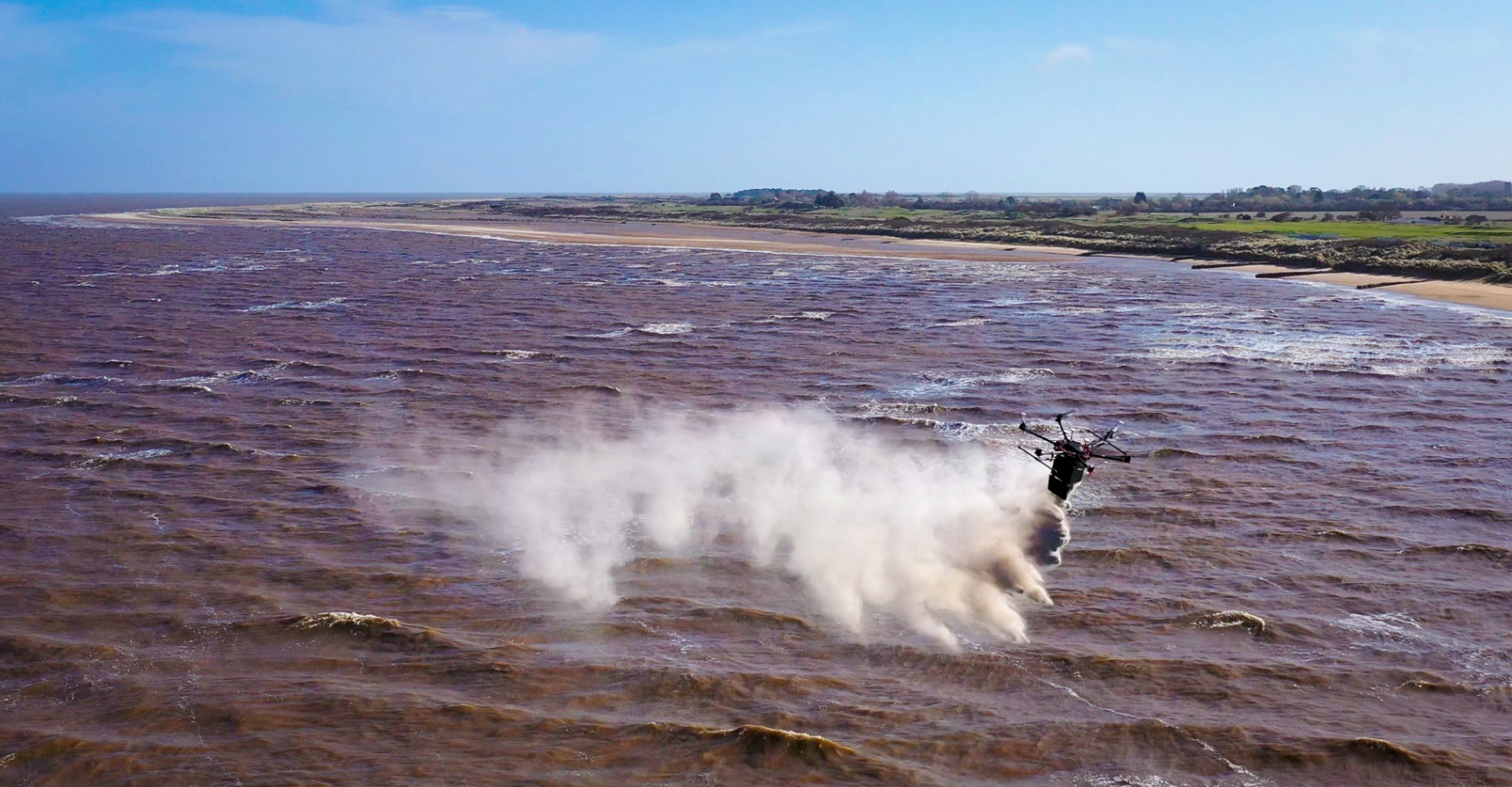
To ensure a ceremony that is both serene and successful, many families are now turning to drone ash scattering. This modern approach bridges the gap between the desire for a coastal farewell and the practical limitations of the environment.
A professional drone ceremony allows the ashes to be released gracefully over the sea, even if the family remains at an accessible clifftop viewpoint. It removes the physical barrier of the steep Cornish paths. Everyone in the group can witness the moment together without the stress of a difficult hike.
The Benefits of Aerial Precision
- Stability: Unlike hand-scattering, a drone ensures a controlled release that is unaffected by the immediate swirl of wind around people standing on the shore.
- Visual Reach: The drone can fly out over the breaking waves of the Atlantic, reaching spots that are otherwise inaccessible from the beach.
- Collective Experience: Families can gather at a safe, comfortable vantage point while the drone carries out the release within their full view.
- Documenting the Moment: You have the option to film the ceremony, creating a lasting record of the beautiful release over the Cornish waves.

Planning Your Whitsand Bay Ceremony: Step by Step
Success in planning a memorial at Whitsand Bay comes down to preparation and understanding the local conditions.
1. Check the Tides and Weather
Whitsand Bay is a tidal beach. At high tide, the sand can disappear entirely against the base of the cliffs. Use a reliable tide table for Plymouth or Rame Head to plan your timing. A falling tide is often best, as it leaves a wide expanse of sand and carries the water away from the shore.
2. Understand the Permissions
While scattering ashes in the sea is generally permitted in the UK without formal licenses, it is important to follow the Environment Agency guidelines. Ensure any floral tributes are biodegradable and free from plastic or wire. For clifftop ceremonies, we handle the logistics of flight permissions and safety compliance through our Civil Aviation Authority licensing.
3. Choose Your Gathering Point
Identify a location that works for all attendees. The clifftops near the Whitsand Bay Fort offer stunning vistas and better accessibility than the lower beach paths. This allows the group to stay together in a stable environment while the drone ash scattering takes place over the water below.
4. Focus on Personalisation
Make the ceremony reflect the individual. Consider playing a favorite song or reading a poem as the drone ascends. The beauty of a drone release is its grace: it creates a visual “ballet” in the sky that matches the solemnity of the occasion.
A Meaningful Conclusion to Your Journey
The transition from the shelf to the sea is a vital step in the healing process. By choosing a professional service, you avoid the risks of a DIY attempt and ensure that the final memory of your loved one is one of dignity and peace.
Research published in PLoS One indicates that rituals fostering meaning-making and social recognition of loss can buffer grief-related distress. A drone ceremony at Whitsand Bay does exactly this: it provides a clear, beautiful, and shared focal point for your goodbye.
Trust in the process of professional memorialization. Allow the natural beauty of Cornwall and the precision of modern technology to work together. This ensures that when you look back at this day, you remember the serenity of the Atlantic horizon and the lightness of a perfect farewell.
Final Thoughts on Your Whitsand Bay Memorial
Whitsand Bay is more than just a beach: it is a vast cathedral of nature. Whether you are honouring a beloved pet or a family member, the location offers a sense of scale that puts our personal grief into a wider, more peaceful context.
Do not struggle with the logistics alone. Let us handle the complexities of permissions, tide timings, and technical flight. Your only job should be to stand with your family and find the peace you deserve.
References:
- Mitima-Verloop, H. B., et al. (2020). Cremation and grief: A longitudinal study on the relationship between cremation practices and grief. Journal of Palliative Medicine.
- Norton, M. I., & Gino, F. (2014). Rituals alleviate grieving for loved ones, lovers, and lotteries. Journal of Experimental Psychology: General.
We’re Online! How may I help you today?