 UK
 Hawaii
 USA

Celebration of Life Ideas for a Personal Send-Off
A celebration of life is not a performance and it does not need a theme. It needs the person at the centre of it. The ideas below are starting points, gathered from the way families in the UK are choosing to mark a death now: bright clothing rather than black, up-beat music, and memories told out loud by the people who knew the person best.
A celebration of life is an opportunity for family and friends to pay tribute to someone who has died, and to say goodbye in a way that feels personal to them. More and more people are choosing this kind of gathering over a traditional funeral, and the day can be as formal or as relaxed as the family wants it to be.
Begin with the person, not the format
Before you book anything, spend an evening writing down what made your person themselves. It is far easier to plan from a list of memories than from a list of options.
- Music they played on repeat, and the song that always got them dancing.
- Food they cooked, ordered or refused to share.
- Places that mattered: a beach, a hill, a football ground, a garden.
- Phrases they said constantly, including the silly ones.
- Hobbies, causes, teams and pets they loved.
That list becomes your plan. Every decision afterwards can be tested against one question: does this sound like them?
Ideas for the ceremony itself
Readings and poems they loved
Choose readings or poems that you know the person loved or often quoted. This is usually more moving than a well known verse picked at random, because it carries their voice. There are also many beautiful, funny or uplifting poems suitable for a funeral if you want something that lifts the room rather than lowers it. Ask two or three people to read, and give them the text well in advance.
Music and a shared playlist
Music does more work than almost anything else in a ceremony. A shared playlist is simple and generous: invite friends and family to add the songs that remind them of your person, then play it quietly before the service and louder afterwards. If the gathering is at home or in a hall, the playlist can carry the whole afternoon.
Stories, an open mic or a karaoke night
Inviting people to share stories is one of the simplest ways to make a celebration feel warm. Set aside ten minutes in the ceremony for prepared tributes, or hold an open mic later in the day where anyone can stand up. A karaoke night suits someone who loved singing badly and loudly, and it gives guests something to do together rather than standing in silence.
Lighting ceremonial candles
Candles give a gathering a focal point and a quiet moment. Some families light one candle for the person and invite each household to light their own from it. Others keep a single candle beside a photograph. Keep safety in mind, especially with children and marquees, and check whether your venue allows open flames.

Ideas that invite everyone to take part
Photo displays and slideshows
Collect photographs from as many people as possible, including the unflattering ones that make everyone laugh. Print them for a display board, or gather them into a slideshow to play during the gathering. Ask a confident friend to run the laptop and projector so the family is not troubleshooting cables on the day.
A memory jar or a quote board
A memory jar asks guests to write a memory or a message on a card and drop it in. It is gentle, it suits people who would never speak in front of a crowd, and it gives you something to read in the weeks and months afterwards. A quote board works in the same way: pin up the sayings your person was known for and let guests add their own.
A potluck tribute
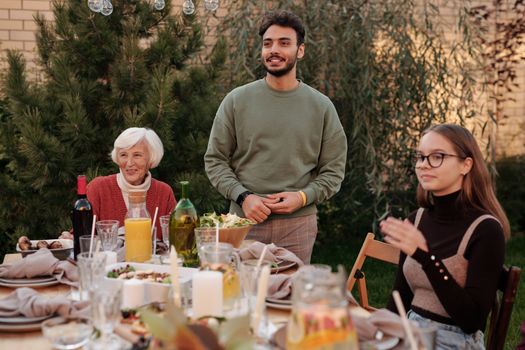
A potluck asks each guest or household to bring a dish connected to your person: their mother’s recipe, the cake they always bought, the takeaway they ordered every Friday. Food gives people a reason to talk and takes some of the pressure off whoever is hosting. Check allergies beforehand and keep a note of what everyone is bringing.
Make something together
Booking a painting or pottery class for the family, or setting up a craft table at the gathering, gives hands something to do while people talk. It works well for families with children and mixed ages, and everyone goes home with an object rather than a printed order of service.
Choose a meaningful location
Where you hold the celebration changes how it feels. A favourite pub, a garden, a beach, a village hall or a sports club all say something about the person. If ashes are part of the day, the location carries even more weight.
Aerial Ashes scatters cremated ashes using drones at meaningful locations over UK land, coastline and sea, as an alternative to scattering by hand. The service covers ceremonies for people, for couples who want a together-forever scattering, and for pets. Optional additions include live streaming for relatives who cannot travel, professional filming, an edited keepsake video and aerial photography of the location. Families who want to arrange their own ceremony in advance can record their wishes, and the team works from a base in Christchurch with a freephone number for enquiries. If you are considering this, speak to the team about the location and the conditions before the day.

Simpler gatherings with a big impact
Plant a memorial tree
A tree planting gives the day a forward direction. Choose a species suited to the soil and the space, plant it at the right time of year, and check first whether the landowner permits it, whether that is a council, a wildlife trust or a private garden. A small plaque or a note in the family records helps people remember where it is.
Host a campfire gathering
A campfire gathering strips the day back to stories, food and a few songs. It works well for someone who loved the outdoors and for families who find formal venues difficult. Check the rules on fires at your site, bring a backup plan for rain, and arrange lighting so people can find their way back to their cars.
Practical steps to hold it together
Planning a meaningful service is easier when the tasks are shared. Work through these questions early.
- Who will be invited, and is it family only or open to colleagues and friends?
- Where and when should the event take place, and does the venue suit older guests?
- Who will orchestrate or conduct the ceremony, and have they agreed to do it?
- Who is speaking, reading or playing music, and do they know how long they have?
- Who is handling photographs, the playlist, food and transport?
Ask friends and family for help rather than carrying it all yourself. A named person for each job makes a real difference. If you want a non-religious ceremony, Humanist Ceremonies offers a find a celebrant service, and funeral directors can usually suggest local celebrants as well. Confirm availability and any fees directly with whoever you approach.
Frequently Asked Questions
These are the questions families tend to ask first when they are planning a personal send-off.
What should I do for a celebration of life?
Start with the person rather than the format. Note their music, food, places, sayings and hobbies, then build the gathering around those. Common choices include a meaningful location, photo displays, a shared playlist, stories from friends and family, a memory jar, candles and food. Keep the ceremony short enough that guests stay comfortable, and share the jobs out.
What is a nice quote for a celebration of life?
The best line is usually one your person actually said or loved, even if it is funny rather than profound. Failing that, choose a poem or song lyric that fits their character and read it aloud. A family saying or a phrase from a favourite book often means more than a well known verse, because it belongs to them.
How soon after a death should you have a celebration of life?
There is no fixed rule. Some families hold it within weeks, close to the funeral, while others wait months so relatives can travel or so the gathering can fall on a meaningful date. Speak to your funeral director or celebrant about what is practical, and give guests as much notice as you can.
How do you honour someone at a celebration of life?
Honour them by making the day recognisably theirs. Serve their favourite food, play their music, display their photographs and let people tell the truth about them, including the funny parts. A memory jar, a tree planting or a scattering in a place they loved gives the tribute something lasting to hold on to.
Can ashes be part of a celebration of life?
Yes. Some families keep the ashes for the gathering and scatter them at a location that mattered to the person, either by hand or by drone. If you are using a service, confirm the location, permissions and weather arrangements in advance, and tell guests what will happen so nobody is caught unprepared.