 UK
UK
 Hawaii
 USA
USA

Coldingham Bay: A Sheltered Borders Shoreline for a Peaceful Ashes Scattering in Scotland
Coldingham Bay: A Sheltered Borders Shoreline for a Peaceful Ashes Scattering in Scotland
Meta title: Coldingham Bay Ashes Scattering in Scotland
Meta description: Discover peaceful ashes scattering at Coldingham Bay in Scotland, with practical guidance on access, parking, tides, permissions and drone ash scattering ceremonies.
Grief often brings a quiet decision that carries deep meaning: choosing the place where a loved one’s ashes should be released. For some families, the answer lies beside a familiar coastline, where the sound of the sea and the shape of the landscape can hold memories more gently than words.
Coldingham Bay ashes scattering offers a serene option on the Berwickshire coast. This sheltered, crescent-shaped bay combines pale sand, clear blue-green water, low grassy cliffs and wide coastal views. With professional planning and drone ash scattering, families can create a dignified ceremony without needing to manage every practical detail themselves.
A peaceful setting for scattering ashes
Coldingham Bay, also known locally as Coldingham Sands, sits around three miles north of Eyemouth and approximately one kilometre south of St Abbs village. The bay is protected from some of the wider force of the North Sea, creating a sense of shelter while retaining the open beauty of the coast.
On a calm day, the water can appear turquoise-clear beneath the changing Scottish light. Waves move across the shore in a steady rhythm, while grassy slopes and rocky edges frame the sands. The landscape feels open but not exposed, making it suitable for families who want privacy, natural beauty and a strong connection with the sea.
The bay lies within the Berwickshire Voluntary Marine Reserve, an area recognised for its marine life and coastal habitats. The surrounding dunes and grasslands also support wildflowers and butterflies. This natural setting can add a quiet environmental dimension to a memorial, particularly for someone who loved walking, wildlife, beaches or the changing seasons.
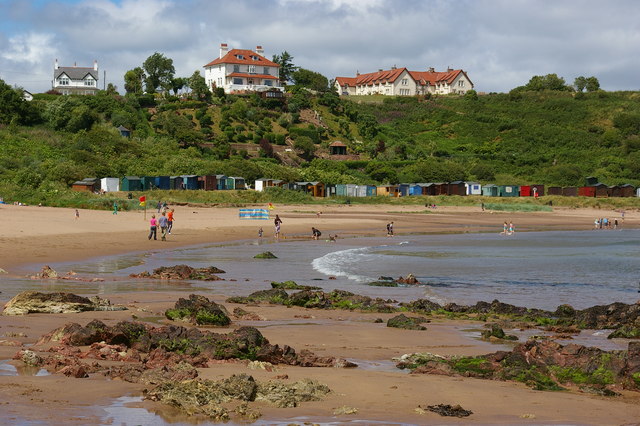
Image credit: Jennifer Petrie, via The Beach Guide, licensed under CC BY-SA 2.0.
When the ashes remain on the shelf
Ashes can sometimes remain at home long after a funeral because the family is waiting for the right moment, the right place or the emotional strength to arrange a ceremony. That pause is understandable.
Choosing a meaningful shoreline can help turn uncertainty into a gentle plan. You do not need to create an elaborate event. Instead, choose the elements that feel appropriate:
- A short reading or prayer.
- A piece of music.
- A few words shared by family members.
- A quiet moment beside the water.
- A live stream for relatives who cannot travel.
- A filmed ceremony to keep and revisit later.
Allow the location to provide part of the ceremony. At Coldingham Bay, the sea, cliffs and open horizon create a natural sense of movement and release.
If you are still considering locations, read the family’s guide to scattering ashes at sea for further ideas about planning a peaceful coastal farewell.
The headland, St Cuthbert’s Chapel and local meaning
The headland near Coldingham Bay adds historical depth to the scenery. Low grassy cliffs lead towards St Abbs Head, while local tradition and older historical accounts associate the headland ruins with St Cuthbert’s Chapel.
The site is also connected with the wider religious history of the area. Kirk Hill and St Abbs Head are traditionally associated with an early monastic settlement linked to St Æbbe. Coldingham Priory in the nearby village was later founded in honour of St Cuthbert.
For families with a spiritual connection, these associations may provide an additional layer of meaning. The chapel ruins are best treated with care and respect, and any ceremony planned on the headland should be discussed with the relevant landowner or site manager in advance.
Do not place memorial objects, flowers with plastic wrapping or permanent markers on the coast. Protect the landscape by keeping the ceremony discreet and leaving the area exactly as you found it.
Practical access to Coldingham Bay
Plan the visit around the needs of everyone attending. Coldingham Bay has useful facilities, but the beach itself can present challenges for people with limited mobility.
Keep these details in mind:
- Parking: A small car park sits above or close to the beach. General parking is free, although the area can become busy during summer and at weekends.
- Approach to the sand: The access road from the car park is short but fairly steep.
- Disabled parking: Dedicated disabled parking is available near the beach, including spaces at the bottom of the access road.
- Viewing area: A paved viewpoint and seating area provide a way to experience the ceremony without walking across the soft sand.
- Facilities: Toilets, an accessible toilet, picnic areas and a seasonal beach café are available.
- Beach access: The sand is deep and soft, so wheelchairs may not move easily across it. Beach wheelchairs may be available through Sea The Change.
A professional drone ceremony can also help reduce the need for every family member to reach the waterline. This matters when someone is elderly, uses a wheelchair, feels unsteady on uneven ground or finds the beach emotionally overwhelming.
The Berwickshire Coastal Path and St Abbs village
Coldingham Bay forms part of the Berwickshire Coastal Path, with walking connections towards St Abbs to the north and Eyemouth to the south. The route offers views across the bay, rocky shorelines, sea birds and the distinctive cliffs of the wider Berwickshire coast.
St Abbs village lies about one kilometre away. Families may choose to stay locally, visit the harbour or spend time together before or after the ceremony. Coldingham village is also around one kilometre from the beach, with further local history and links to Coldingham Priory.
The path includes slopes, steps and uneven sections in places. Check conditions before inviting guests to walk from St Abbs. For route information, see the Berwickshire Coastal Path details from Scottish Borders Council.

Image credit: Chris Heaton, via The Beach Guide, licensed under CC BY-SA 2.0.
Check tides, weather and coastal conditions
Coldingham Bay has a substantial tidal range of approximately four to five metres. The waterline can move a considerable distance between low and high tide, changing the appearance and accessibility of the beach.
Check a reliable local tide table before arranging a ceremony. The Coldingham Bay weather and tide information can help with initial planning, although conditions should always be reviewed again closer to the date.
Use these practical steps:
- Choose a calm day with light winds where possible.
- Avoid standing beneath cliffs, especially as the tide rises.
- Keep away from slippery rocks and areas affected by swell.
- Avoid busy bathing areas, harbours and fishing activity.
- Allow additional time for parking and access during peak periods.
- Consider an elevated viewing position if the beach is crowded or conditions change.
When you choose Aerial Ashes, the ceremony is planned around safety, weather, access and the character of the location. Learn more about how the service works before making your arrangements.
Why choose drone ash scattering at Coldingham Bay
Scattering ashes by hand can feel difficult, particularly when wind direction changes or the shoreline is uneven. A drone allows the release to take place gracefully from above, creating a calm visual connection between the family, the landscape and the sea.
A professional drone ash scattering ceremony can provide:
- A dignified and carefully controlled release.
- A suitable option for families who cannot reach the waterline.
- A clear view of the bay, cliffs and open sea.
- Professional handling of permissions and logistics.
- CAA-compliant flight operations.
- Live streaming for relatives elsewhere.
- A professionally edited video of the ceremony.
The drone does not replace the family’s presence or personal words. It supports the ceremony by carrying out the physical act of scattering ashes with care and precision.
Aerial Ashes is a multi-award-winning service and a pioneer in drone-based ashes scattering across the UK. The team can help you consider whether Coldingham Bay, the nearby coastline or another meaningful Scottish location is right for your loved one.

Image credit: Iain Lees, via The Beach Guide, licensed under CC BY-SA 2.0.
Permissions and respectful planning
Before scattering ashes on the sand, dunes, cliffs or headland, identify the landowner or managing authority and request permission. Coldingham Bay is associated with Scottish Borders Council, while nearby protected areas and historic sites may involve different organisations.
If you plan to scatter directly over the sea, follow environmental guidance and avoid leaving anything non-biodegradable behind. Do not release urns, plastic flowers, ribbons or other objects into the water.
Aerial Ashes can assist with identifying the appropriate permissions and planning a ceremony that respects the coastline, local wildlife and other visitors. Plan your own ceremony or arrange a free conversation through the company’s frequently asked questions page.
A gentle farewell above a beautiful shore
Coldingham Bay offers more than a beautiful view. Its sheltered sands, clear water, grassy cliffs and connections to St Abbs create a setting where a family can pause, remember and release.
Choose a time that feels unhurried. Invite only the people who need to be there. Let the sea carry the ashes away, while the memory remains with those gathered.
With professional drone ash scattering, Coldingham Bay can become the setting for a serene and personalised farewell in Scotland, shaped around the person being remembered and the places they loved.
References and useful information
- Scottish Borders Council, Coldingham Bay countryside site
- Scottish Borders Council, Berwickshire coastal routes
- Sea The Change, beach wheelchairs at Coldingham Bay
- RNLI beach and coastal safety guidance
- Historic Environment Scotland, Coldingham Church and Priory
- Aerial Ashes, scattering ashes at sea guide
We're Online! How may I help you today?